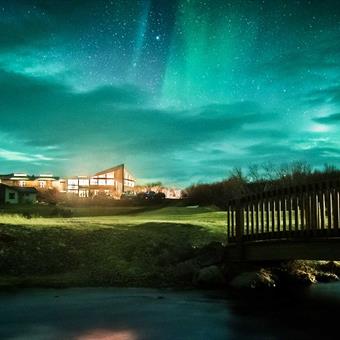
Take a moment and picture this. You're wrapped in a blanket, your breath fogging in the cold, when the sky above you starts to move. Green light ripples across the stars, bends, and disappears, then reappears somewhere else entirely.
This is the moment people travel to Iceland for. And it’s one of the most common reasons our guests book a winter trip. With some planning and a bit of luck, you can improve your odds a lot.
This guide covers the best time to see the northern lights in Iceland, the places to watch from, and a few things our own Reykjavík team wishes every guest knew before they start looking up.
- Chase the aurora on one of these northern lights tour packages in Iceland
When is the best time to see the northern lights in Iceland?
Two things decide your chances: the time of year, and the time of night. Get both right, and you're in good shape.
1. Northern lights season in Iceland
Aim for September to April. Nights are long and dark enough during these months to see the lights. On the shortest days of winter, parts of the country get up to 19 hours of darkness.
When it comes to seeing the aurora, summer works against you. The midnight sun means the sky barely gets dark at all between May and August, so even a strong aurora has nowhere to show. It's still there. You just can't see it.
My favourite time is the end of September into early October. It's still warm enough to be comfortable outside, and the wet season hasn't started yet, so waiting for the lights to show up is actually enjoyable. Even in February, when the weather can be hit-or-miss, the light's often at its best simply because there’s more darkness to work with. It's incredible, and you'll never see it exactly the same way twice.
- Emily, Iceland Travel Consultant
2. Best time of day to see the aurora borealis
Most sightings happen between 9 PM and 2 AM, when the sky's at its darkest. Stay out late if you can. The best displays can appear in the middle of the night, after most people have gone to bed.
Some hotels offer a wake-up call if the aurora appears overnight, so you can sleep without worrying you'll miss it.
One of the best things hotels offer is the northern lights wake-up call. Tell the front desk you're heading to bed and ask them to call if anything shows up. When that phone rings, you get up, throw some clothes on, and go.
- Emily, Iceland Travel Consultant
.jpg)
Where is the best place to see the northern lights in Iceland?
Light pollution is the main obstacle: the further you get from streetlights, the clearer the colours. But you can spot the aurora from almost anywhere in Iceland, even from downtown Reykjavík on a good night.
So what's the best place to see northern lights in Iceland? Here's where we'd point you, region by region.
1. South Iceland and Vík
Vík is a small fishing village with black sand beaches and basalt cliffs, a few hours south of Reykjavík along the Ring Road. It's an easy add-on to any tour of South Iceland.
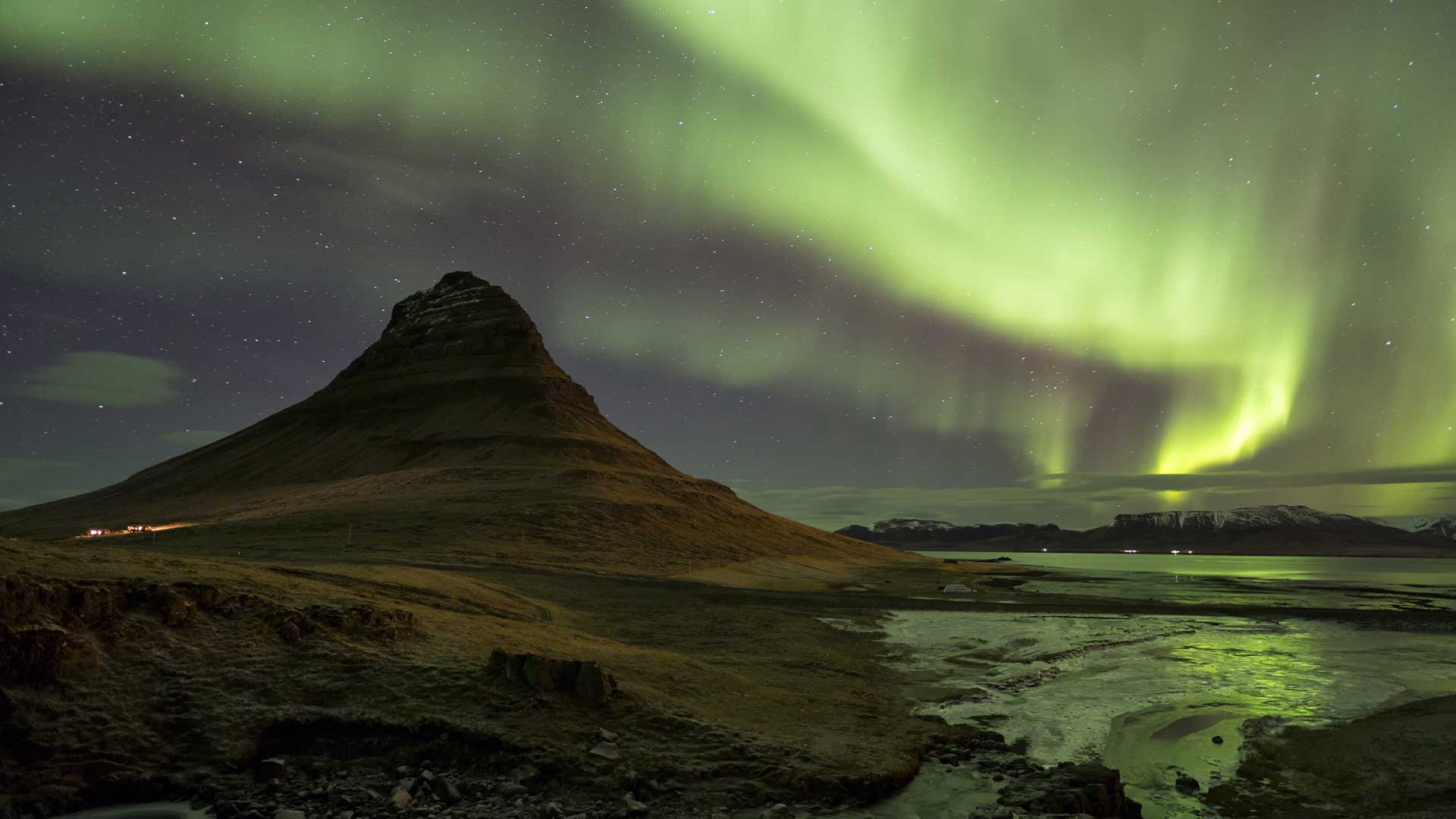
Spend the day walking Reynisfjara, with the Reynisdrangar sea stacks and the Dyrhólaey rock arch close by. Once the sun’s down, look up. The green light can stand out clearly against the black rock.
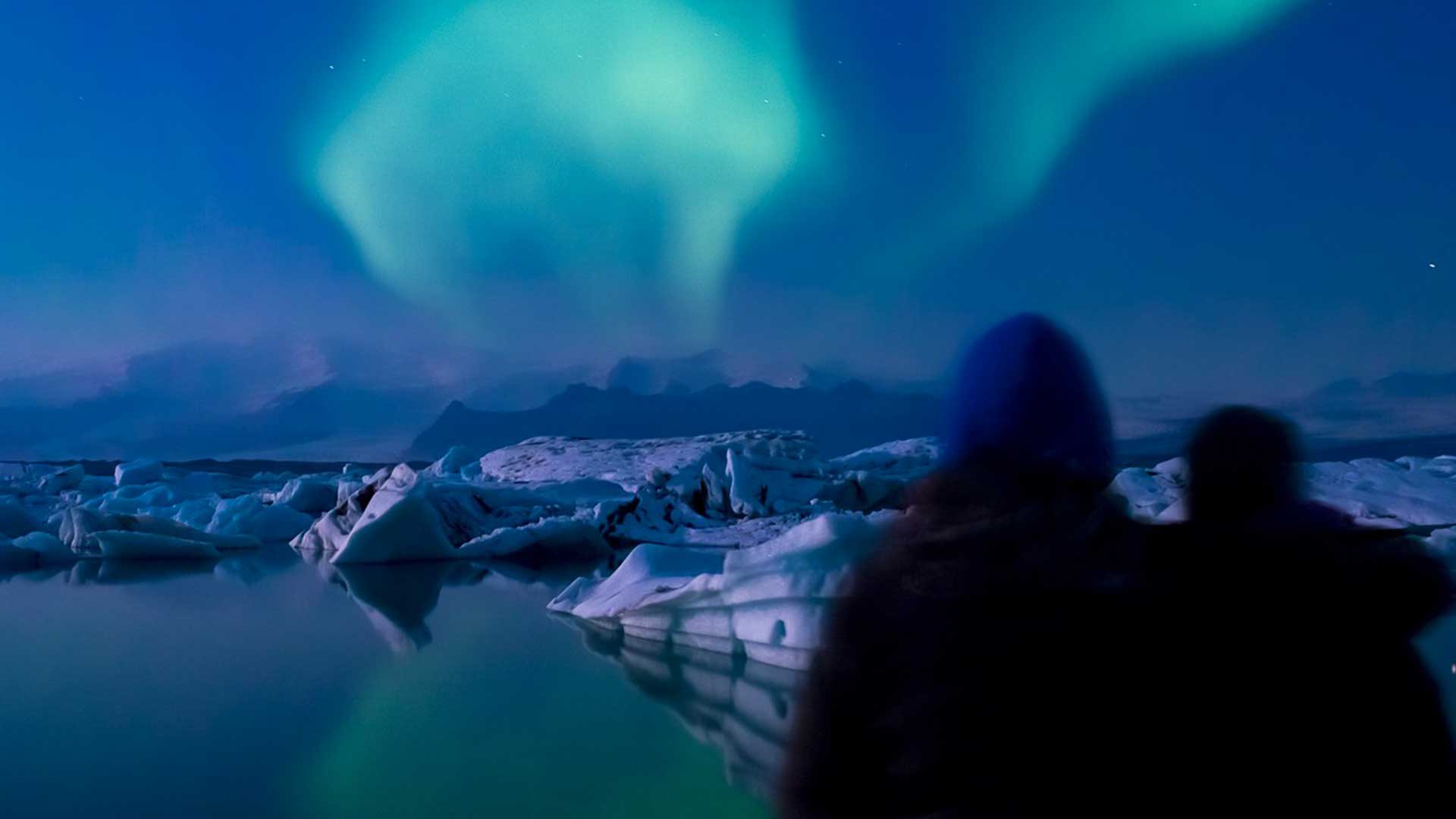
Push further east along the Ring Road, and you’ll reach Jökulsárlón glacier lagoon, where the aurora’s colours reflect off the floating ice.
2. North Iceland and the Westfjords
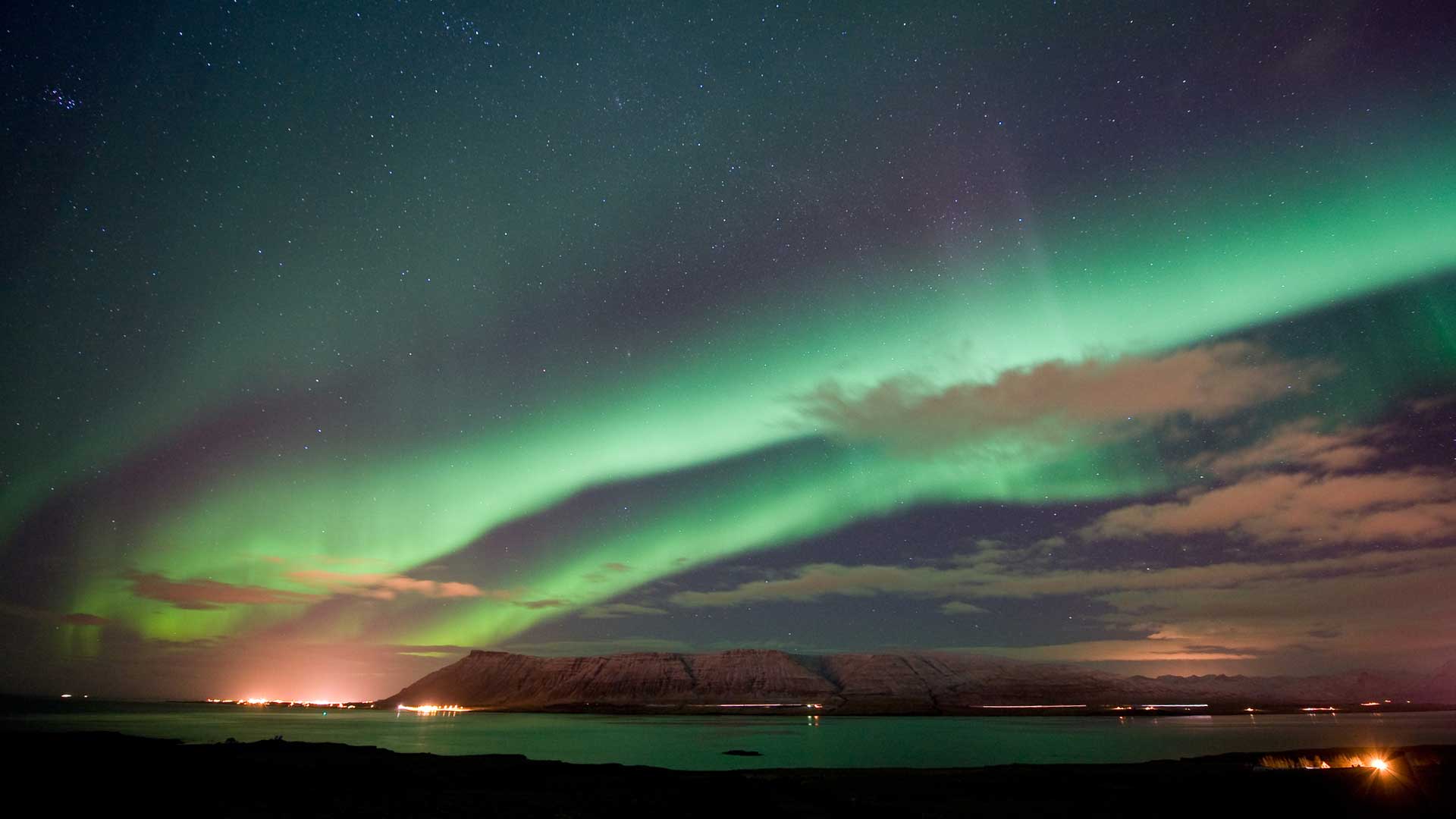
Head north of Reykjavík for get extra hours of darkness each night, which improves your odds. Both North Iceland and the Westfjords also have far smaller populations than the capital, so there's less light pollution around.
While you're up there, you could hike toward Drangajökull glacier or snowshoe through Heydalur valley. Ísafjörður, the unofficial capital of the Westfjords, is worth a stop too. A tour of North Iceland can also take you whale watching or to the volcanic craters around Lake Mývatn. Dettifoss waterfall is close by as well.
- Related: Must-see sites in North Iceland
4. Reykjavík
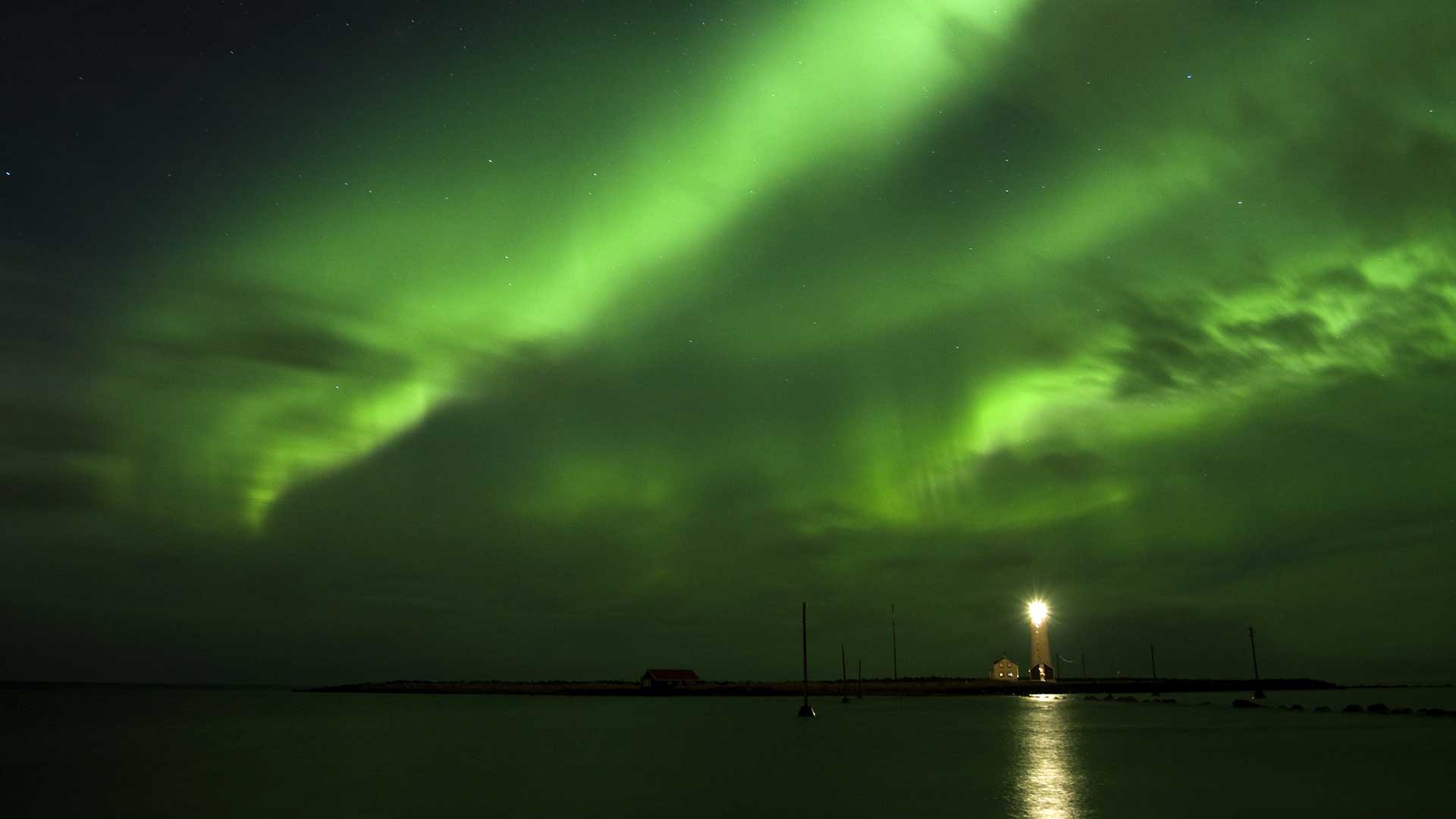
If you're short on time, you can still see the northern lights without leaving Reykjavík. A handful of parks in the city sit far enough from streetlights to give you a decent shot.
Our top pick is Grotta Lighthouse, out on the Seltjarnarnes peninsula, one of the darkest spots in the whole city. It also has a geothermal hot tub, so you can stay warm while you wait for the lights to appear.
If you'd rather not go it alone, an aurora-watching tour from Reykjavík takes you out of the city to a darker spot, with a guide who knows where to look. If the lights don't show up, most of our guided tours let you head out again another evening at no extra cost.
- Related: Top things to do in Reykjavík
What to do once you know the best place and time to see the northern lights in Iceland?
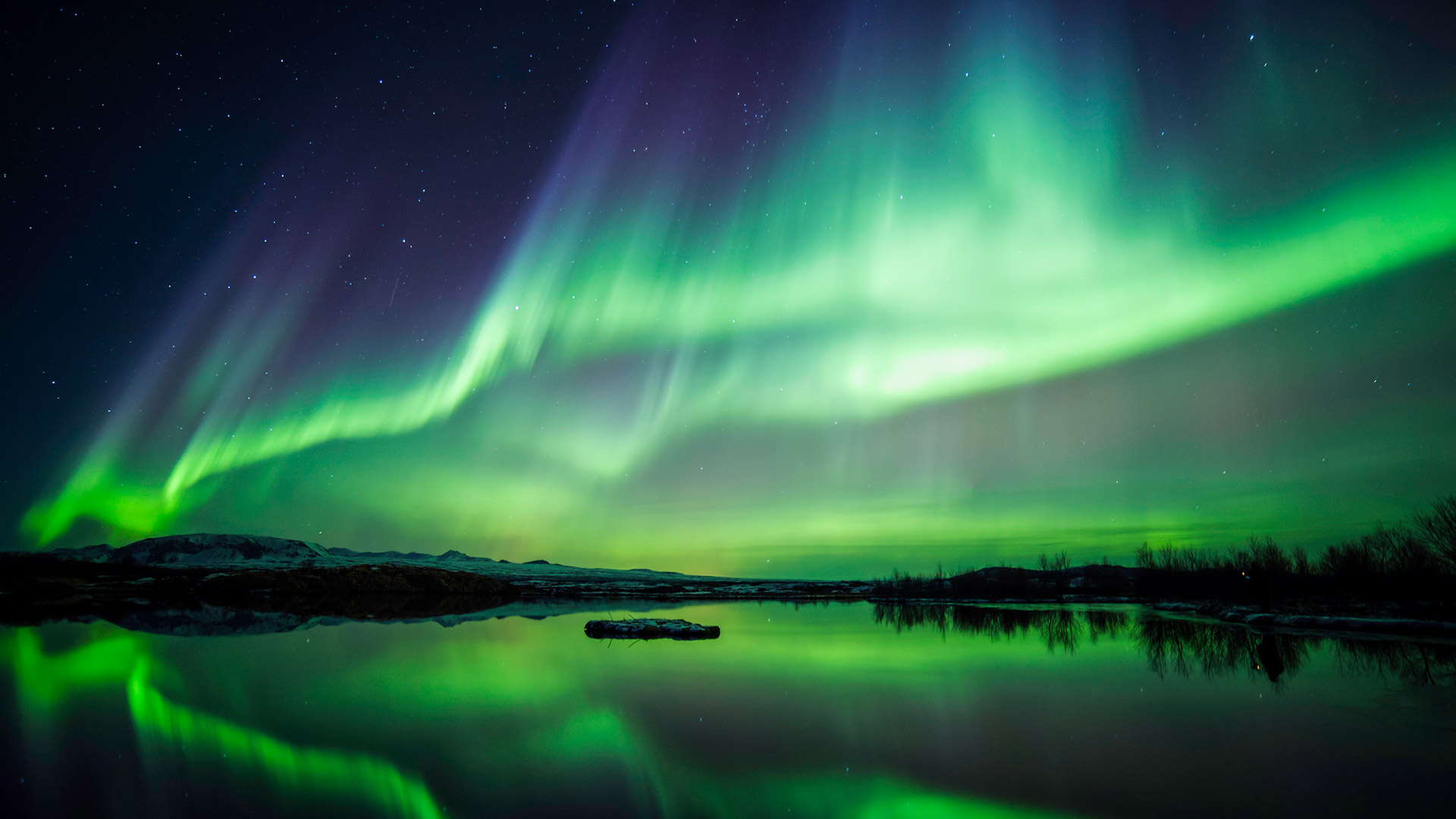
Put the two together, and the plan is simple. Travel between October and March, head out between 9 PM and 2 AM, and get away from city lights. Vík, North Iceland, the Westfjords, and Þórsmörk all give you an edge, though even a dark corner of Reykjavík will do in a pinch.
“There are three things that need to happen: clear skies, darkness, and solar activity. All of that is outside our control. There's an unofficial fourth thing too. Keep your fingers crossed, and hope for a bit of luck.
- Emily, Iceland Travel Consultant
A clear sky matters more than location. Even the best spot is no good if it's cloudy, and even an average one works if the sky is clear. Check the forecast before you commit to a location. If you can, plan for more than one night, since the aurora is unpredictable and more nights mean better odds.
Handy tools for planning your aurora hunt
It's worth checking conditions before you head out. The Icelandic Met Office's aurora forecast rates your chances from 0 to 9, and anything above a 2 is worth bundling up for. Its companion cloud cover forecast tells you whether tonight's a night to head out or stay in.
SolarHam is another popular tool among aurora hunters, with a 3-day geomagnetic forecast. There's also a free Aurora Forecast app that shows the auroral oval (the band of active aurora circling the pole, which grows or shrinks depending on solar activity) and your odds from wherever you are.
- Related: Travel tips for visiting Iceland
Photographing the northern lights
Once the sky lights up, you'll want to capture that moment. A few basics help: a camera with manual settings, a tripod (long exposures don't forgive a shaky hand), a shutter release if you have one, and spare batteries, since the cold drains them fast.
Turn off image stabilisation. Push your ISO to 400–800, higher if your lens allows. Open your aperture as wide as it goes, and try exposure times of 15–30 seconds. Practise on any ordinary dark night before your trip, so you're not fumbling with settings when the sky finally moves.
That said, Emily also says this:
You don't need a fancy camera. I've taken some amazing northern lights photos on my phone. Sometimes the lights are vibrant enough to see with the naked eye, and other times your phone picks up more than your eyes can. Either way, it's one of those things a camera will never fully capture. You have to see it in person, and Iceland is the perfect spot for it.
- Curious who's behind these tips? Meet Emily, Hildur, and the rest of our Iceland team
Four ways to see the aurora borealis in Iceland
1. Rent a car
Take the wheel and head into Iceland's quieter corners on your own schedule. Our self-drive tours of Iceland map out the best routes and stops so you don't have to guess.
2. Hire your own guide
A privately guided tour of Iceland puts someone who's driven these roads for years behind the wheel. They can’t make the lights appear, but they can make sure you're in the right place when they do.
3. Join a group tour
Share the experience with fellow travellers on a small group tour of Iceland. Your guide handles all the driving and planning. You just need to look up.
4. Take a multi-day tour
For a mix of independent and guided travel, an Iceland multi-day tour bases you in Reykjavík, and sometimes a second spot like the Westfjords, with day and evening excursions built in.
Ready to see it for yourself?
Now you know the best time and place to see the northern lights in Iceland. Take a look at our aurora borealis tours and find the trip that fits.
You'll be paired with a dedicated travel consultant based in Reykjavík, the same team you can meet here. They'll know where to send you when the forecast looks promising. The only thing nobody can control is the weather and the aurora.
Get in touch to speak to an Iceland expert and start planning your trip.