All travel styles
 All tours
 Best sellers
 Special offers
 Special offers

 Book with confidence
 Booking terms
 Sustainability policy
 Iceland volcano update
 Blog
Blog Reviews
 About us
 Why book with us?
Another victim of Vesuvius’ fiery temperament
Pompeii is the celebrity victim of Mount Vesuvius’ 79 CE eruption. Its ruins, next to Tutankhamun’s tomb, are probably the world’s most famous archaeological discovery. In fact, it basically kickstarted the science of archaeology itself. Spare a thought for Vesuvius’s Herculanean victims – they got the same end, but far fewer of us know its name.
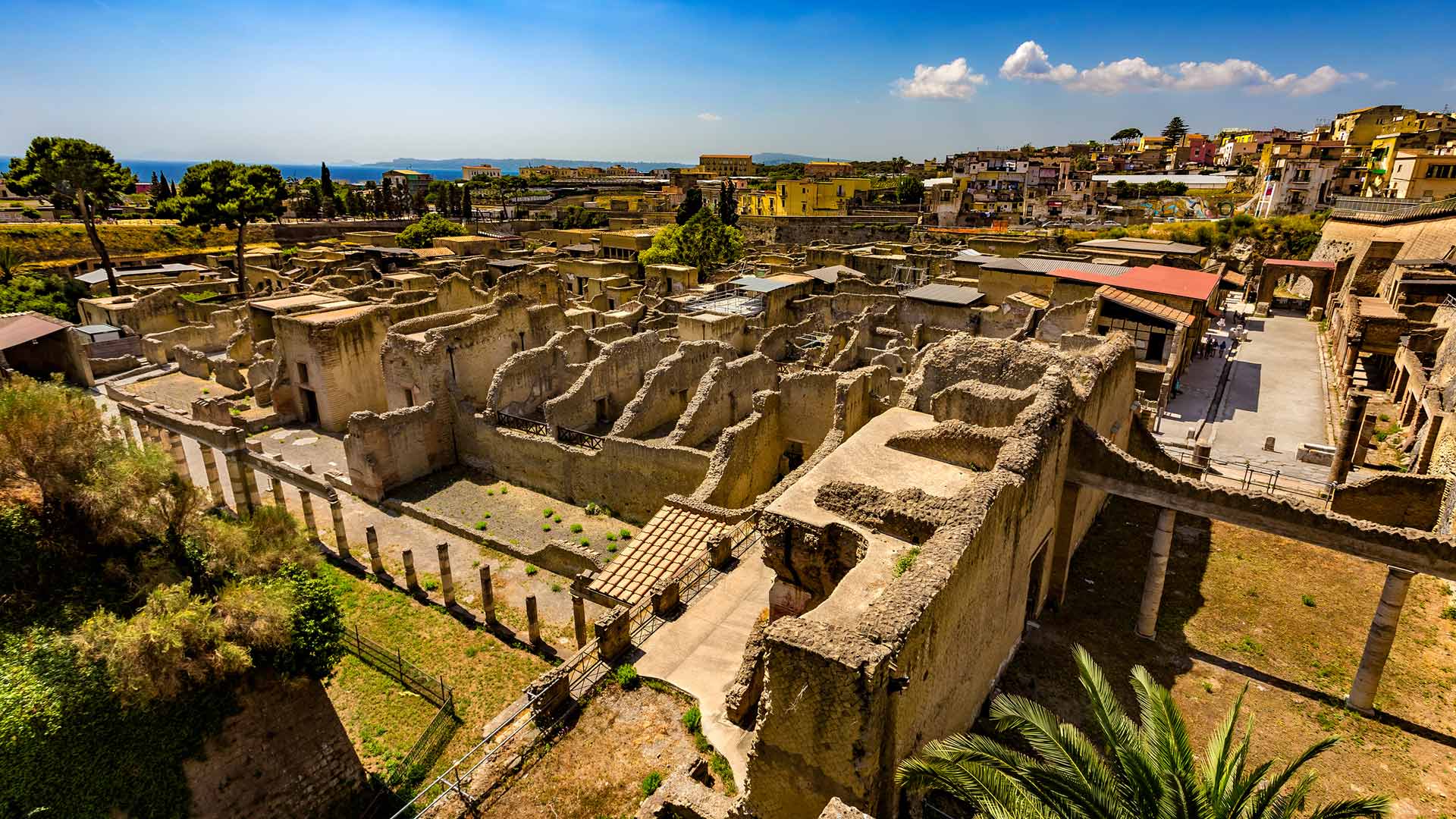
Like Pompeii, Herculaneum was built as a coastal town. But now, the sea has receded, pushing the town inland. You can find it close to the centre of the Naples coast, about half an hour from Naples by train.
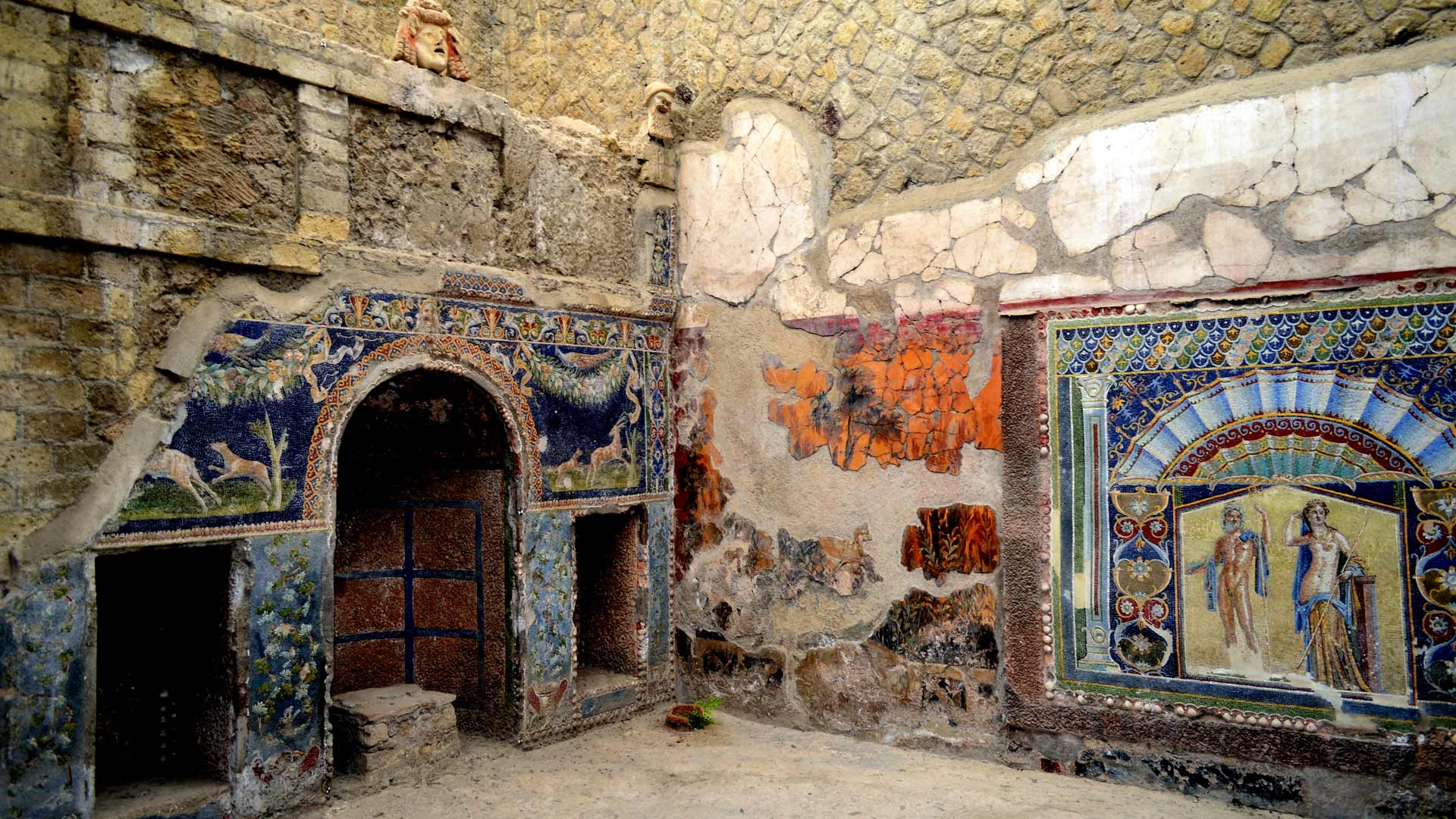
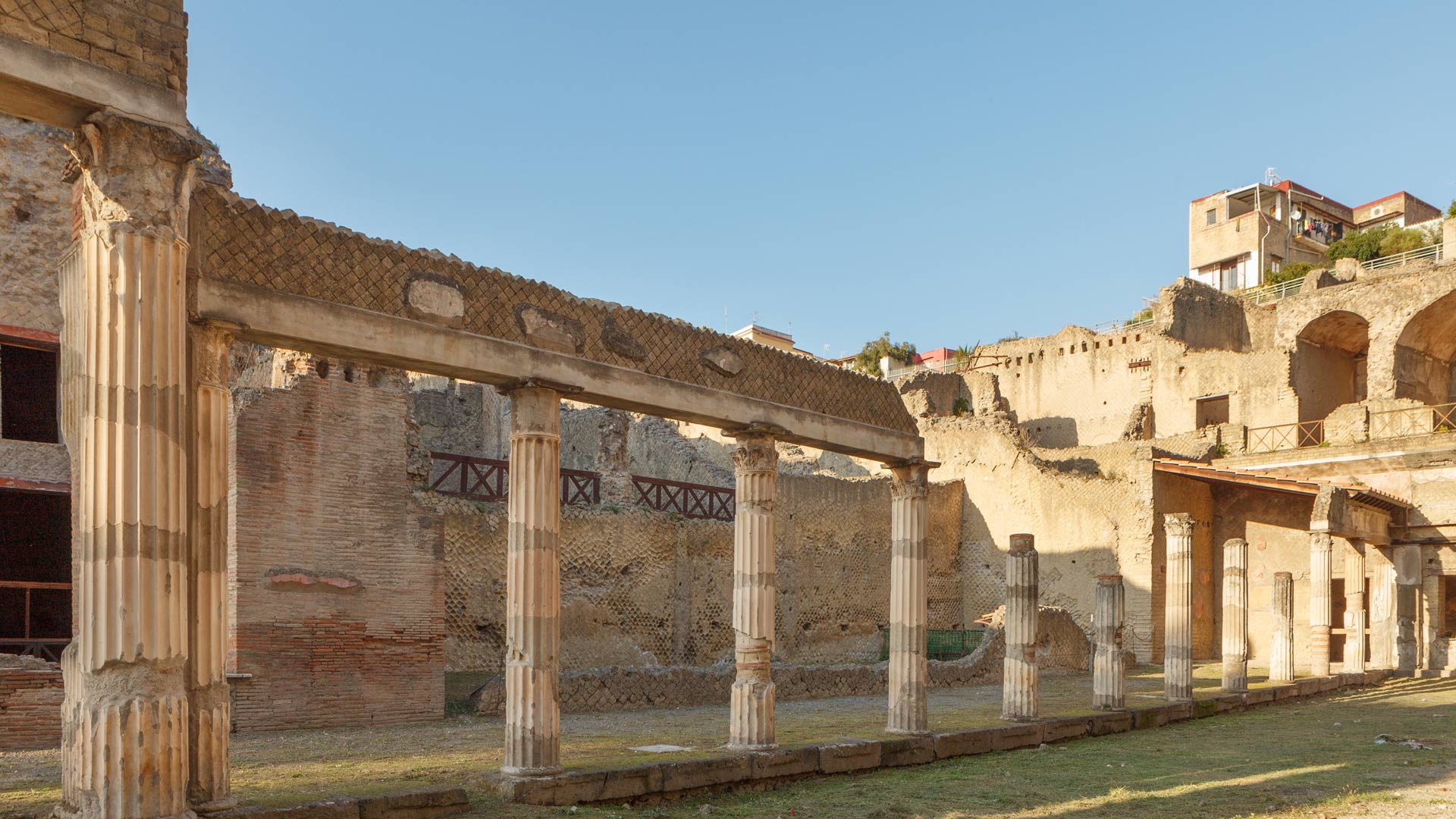
Before its accidental rediscovery in the 1700s, it was all but lost. Only traces of its existence – its name – dimly echoed in the writings of ancient Roman historians. Now, thanks to the layer of volcanic material that covered it and the humidity of its ground, it’s a perfectly preserved snapshot in time.
Five thousand people once lived, ate, argued, and loved here. Locals laughed and wept at the theatre. Did business at the port. Slaves baked bread and cleaned the baths. Wealthy senators holidayed here, decompressing from the stress of Roman politics. Boat houses, built for ships and goods, became the tombs of 300 people who couldn’t escape in time.
One thing you’ll notice about Herculaneum, aside from its well-preserved condition, is that, unlike Pompeii, it was more like a holiday resort than a normal town. It lacks the big fixtures of public life an amphitheatre. Instead, it has an abundance of large villas covered in marble, often with views of the bay.
Wander the streets of Herculaneum and pause for a moment. Just think. Amongst the beauty is a darker history.
View Campania