All travel styles
 All tours
 Best sellers
 Special offers
 Special offers

 Book with confidence
 Booking terms
 Sustainability policy
 Iceland volcano update
 Blog
Blog Reviews
 About us
 Why book with us?
The beating heart of ancient Rome
Before Rome became the city it is today, it was a cluster of settlements on 7 hills. Aventine, Palatine, Capitoline, Esquiline, Quirinal, Viminal and Caelian. Slowly, they were interconnected, developed and urbanised. The Roman hunger for conquest began here, carrying them to the Scottish border and the Syrian sands.
The Palatine Hill reaches back into the mists of Rome’s mythic origins. A prowling she-wolf followed the sound of crying to a murky cave. Within? Two abandoned babies. You know their names. She fed Romulus and Remus on her wolf’s milk, raising two predators. Brotherly love eventually led to fratricide. Romulus, the victor, gave the city his name.
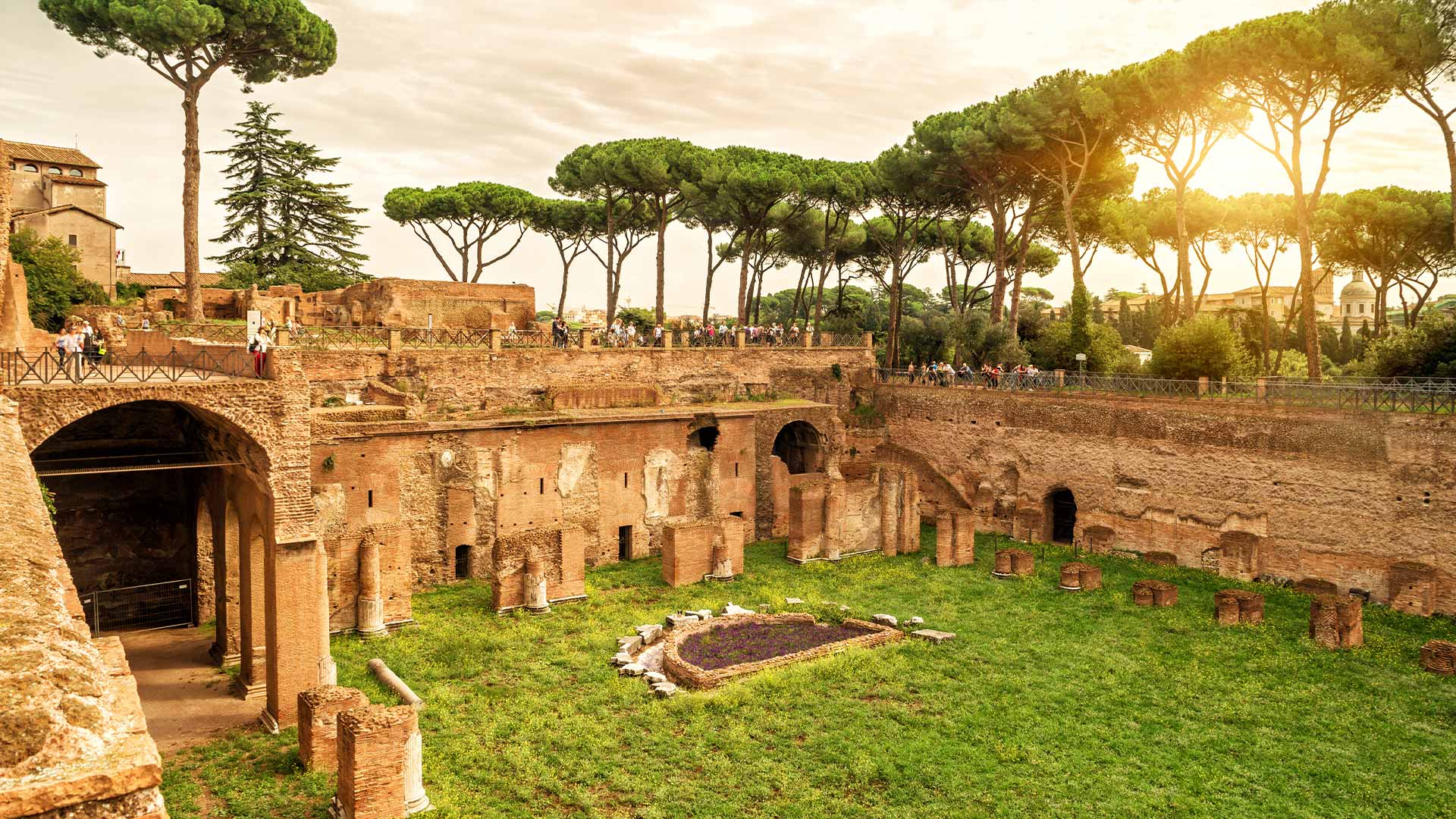
The Romans revered the Palatine Hill. Not only did it connect them to their origins, but it also overlooks the Roman Forum. The elite loved it, who built their palaces here. In fact, “Palatine”, for that reason, is where we get the word “palace” from. A museum nearby holds all kinds of unearthed treasures.
Splendid views of the Roman Forum and Circus Maximus await you from the Palatine Hill. But you can also admire the history upon it. Domitian’s “Flavian” palace. The houses of Augustus and Livia. The Hut of Romulus, an ancient site even for the Romans themselves. It’s all there, just a short walk from the Colosseum.
Follow in the footsteps of Rome’s old elite and see Rome through their eyes. And don’t be too alarmed if you see the pawprints of a she-wolf in the dust.
View Lazio