All travel styles
 All tours
 Best sellers
 Special offers
 Special offers

 Book with confidence
 Booking terms
 Sustainability policy
 Iceland volcano update
 Blog
Blog Reviews
 About us
 Why book with us?
Choosing between the best places to visit in Italy is part of the fun – and part of the challenge. One moment you’re dreaming of historic Italian cities, the next it’s lakes, mountains, vineyards, or somewhere by the sea.
This guide takes you through 11 destinations that show you just how beautifully varied your trip can be. Some are famous. Some are lesser-known. All of them earn their place.
Whether you’re planning your first trip or your fifth, these are the places worth building your route around.
- Hit all the highlights with these Italy vacation packages made with local expertise
1. Rome
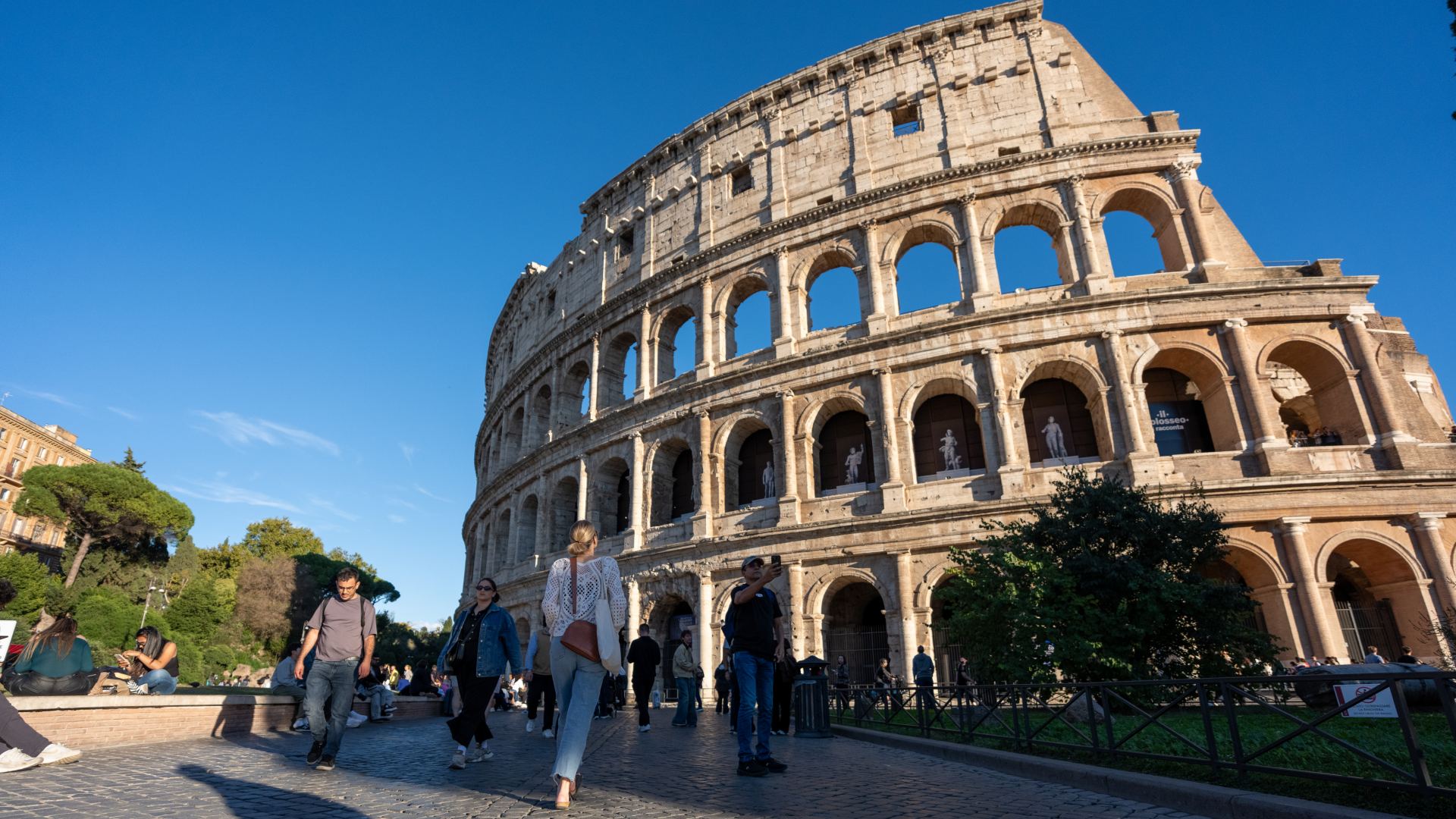
The Eternal City lives up to the name. Ancient ruins stand shoulder-to-shoulder with Baroque fountains. The sound of Vespas echoes off medieval walls. And the food? Worth the trip alone.
Start with the icons. The Colosseum is as grand as you’ve heard. Stand in the arena where gladiators once fought, and 50,000 spectators roared. Then wander into the Roman Forum and Palatine Hill. This is where senators debated, emperors ruled, and priests made offerings to the gods.
A short walk away is the Pantheon. Step inside and look up. That dome has been standing for nearly 2,000 years.
Everyone tosses a coin at the Trevi Fountain – do it anyway. And climb the Spanish Steps. But try to get there early.
When the sun sets, hop across the Tiber River to Trastevere. This bohemian neighbourhood is where you come for that quintessential Roman vibe. Narrow cobbled lanes, ivy-clad walls, and neighbourhood trattorias where the menu’s scribbled on a chalkboard.
Sit down. Order some pasta. Rome has 4 classics: cacio e pepe, carbonara, amatriciana, and gricia. However you spend your days here, this is the part you’ll remember just as clearly.
Vatican City
Cross into the Vatican City, and you’ll find yourself in the world’s smallest country. St. Peter’s Square, with those grand curved columns, opens up to welcome you. Look up at the balcony of Peter’s Basilica ahead – that’s where the Pope addresses the crowds.
Book ahead for the Vatican Museums. You’re here for the Sistine Chapel, really. Michelangelo painted that ceiling lying on scaffolding for 4 years. Even if you spend 20 minutes staring up at it, that’s probably still not enough time to take it all in.
2. Tuscany
If Rome is about ticking off landmarks and seeing history up close, Tuscany is about slowing down and soaking up the countryside.
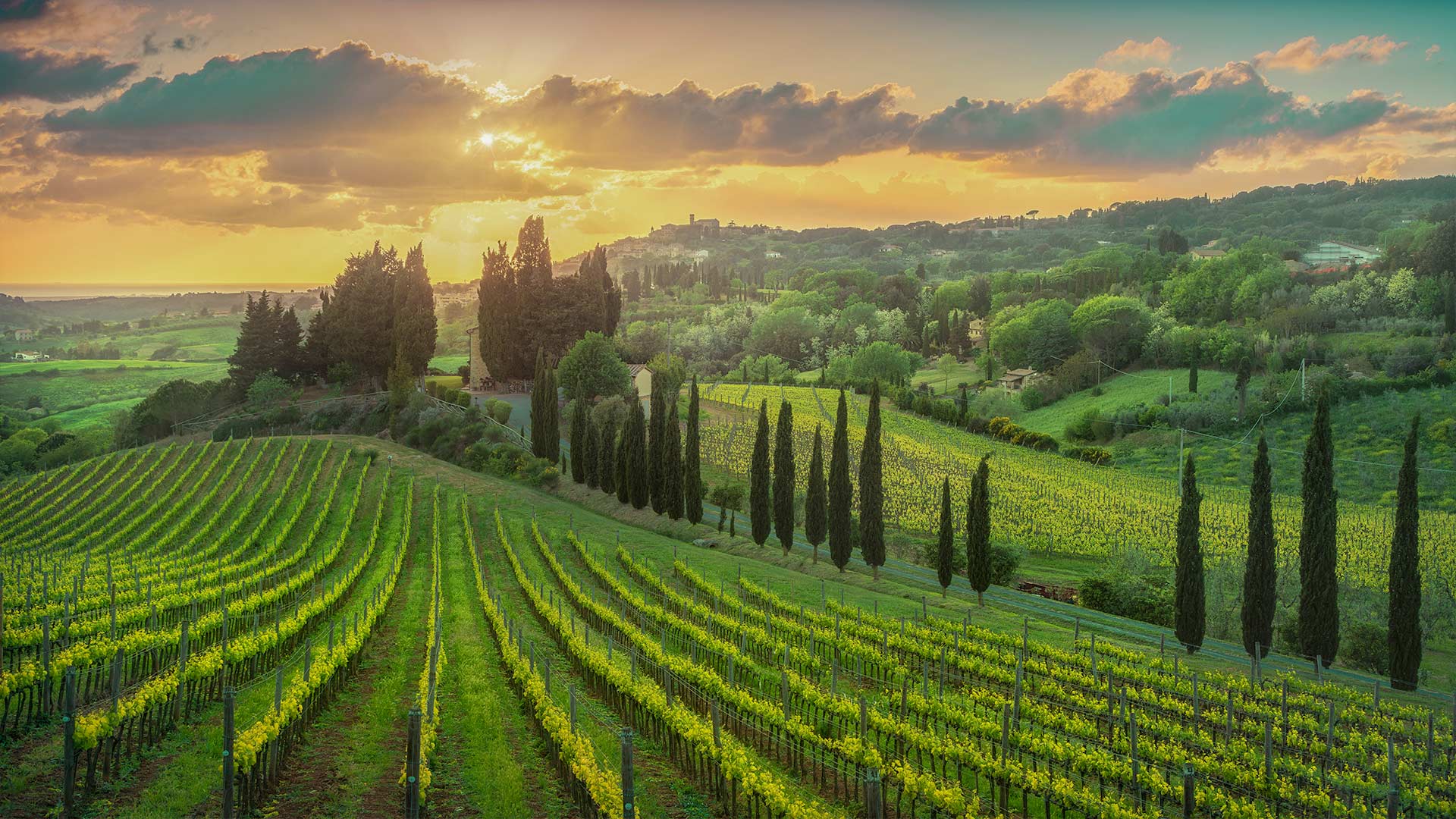
Hills stitched with vineyards. Silver-green olive groves. Cypress trees lining roads that beg for slow drives with open windows. This is the Italy you see on postcards.
Tuscany also happens to be one of the world’s great wine regions. Chianti and Montepulciano are born here, in sun-soaked vineyards where families have been making them for generations. If you’ve got time, detour to one. Taste the wine where it’s made. Pair it with local pecorino cheese.
Florence
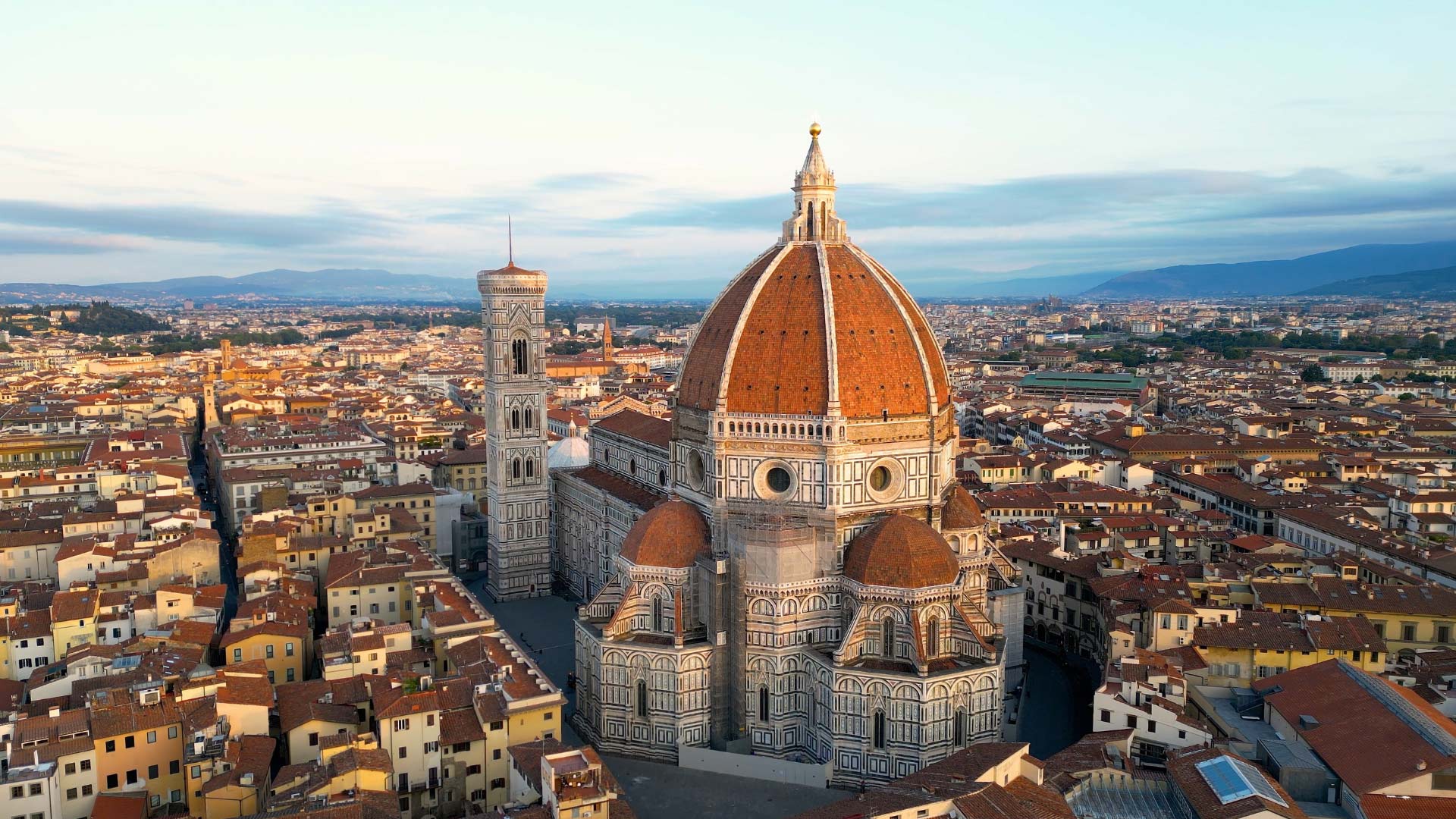
At Tuscany’s heart is Florence, the elegant capital and birthplace of the Renaissance. And nowhere showcases that better than Brunelleschi’s iconic dome crowning the Florence Duomo.
Then there’s the art. Inside the Uffizi Gallery, you’ll find Botticelli’s Birth of Venus, works by Leonardo da Vinci, Michelangelo, Raphael – masters whose names you know even if you’re not an “art person”.
Walk to the Accademia next to see Michelangelo’s David. Photos don’t prepare you for the scale, the detail, the presence of that 5-metre (17-foot) marble figure staring you down.
Step back outside and cross the Ponte Vecchio, Florence’s medieval bridge lined with jewellery shops. Follow it to Mercato Centrale near San Lorenzo.
Here, lunch comes with decisions. Lampredotto, Florence’s beloved street-food sandwich, if you want to eat like a local. Or wander between counters piled with cannoli, arancini, fresh pasta and things you hadn’t planned on ordering (but absolutely will).
Foodies, this one’s for you. Heading north from Florence, you could detour east through Emilia-Romagna – the region that gave Italy some of its best food. Bologna for tortellini, Parma for prosciutto and Parmigiano-Reggiano, Modena for balsamic vinegar.
It deserves its own trip, honestly.
- Find your next favourite dish in our Italian food travel guide
Pisa
Just 45 minutes north of Florence by train, Pisa is famous for one thing: the Leaning Tower. The classic “holding it up” photo is practically a rite of passage – and you’ll probably find yourself lining one up too.
The tower sits in the Piazza dei Miracoli, alongside the cathedral and baptistery. Both are equally beautiful and far less photographed.
Then there’s the rest of Tuscany – and this is where many travellers truly fall for it. Siena, with its scallop-shell-shaped Piazza del Campo. Lucca, wrapped in Renaissance walls you can walk or cycle around. And villages like San Gimignano, the “Medieval Manhattan”, with its stone towers rising above the Tuscan hills.
- Dreaming of vineyard roads and scenic routes? Explore our self-drive tours of Italy
- Learn how to navigate the country’s roads with this guide to driving in Italy
3. Cinque Terre
Not far from northern Tuscany, the hills begin to fade. Vineyards give way to cliffs. Fields give way to open water. And suddenly, you’re on the Italian Riviera.
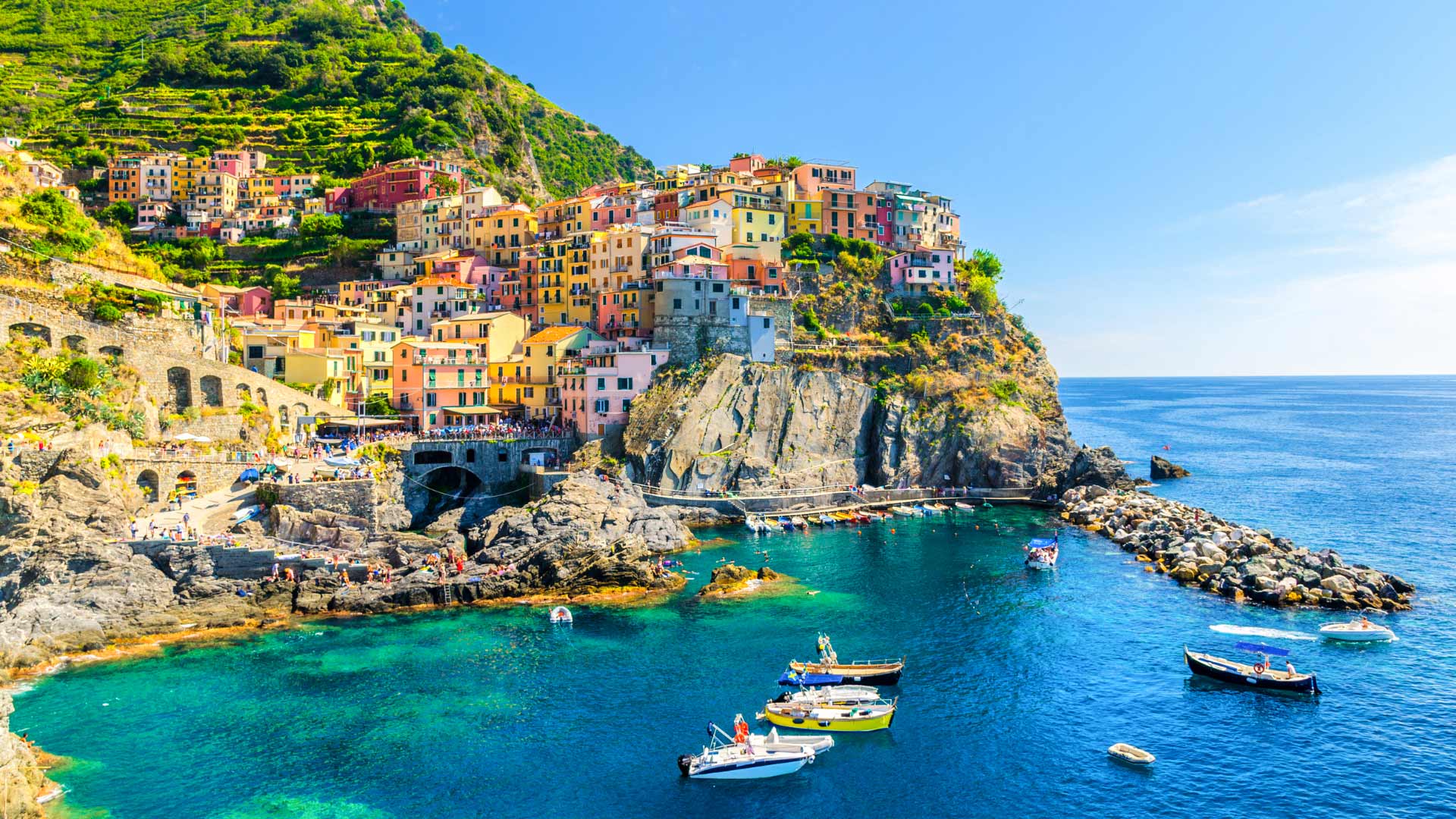
Cinque Terre is made up of 5 small fishing villages strung along the Mediterranean coast: Monterosso, Vernazza, Corniglia, Manarola and Riomaggiore.
Each one clings to the cliffs, with pastel-coloured houses stacked on top of each other. Fishing boats bob in tiny harbours. Vineyards grow on slopes so steep you wonder how anyone harvests them.
The best days here are simple ones. Walk the coastal paths, swim off the rocks, and take a boat trip or two between villages. Then find a harbourside table and order trofie al pesto – twisted pasta ribbons coated in basil, pine nuts, garlic and olive oil. This is Liguria after all, pesto’s birthplace.
4. Milan
There’s more to the country’s fashion capital than shop windows and catwalks. It’s one of the top destinations in Italy for art, architecture and design.
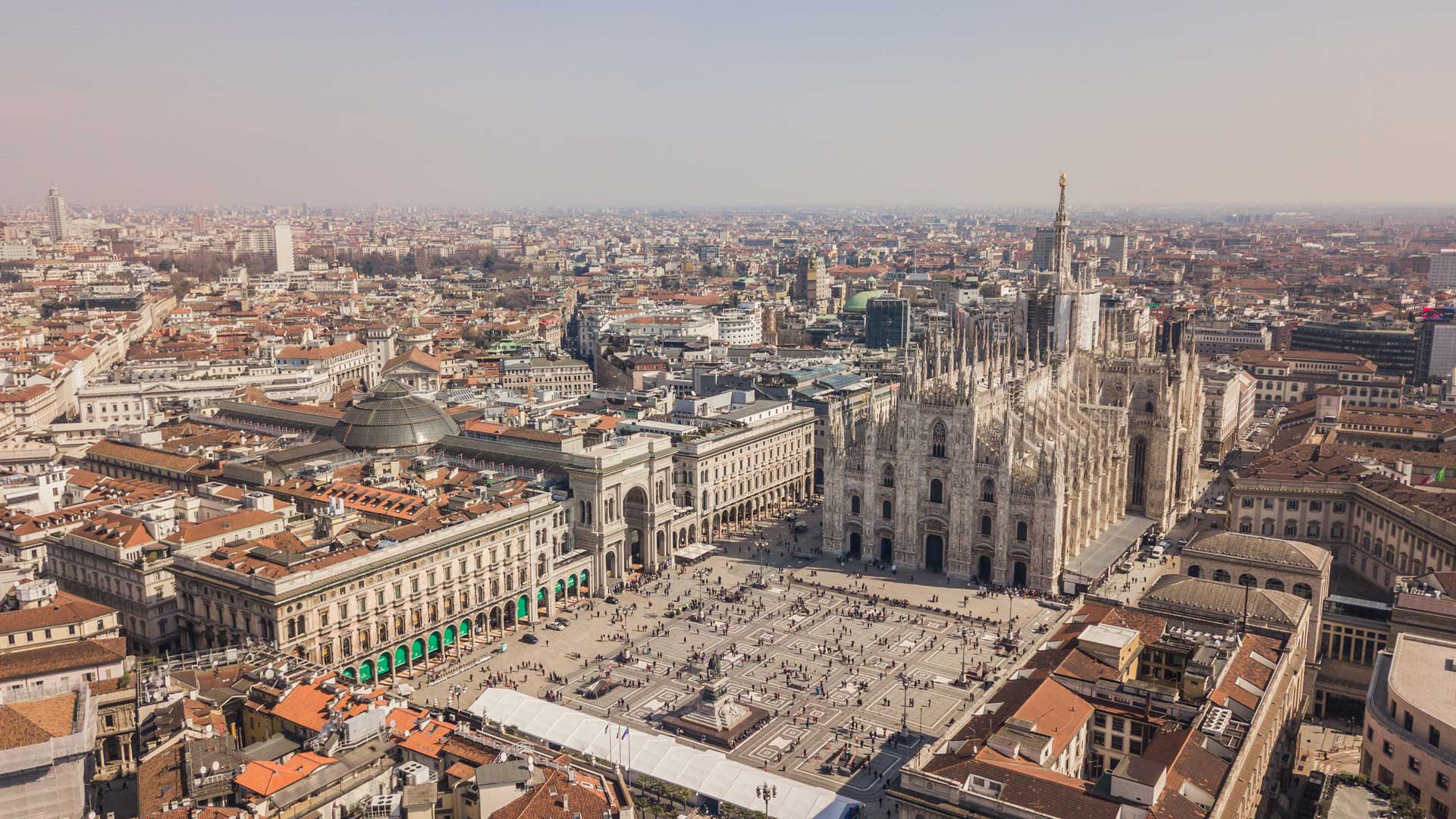
Milan’s anchor is the Duomo di Milano, a Gothic cathedral in Piazza del Duomo that took almost 6 centuries to complete. Climb to the rooftop terraces to walk among its dreamy spires, with views across the city. On clear days, all the way to the Alps.
Just around the corner, another masterpiece waits: Leonardo da Vinci’s The Last Supper, housed in the Santa Maria delle Grazie. Book ahead (months ahead, if you can) to see it – it’s one of the most famous paintings in the world, and it earns every bit of that reputation.
Walk through the glass-vaulted Galleria Vittorio Emanuele II, Italy’s oldest shopping arcade, and you’ll step straight into Milan’s Fashion Quarter. Locals call it the “Golden Quarter”. This is where big fashion houses like Prada, Armani, Versace, and Dolce & Gabbana live.
Even if you’re not buying, it’s worth walking through – equal parts museum and mall. The cafés here are pricey, but people-watching is free.
- Visit Milan and Lake Como on a tour of Northern Italy
- Related: Best places to visit in Northern Italy
5. The Italian lakes: Como, Garda and Maggiore
North of Milan, 3 of Italy’s most beautiful lakes stretch out beneath the Alps. This is your quintessential la dolce vita moment: lazy lakeside strolls – gelato in hand – and nothing on the agenda but aperitivo by the water.
Lake Como
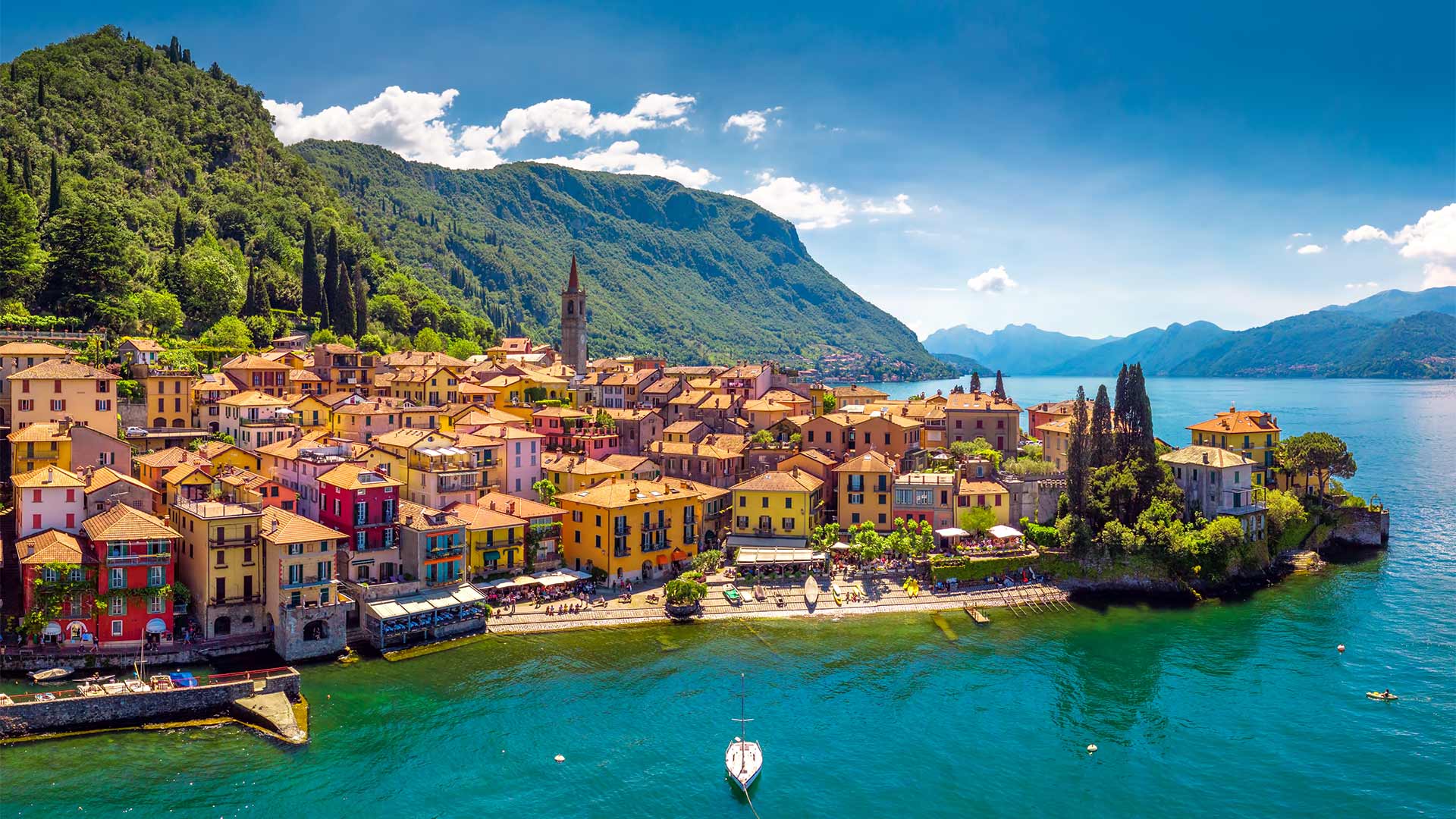
Lake Como is the glitzy one. Its shores are lined with luxurious villas and gardens that spill down to the water, many with centuries-old estates where aristocrats once summered. And a few very famous modern owners (George Clooney among them).
The lake’s shaped like an upside-down Y, with towns dotted along it. Bellagio, perched at the point where the lake splits, is the most well-known. Stroll the narrow cobbled streets, wander Villa Melzi’s gardens, and order an Aperol Spritz at a lakeside café.
Ferries connect the towns, so you can hop between them without dealing with the narrow lakeside roads.
- Related: Best things to do in Lake Como
Lake Garda
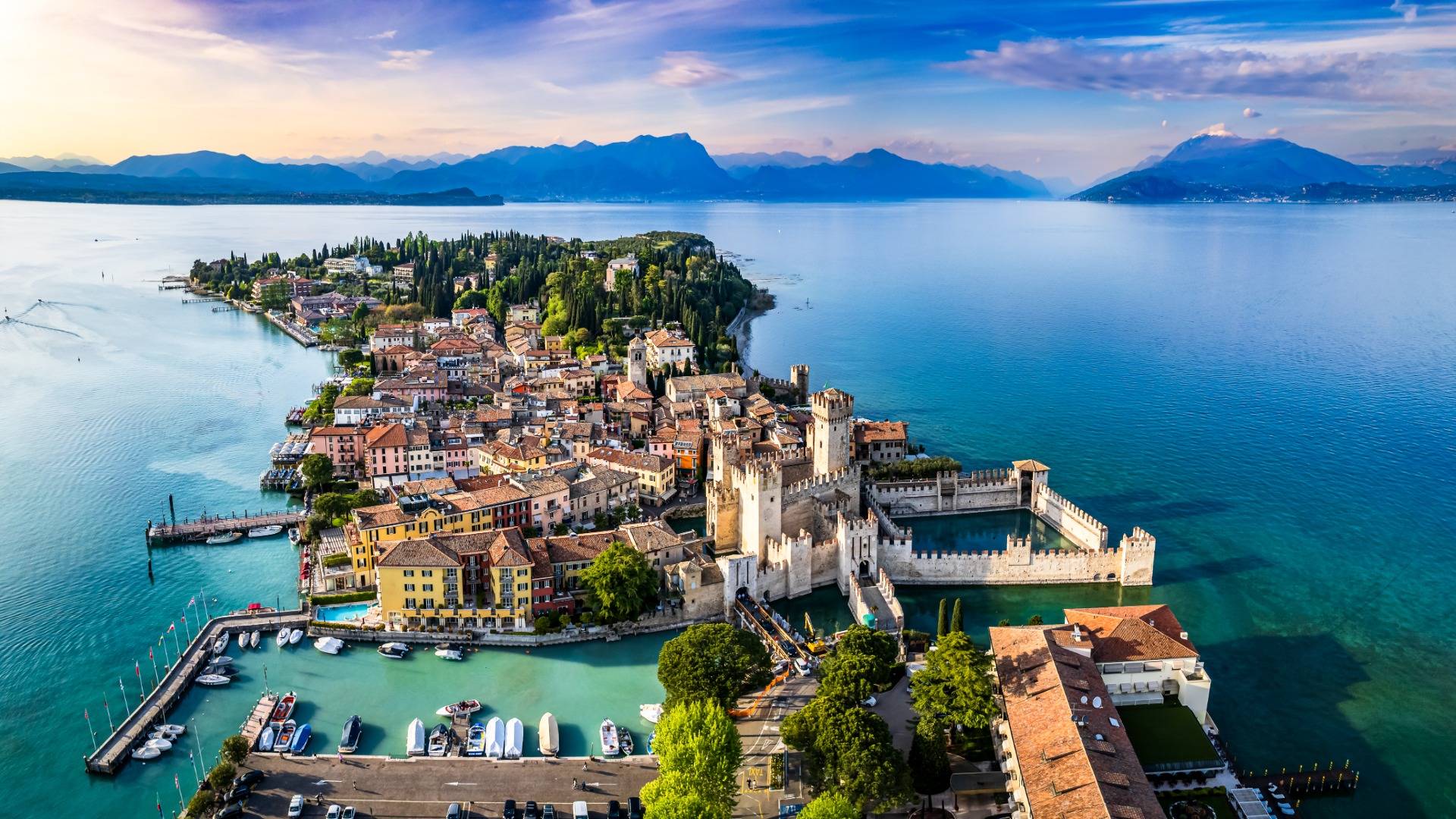
Italy’s largest lake, Lake Garda, stretches between Lombardy and Veneto, with the Dolomites rising to the north.
Take in the amazing views from Riva del Garda, a colourful town on the northern edge of the lake. To the south, wander Peschiera del Garda, a UNESCO World Heritage Site with 16th-century Venetian fortifications still standing.
In nearby Sirmione, you can soak in thermal baths. But arrive before noon if you can. It’s quieter and much more “ahh” than “excuse me”. Next, follow the shoreline, and you’ll reach the citrus-scented streets of Limone sul Garda, surrounded by lemon groves.
If you like to stay active, Lake Garda makes that easy too. Sailing, paddleboarding, windsurfing, kayaking – take your pick. The lake’s steady breezes and clear water make it one of Italy’s best outdoor playgrounds.
Lake Maggiore
Then there’s Lake Maggiore, stretching across the Italian–Swiss border. It’s a little more understated than the others, with quieter towns and a more laid-back feel.
Out on the lake, the Borromean Islands steal the show. Milan’s most powerful aristocratic clan, the Borromeos, built their retirement villas here. Wander the lavish palazzos and gardens, and spot white peacocks roaming the grounds like they own the place.
Lake Maggiore doesn’t stop at Italy. You can easily explore lakeside towns on both the Italian and Swiss shores. A popular stop is Locarno, technically in Switzerland but Italian-speaking and blessed with a sunny Mediterranean climate.
- Visit Italy and its neighbours on these multi-country Alps tours
- Related: Top things to do in Northern Italy
6. Venice
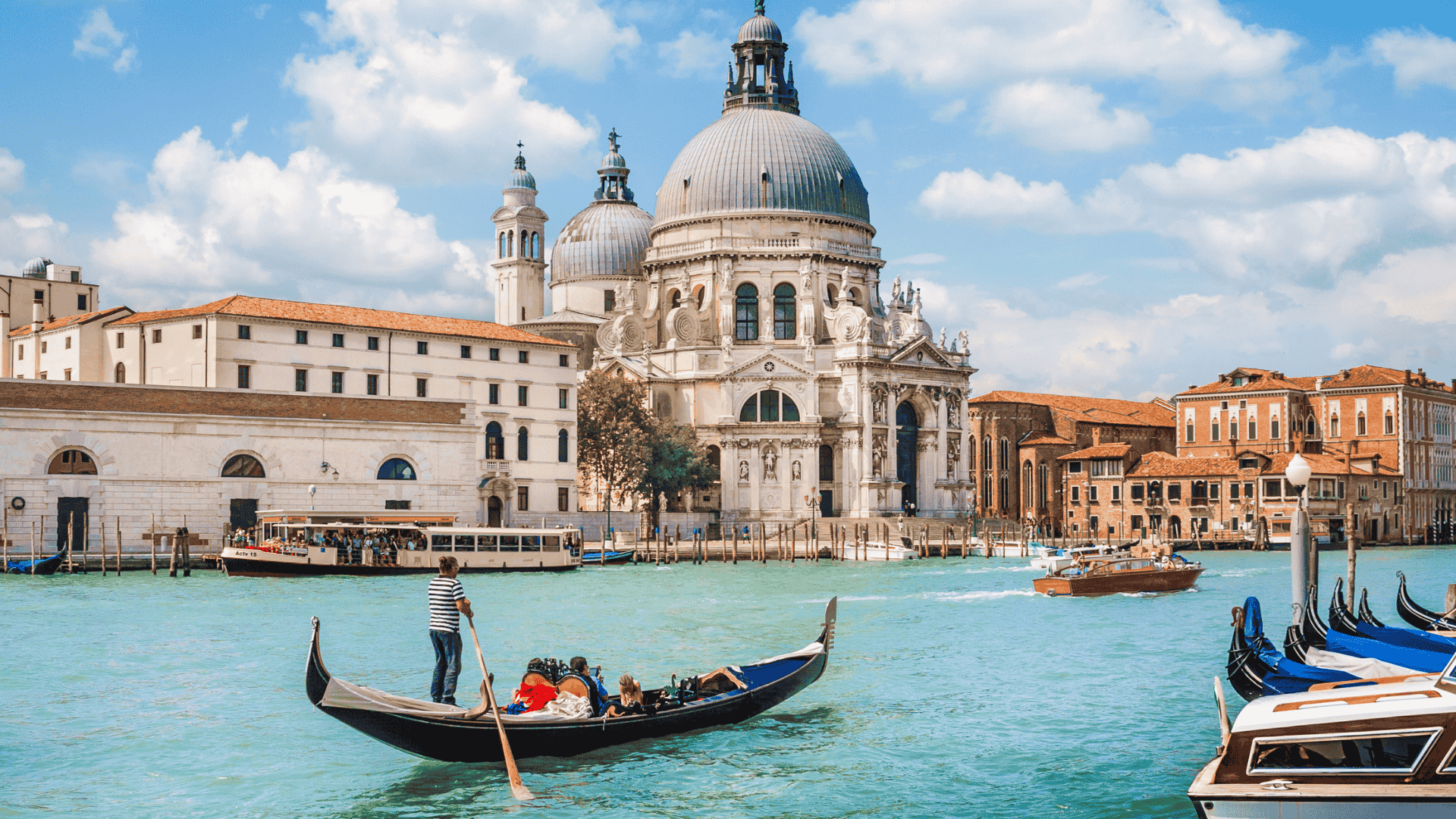
Venice floats. Literally. No cars, no roads – just canals, bridges, and boats gliding past palazzos. Built across more than 100 small islands, it’s easy to see why it’s often named among the best places to go in Italy.
Start at St Mark’s Square, where St Mark’s Basilica’s Byzantine domes rise above the Venetian Lagoon. Just steps away, you’ll find the Doge’s Palace.
A guided tour is one of the best ways to experience it. Move through vast chambers, along hidden passageways, and across the Bridge of Sighs, with the stories bringing it all to life. From there, it’s an easy wander to the Rialto Bridge.
Have you really been to Venice if you’ve not seen it from the water? A gondola gives you the slow, romantic version. A vaporetto (water bus) down the Grand Canal is the everyday one for a fraction of the price.
When the sun sets, do as Venetians do. Find a small bàcaro (a traditional Venetian wine bar), order a glass of wine, and try a few cicchetti – Venice’s answer to tapas.
- Let the journey be part of the adventure on a Europe train tour
- Related: Best cities to visit in Italy
7. Verona
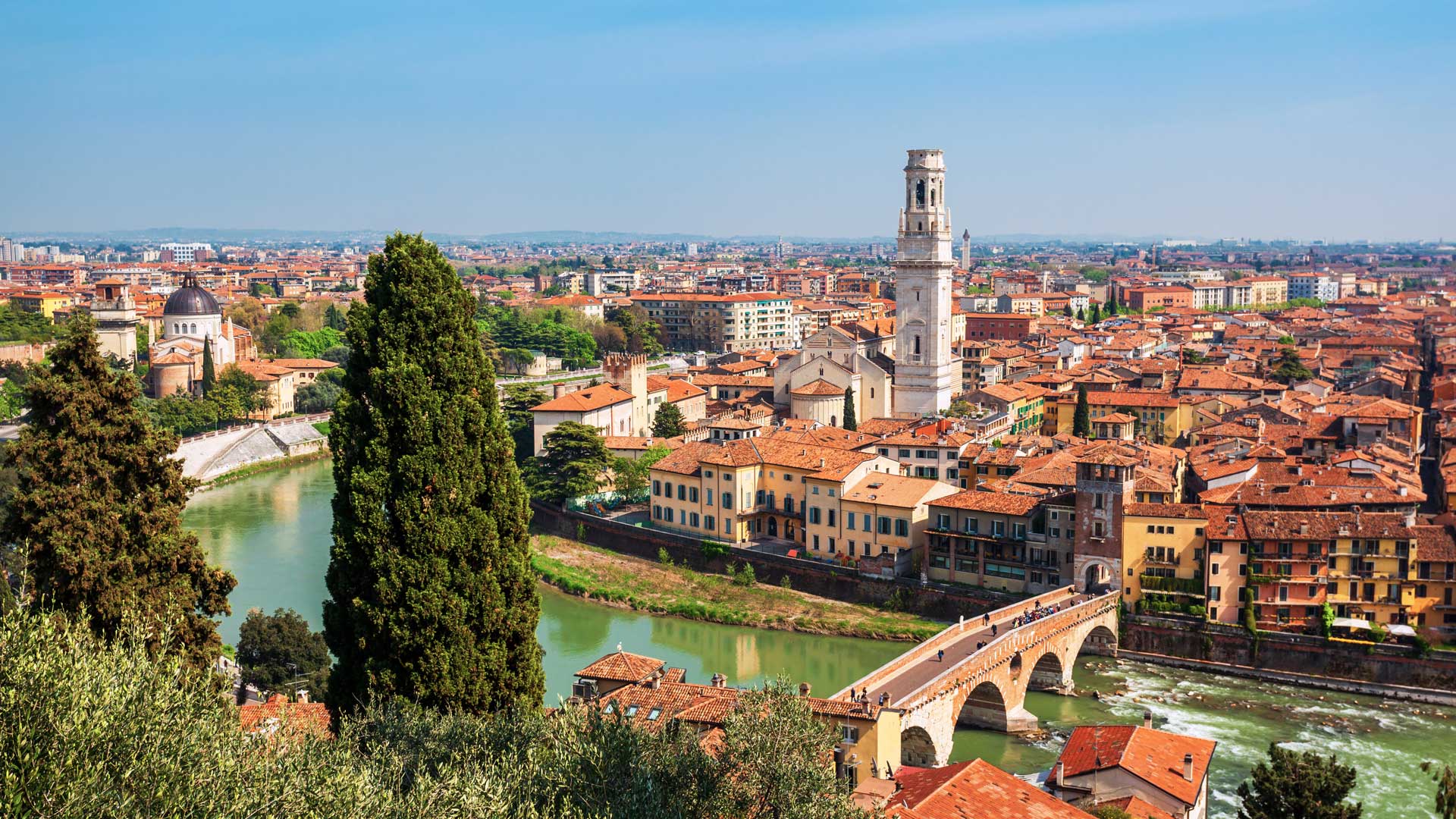
An hour west of Venice by train, Verona makes an easy day-tripping option. Step out of the train station, and you’re already within walking distance of the historic centre.
Make your way to the Verona Arena (“Arena di Verona”), an enormous Roman amphitheatre that’s been standing since the 1st century AD. It’s smaller than the Colosseum but really well preserved, and still hosts opera performances on summer nights.
Imagine sitting in a 2,000-year-old arena, watching Aida or Carmen under the stars.
But Verona has another story people come looking for. Yes, this is that Verona. The one from Shakespeare’s Romeo and Juliet.
And yes, you can visit Juliet’s House (“Casa di Giulietta”) and look up at the famous balcony. Is it a little theatrical? Of course. Is it also fun, romantic, and strangely hard to resist? Very much so.
- Related: Best time to visit Italy
8. Italian Alps
Italy’s northern edge is all peaks, valleys and crisp alpine air. This is where you come for summer hikes, world-class skiing in winter, and cable cars that lift you above the clouds.
Trento
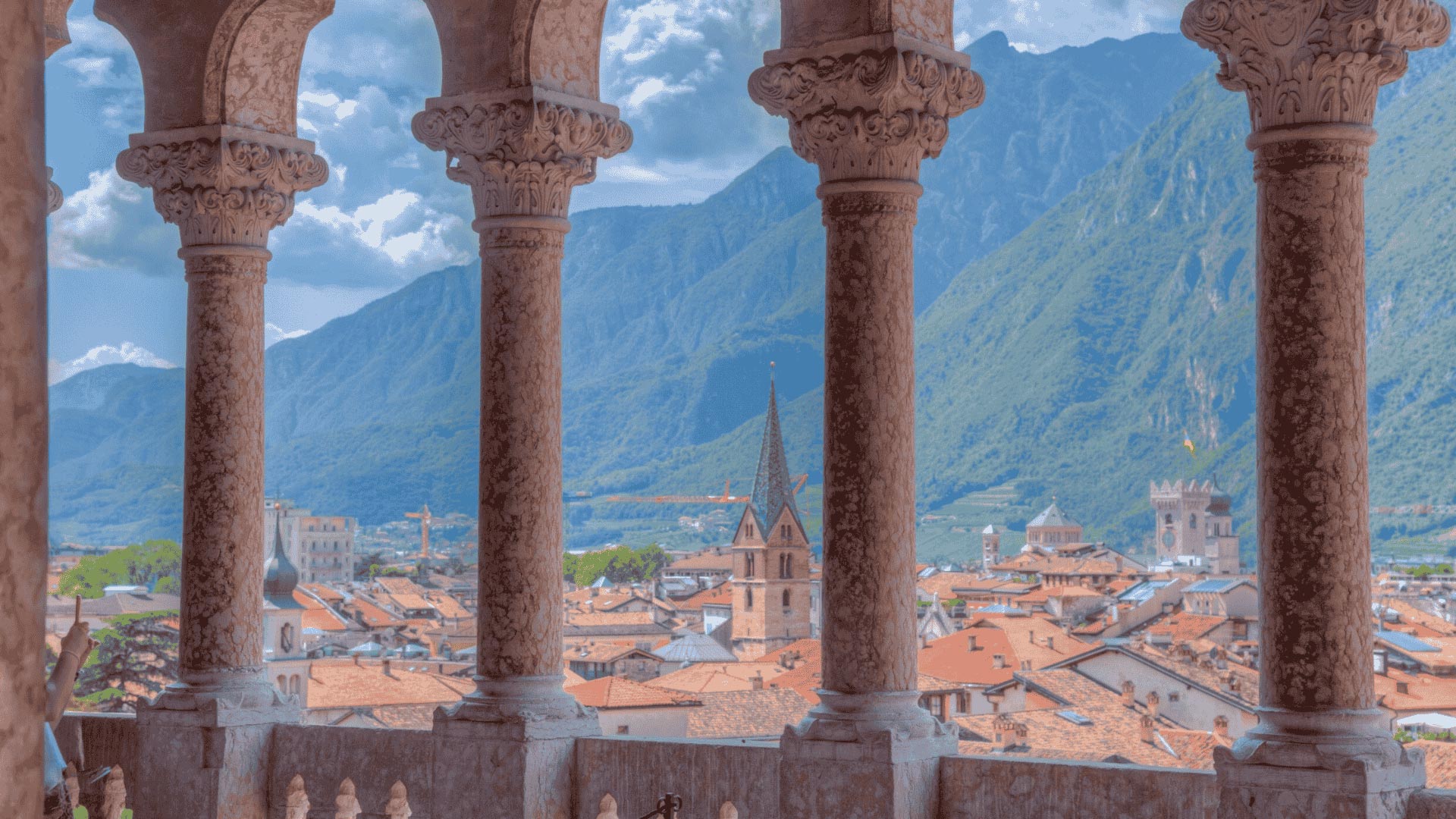
At the foothills of the Alps, Trento is a compact historic city with frescoed buildings, lively squares, and mountains rising just beyond.
Wander the Piazza del Duomo, where the cathedral and Renaissance fountain sit at the heart of town. Climb up to Buonconsiglio Castle for medieval centuries-old artwork and views over the terracotta rooftops.
Trento is also the gateway to the Dolomites, Italy’s most dramatic mountain range. In summer, you can hike trails that wind through alpine meadows and up to jagged limestone peaks.
Come winter, the same mountains turn into one of Europe’s best ski destinations. Cortina d’Ampezzo, Madonna di Campiglio, Val Gardena – take your pick. If you’re into winter sports, you carve up world-class slopes by day, then retreat to a mountain chalet for mulled wine.
Aosta Valley
Further west, the Aosta Valley is home to Gran Paradiso National Park, Italy’s oldest national park. A beautiful tangle of hiking trails, wildflower meadows and snow-capped peaks. Keep an eye out for ibex and chamois. They’re very much the locals here.
The valley itself is dotted with medieval castles (more than 100 of them). And the food? Think heavy French influence: nutty fontina cheese, hearty stews, and small-batch wines you won’t find anywhere else in Italy.
- Related: Must-see mountains in the Alps
9. Umbria
When people ask where to go in Italy beyond the usual suspects, the answer’s often Umbria – Tuscany’s quieter, lesser-known neighbour.
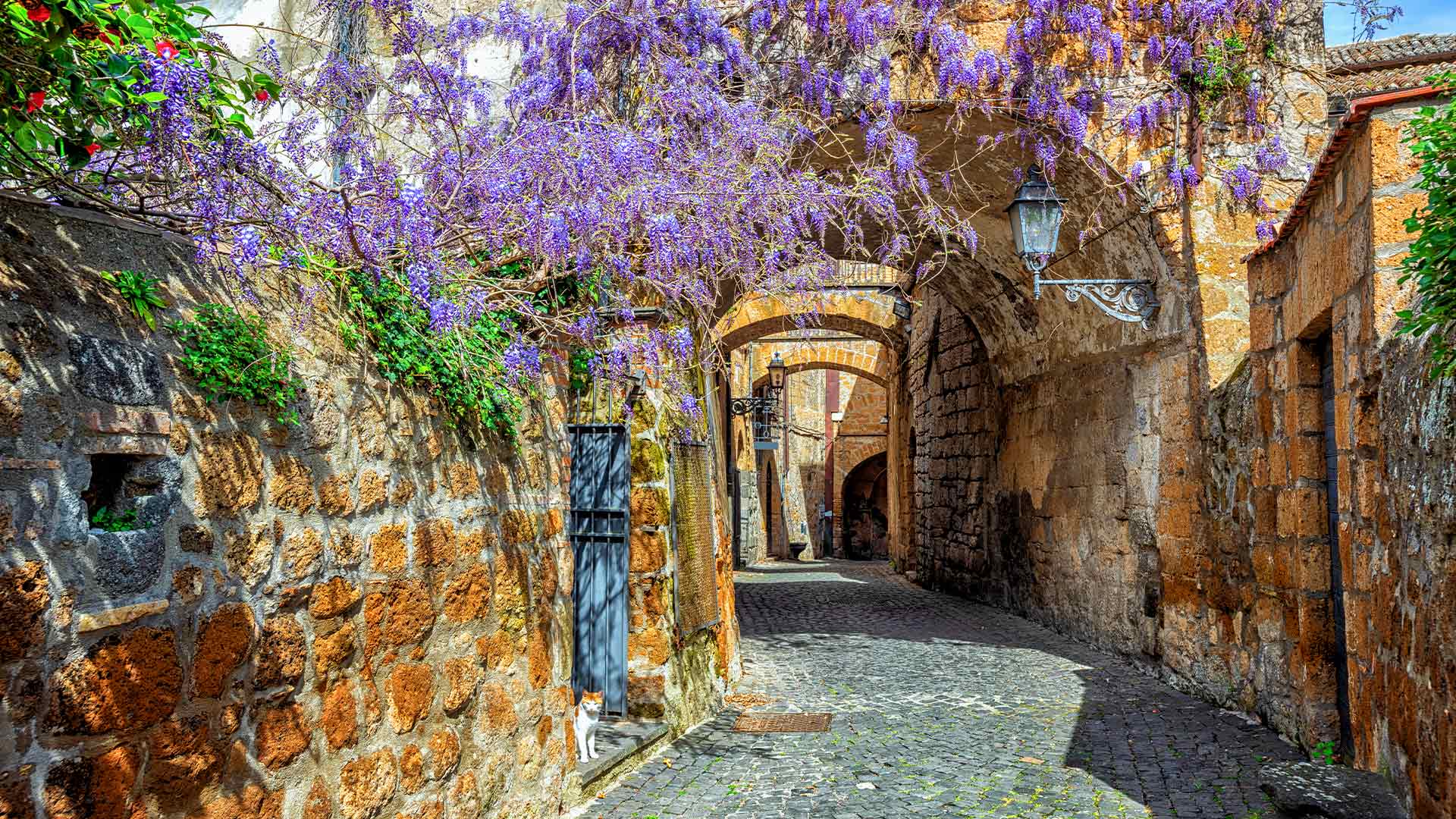
The landscape’s similar: rolling hills, medieval towns, vineyards stretching toward the horizon. But Umbria feels more lived-in, more local. And if you’re here in autumn or winter, those hilltowns become truffle-scented (yum).
Assisi is the most famous town, built into the slopes of Monte Subasio. It’s the birthplace of St Francis, and the Basilica of San Francesco draws pilgrims from around the world.
Whether or not you’re drawn by its spiritual side, it’s a lovely place to wander. Nearby Perugia, Umbria’s lively capital, adds energy to the mix, with medieval streets, café-lined squares, and a buzz that comes from being a real university city.
But part of Umbria’s appeal is how easily it invites you beyond its main towns. It’s a wonderful base for exploring the surrounding areas. Places like Orvieto, dramatically perched on volcanic rock, or Spoleto, where Roman ruins and hillside views are woven into everyday life.
10. Naples
Naples is loud, chaotic and completely unapologetic about it. Laundry hangs between buildings. Vespas weave through narrow streets. The energy’s infectious – or full-on, depending on your mood.
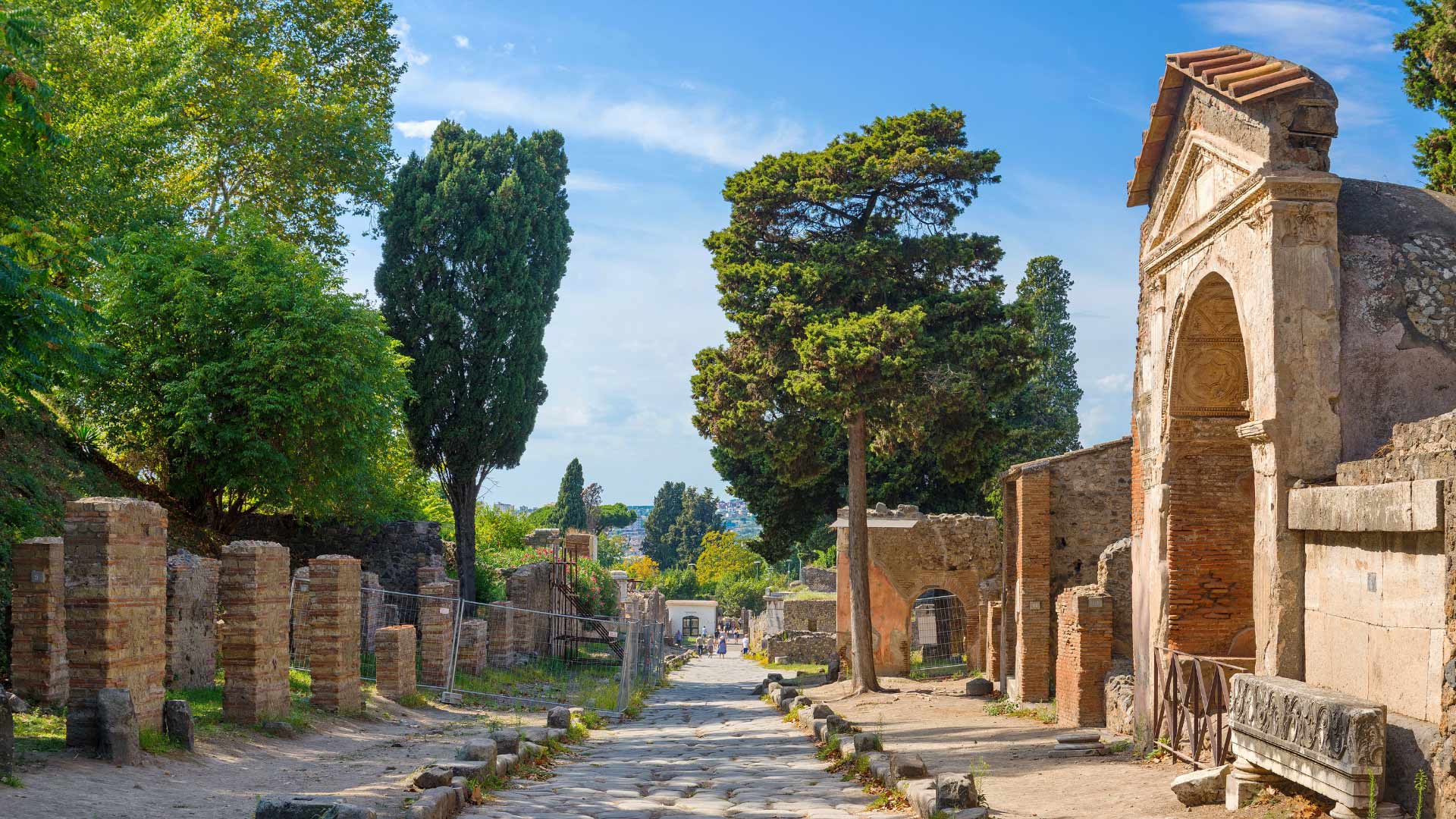
From here, one of Italy’s most moving sights sits within easy reach. You can travel back nearly 2,000 years at Pompeii, where streets, houses and frescoes still tell the story of the day Mount Vesuvius changed everything.
This is also the birthplace of pizza. And today, it’s still made the way it should be: wood-fired, with a soft, chewy crust that blistered in the oven. Simple toppings – San Marzano tomatoes, buffalo mozzarella, fresh basil. Irresistible!
11. Amalfi Coast
The Amalfi Coast is southern Italy at its most cinematic. Cliffside towns are stacked above a bright blue sea. Lemon trees scent the air. The coastline twists and turns for 50 kilometres (31 miles), each bend revealing another postcard-worthy view.
Positano
Positano is probably the first image that comes to mind when you think of Amalfi. Peach, pink and butter-yellow houses tumble down the cliffs towards a pebble beach and a scatter of boats.
Below, Spiaggia Grande stretches along the shore, its orange umbrellas adding another splash of colour (not that it needs it).
Take a dip, stretch out on a sun lounger, then wander the steep lanes lined with boutiques selling linen clothes and handmade sandals.
Ravello
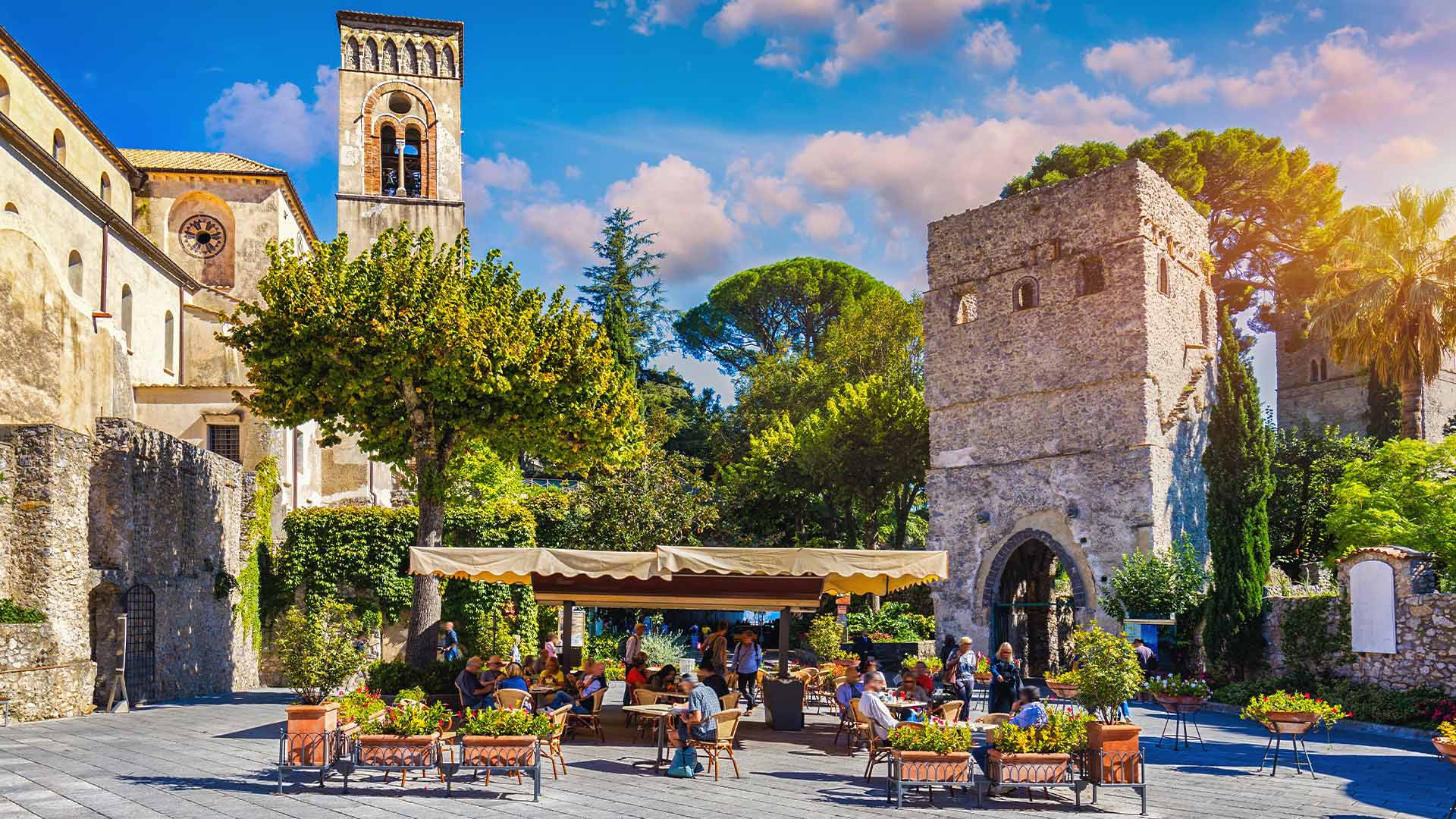
Perched 365 metres (1,200 feet) above the sea, Ravello is where you come to look out rather than look around. It’s quieter, cooler, and home to some of the coast’s most stunning gardens.
Villa Cimbrone and Villa Rufolo both have terraces that seem to float above the sea.
Sorrento and Capri
While they’re not technically part of the Amalfi Coast, many trips also weave in nearby Sorrento or a boat ride out to Capri.
Sorrento sits high above the Bay of Naples, with views that stretch on and limoncello that makes a very good case for staying a little longer.
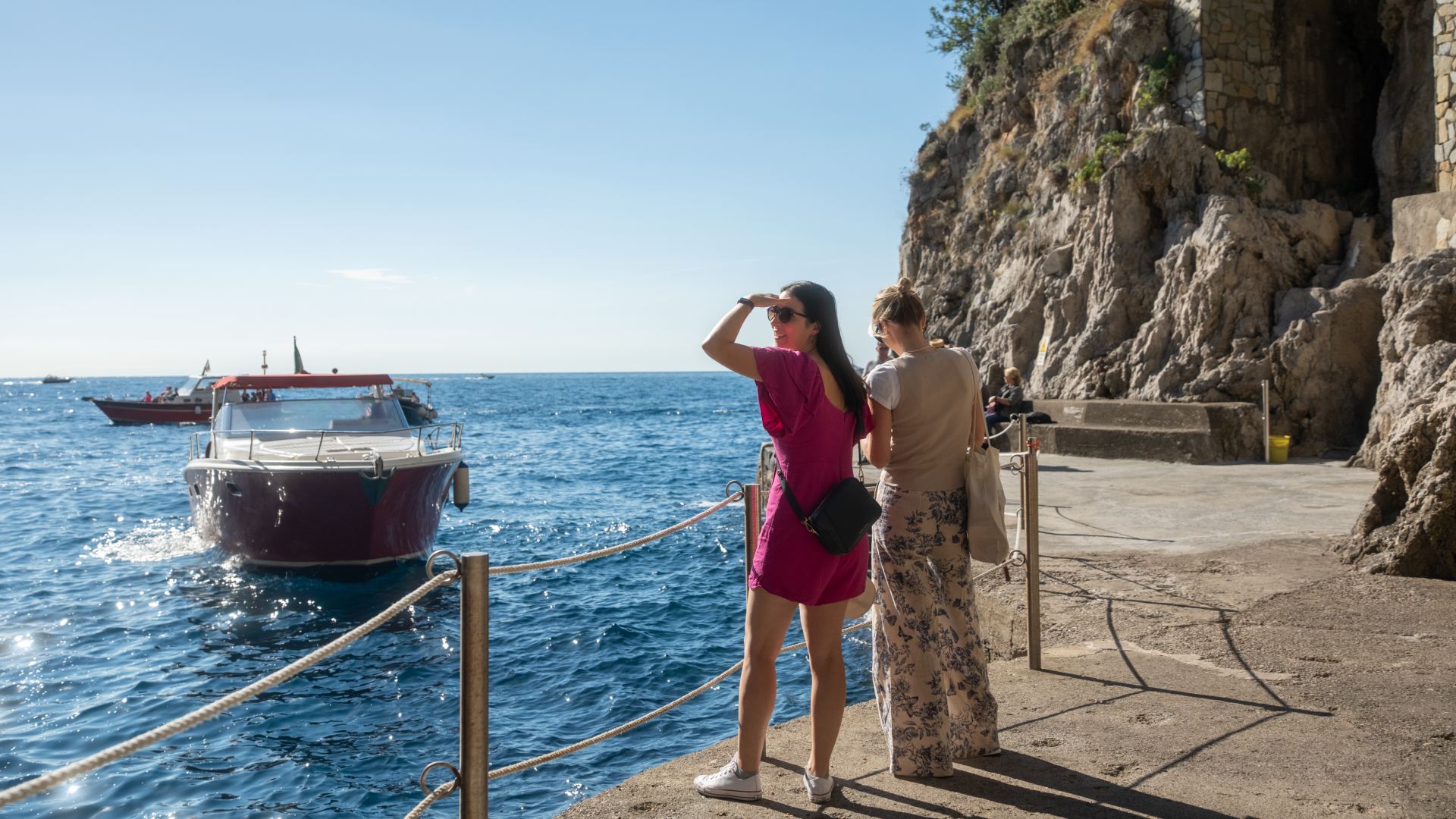
From here, catch a ferry to Capri, the island where Roman emperors once retreated. You might venture into the glowing Blue Grotto. Sunbathe at Marina Piccola beach. Then end up at Piazzetta – Capri’s tiny main square, where everyone gathers for people-watching over a well-timed apperitivo.
Experience the best vacation spots in Italy with us
There’s always more to Italy than you can fit into one trip. And that’s part of the fun. For now, choose the places that pull you in.
This guide shows just how many versions of Italy you can pick from. You might start with the icons. You might skip straight to the quieter countryside. You might fall for Positano and never want to leave.
Our local experts based in Rome have designed these top Italy tours to hit the highlights and dig a little deeper. We’ll arrange your accommodation, organise your local transport, and map out your route.
But you also have the freedom to make it your own. A cooking class in Rome. A gondola ride through the Venetian canals. A winery experience in Tuscany.
Already starting to picture your journey? We’d love to bring it to life. Get in touch to start planning your trip to Italy.