Here's the truth, before you scroll any further: there's no single best time to visit France.
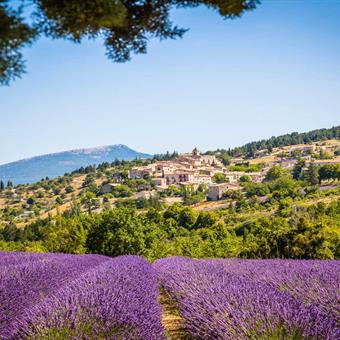
Go in summer, and you'll get long golden evenings, lavender fields in full swing, and a coastline buzzing with visitors. Go in the autumn, and you'll get crisp low light, vineyards turning red and amber, and a café table that's yours for as long as you'd like to sit there.
Both are in France. Both are worth the airfare. The lovely part is choosing the one that fits the trip you're dreaming about.
It helps to know that France doesn’t have just one climate – you could experience several on a trip here. Paris and the north stay fresh and green. The east, around Alsace and the Alps, gives you proper snow-globe winters. The south basks through summer and stays mild in the cold months.
So the best time of year to visit France depends as much on where you're heading as on the month you pick. Let's take a slow walk through the year. The weather, the festivals, the food. By the end, you'll know the best time to visit France for your kind of trip.
- Find your route with these France self-drive tours
Spring: March to May
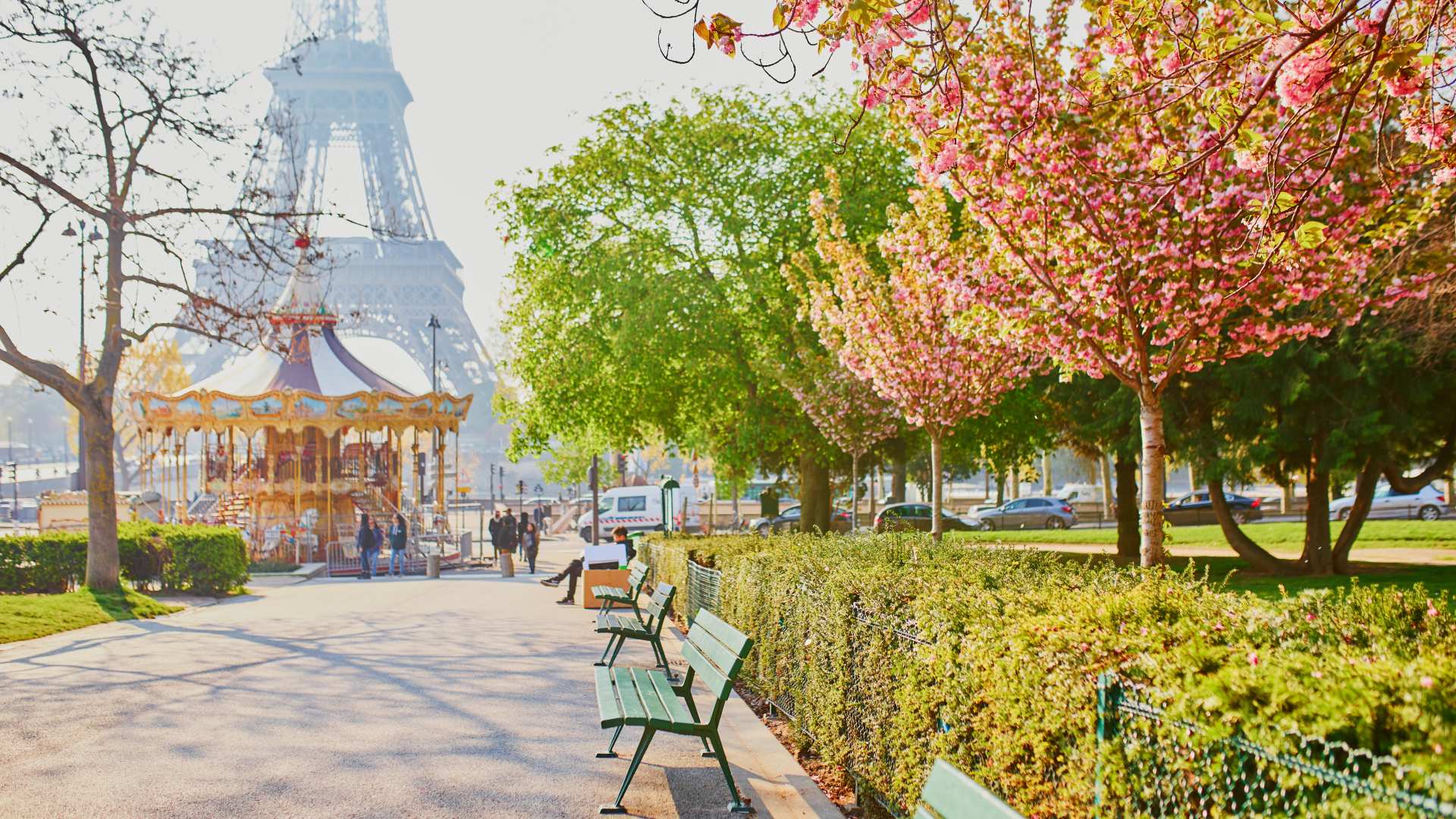
Spring is when the whole country seems to wake up smiling. The markets that dozed through winter throw their shutters open and double in size. Café chairs reappear on the pavements like the first crocuses.
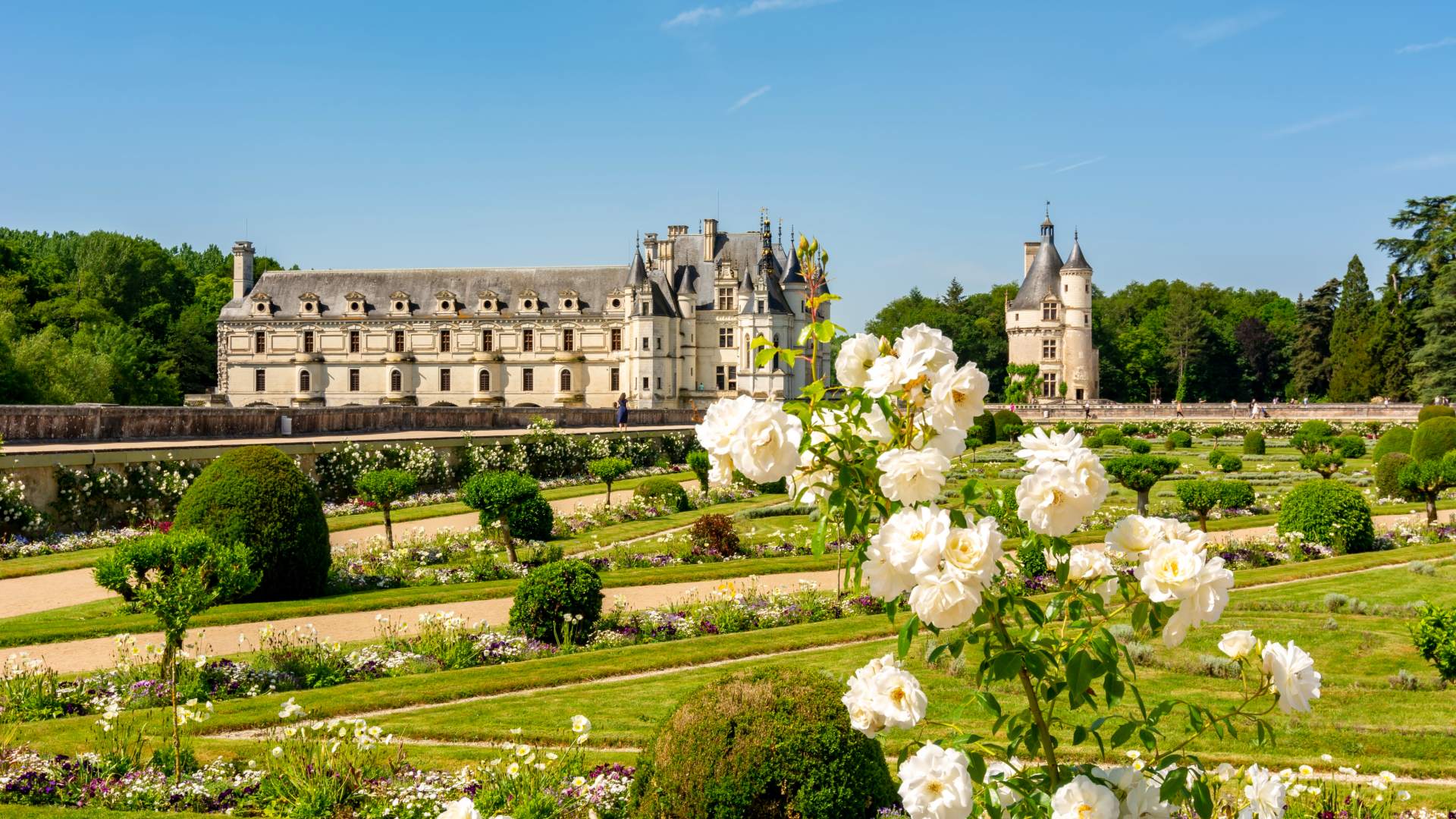
Every year I look forward to coming back to France – to the Loire Valley, where I grew up, under those wide open skies. Spring is when you want to be there. The châteaux come alive when the gardens bloom, and the Château de Chenonceau in particular stops you in your tracks: the floral displays they put inside that building are like nothing else. The Château de Villandry's kitchen garden alone is worth the detour.
- Lauriane Bourdiau, Travel Consultant
Paris in April is around 15°C (59°F), warm enough for an afternoon beside the River Seine in just a jumper. Push south, and Provence is even further ahead, with the first red poppies along the roadsides. This is classic shoulder-season magic: mild, alive, and beautifully quiet. The Easter break livens things up for a week or two, which only adds to the buzz.
If you fancy a little glamour, May sweeps the film world down to the coast for the Cannes Film Festival. Expect flashbulbs, gowns, and movie stars on the promenade.
Alexandra Þórisdóttir, who builds our France routes, makes a case for pushing the timing a little earlier:
My favourite time to visit the South of France is in early May – the days are long, wildflowers are out across Provence, and you'll beat the July heat and crowds entirely. It's a sweet spot most guidebooks don't talk about enough.
She's not wrong.
A spring morning can open under clouds and finish in shirtsleeves, so pack a layer you can peel off by lunch. But that changeability is really part of the fun. Spring and autumn are the two seasons that regulars and locals alike swear by.
- Ready when you are. Browse all our France tours
- Related: Top places to visit in Paris (plus the ones you might miss)
Summer: June to August
Now summer is where it feels like someone turns the music up.
June is, hand on heart, one of the best months to visit France. Daylight stretches past 9 PM; Paris averages a comfortable 20°C (68°F), with the south already at 25°C (77°F), and the schools haven't let out yet.
On 21 June, the whole country throws a party for Fête de la Musique. Bands set up on street corners and play for free until the small hours.
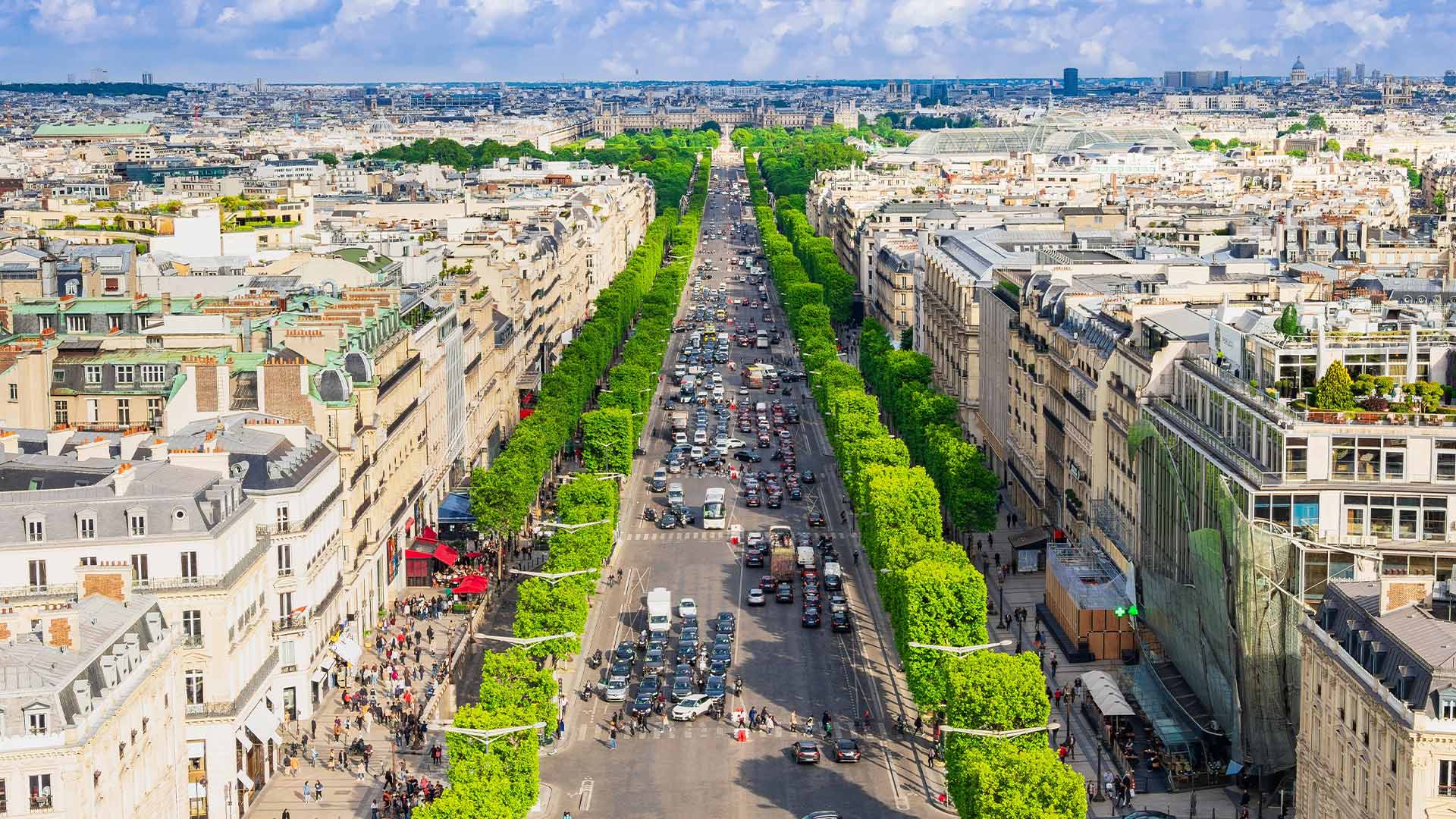
A couple of weeks later comes Bastille Day on 14 July, with fireworks blooming over the rooftops and the Tour de France sweeping toward its finish on the Champs-Élysées.
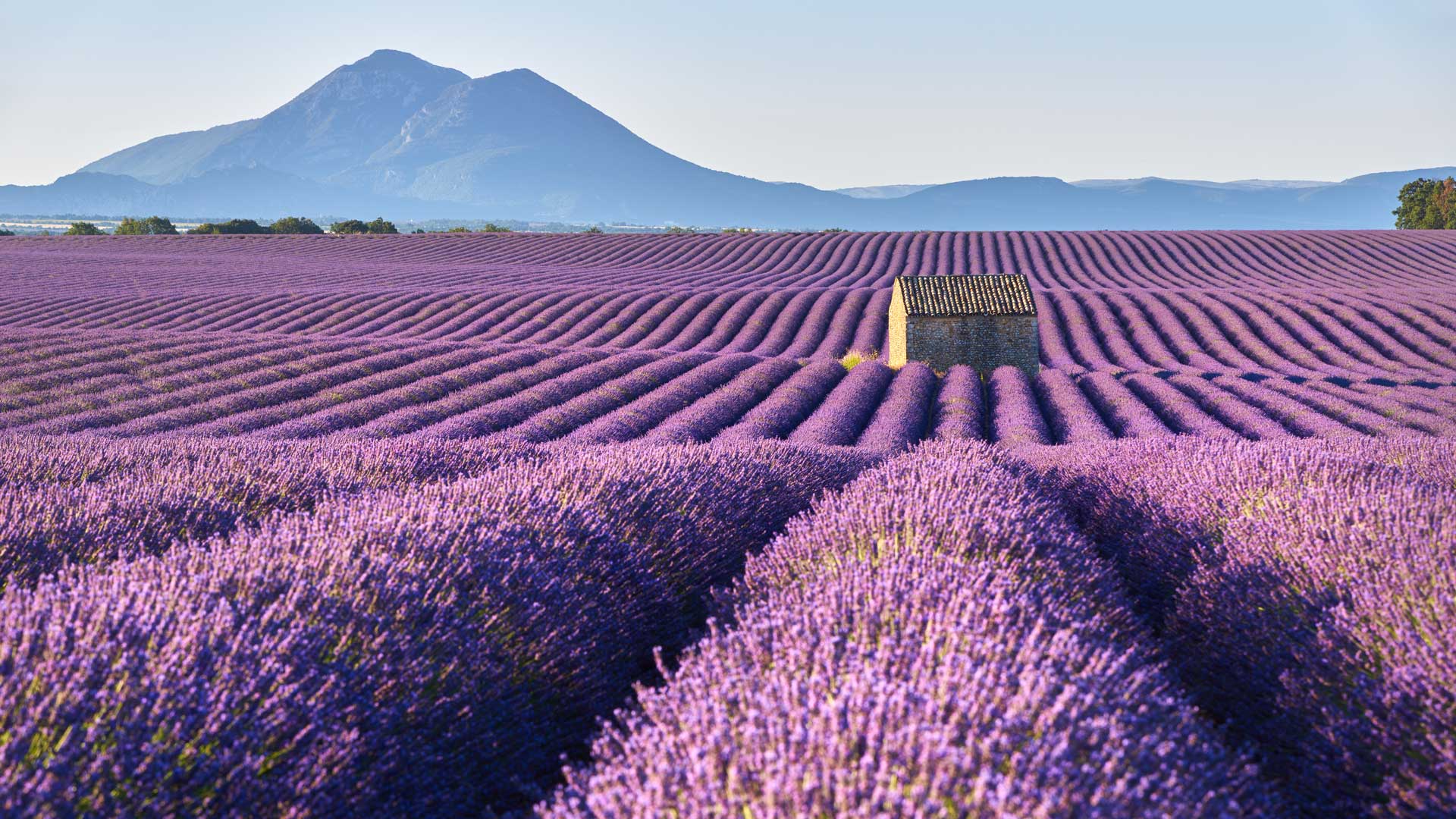
July is when Provence earns its place on all those postcards. The lavender fields hit full swing, loud with bees, and the sunflowers turn their faces to the sun. It really is as gorgeous as it looks.
It's hot, too. Avignon climbs to about 33°C (91°F), the kind of heat that has you hugging the shady side of the street. Down on the coast, the French Riviera fills with bodies chasing the same fix: water, and an excuse to stay in it
- Local tip: One thing that catches plenty of visitors off guard is that French public swimming pools don't allow classic board shorts or swim trunks on men. You'll be asked to wear close-fitting trunks instead, the Euro-short or Speedo style.
- Related: Best time to visit Provence – Your guide
This is a hygiene rule: looser shorts double as daywear and carry dirt from the street into the water, while the snug kind are swim-only. Women's swimwear isn't affected.
August is when the French close their laptops, lock up the shop, and head for the sea or the countryside. Entire Parisian streets turn blissfully calm; the city is yours to wander while everyone else is on the beach.
Prefer a cooler kind of summer? Point the car inland and uphill. The Alps and the Pyrenees stay green and breezy while the coast soaks up the sun. A lake swim at altitude, then cheese and a glass of something local on a terrace, is summer doing its very best work.
Alexandra knows that stretch well:
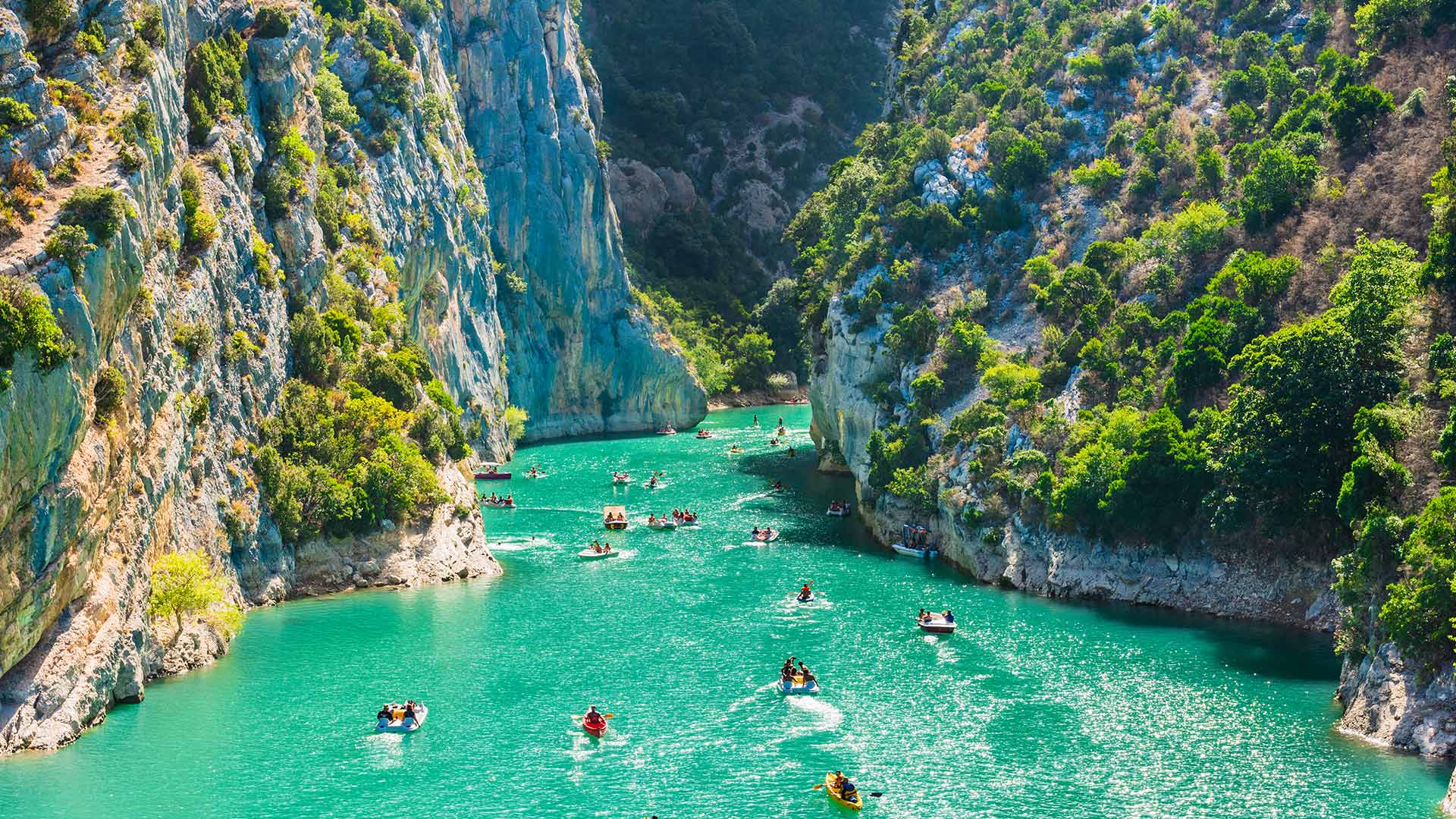
Driving into the mountains above the French Riviera is not for the faint of heart – the road takes you up quite high. But hiring a paddleboat on Lac de Sainte-Croix at the mouth of the Verdon Gorge was one of my favourite stops on the whole trip. There's something about combining water and that kind of wild scenery that I always make time for.
- See Provence bloom in summer on a tour from Paris
- Related: Must-see mountains in the Alps
Autumn: September to November
Autumn might be the most well-loved by locals.
September keeps summer's warmth and trades the summer crowds for calm. Cannes stay around 21°C (70°F) into October. The light drops low, and the vendange, the grape harvest, gets going across the wine country.
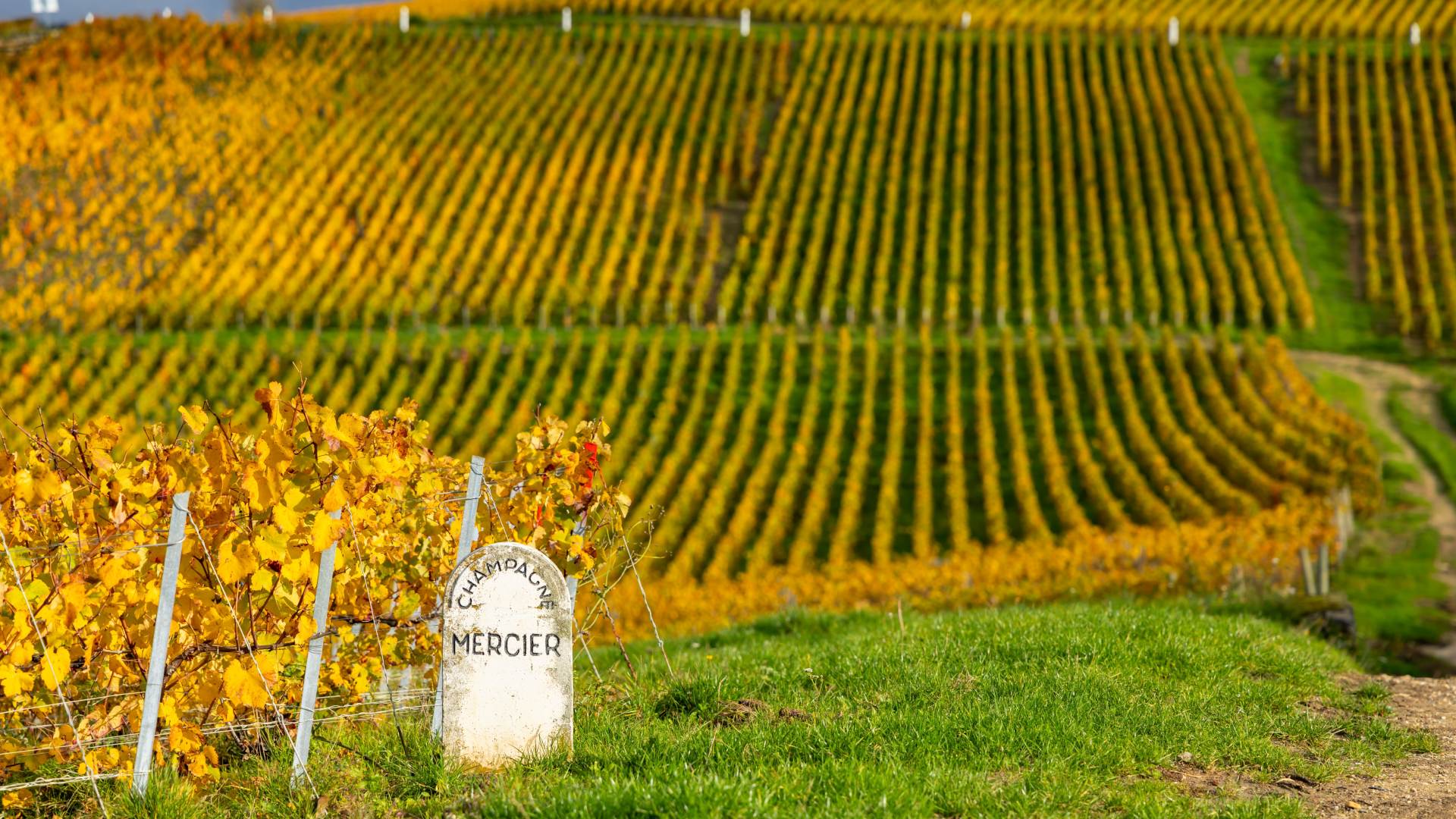
The vineyards of Burgundy, Bordeaux and the Loire Valley are gold and rusty red. And the food turns rich and generous again: game, wild mushrooms, the first cloudy press of olive oil down south.
The weather is warm enough through September to keep eating outside, glass in hand, while the leaves start to turn. On the first Saturday of October, Paris stays up all night for Nuit Blanche, when galleries and museums fling their doors open, free of charge, until sunrise.
By November the gold's gone out of it. The light goes colder, the rain sets in, and you get what locals call un temps de chien, dog weather. Still good. Just a little chillier when running between cafes.
- Explore medieval villages in autumn on a South of France tour
- Related: Best places to visit in France, beyond Paris
Winter: December to February
Winter is the cosy season, and it has a real magic of its own.
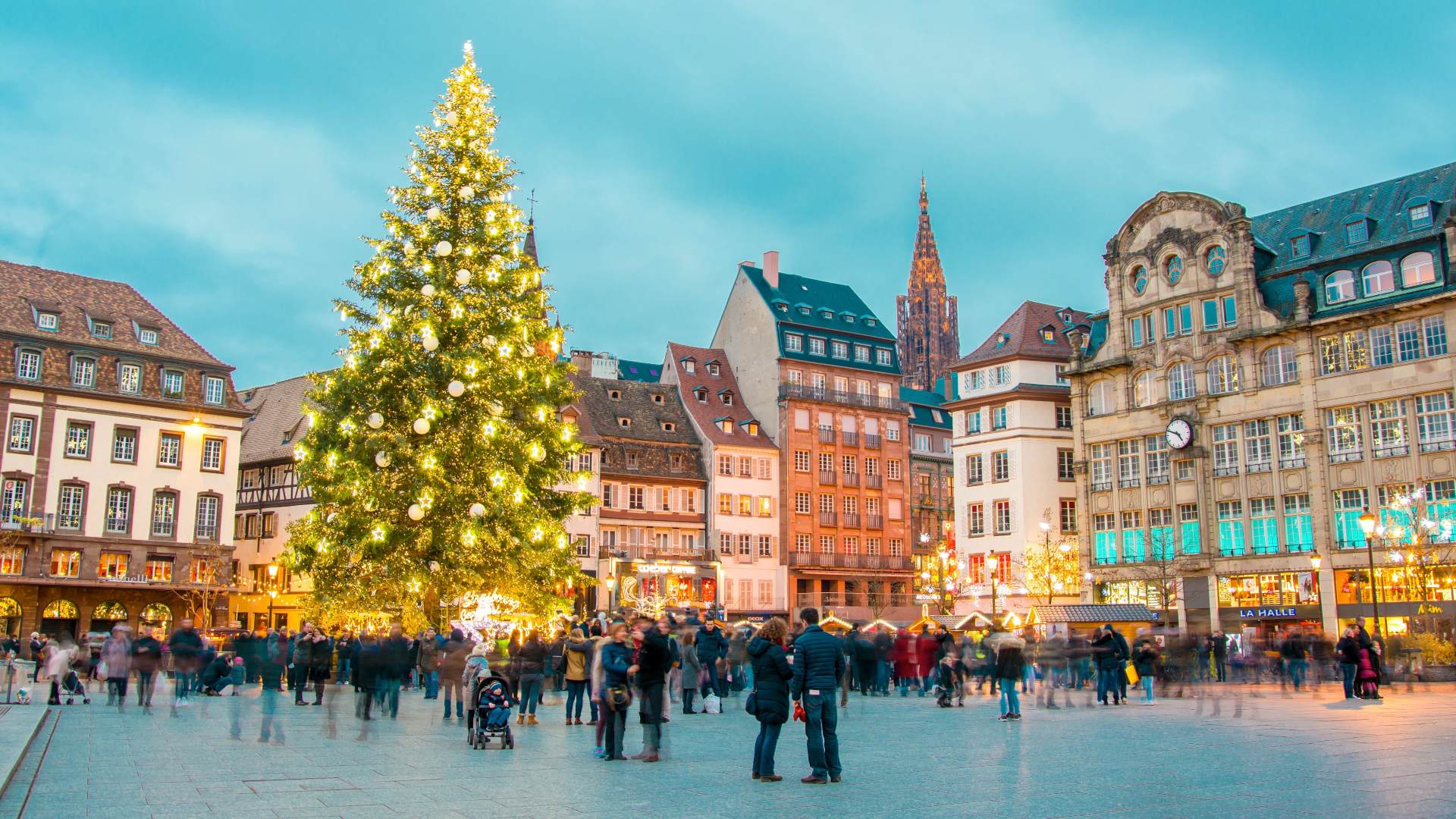
The Christmas markets are the headline act: Strasbourg and Colmar over in Alsace light up like film sets and fill the air with mulled wine and roasting chestnuts. Paris turns crisp and cinematic – the Seine silvery, the bistros warm and full of locals happy to share a corner with you.
Strasbourg's Christmas market has been running since 1570. You're standing in something older than most countries, which puts the mulled wine in a different light. Go on a weeknight if you can – the weekend crowds are real, and the magic is easier to find when you're not queuing for it.
- Emily Bavis, Local Expert
Down on the Côte d'Azur the weather stays mild, with Nice sitting around 9°C (49°F) in January. Come February, the Nice Carnival and Menton’s Fête du Citron arrive in a joyful riot of citrus and music, the first wink that spring is on its way.
- Explore beyond France and its Alpine neighbours on a multi-country Alps tour
- Related: Top European Christmas Markets – Your complete guide
So, what's the best month to visit France?
Here's the short version. For warm weather without the elbow-to-elbow crowds, aim for May, June, September or October. For lavender and fireworks, July is your month. For twinkling Christmas markets and cosy evenings, December delivers.
The best time to go to France comes down to the trip you're chasing, and that's the joy of it. Whenever you choose, you’ll find a France worth falling for.
Spring, summer or autumn, our self-drive tours of France let you to set your own pace. The route mapped and the keys waiting at the desk.
Get in touch with our local experts to start planning your trip.