Flexibility when you need it: Book With Confidence

Menu
The Grand Canal in Venice at sunrise

Italy to France by Road & Rail: Venice to Paris

Lake Garda, the Riviera & Provence

(12 days / 11 nights)

From the canals of Venice to the boulevards of Paris

Begin where Venice’s gondolas glide through mirrored canals. Drive through Romeo and Juliet’s Verona to sparkling Lake Garda, then stylish Milan. Reach the French Riviera by train, hugging a coastline of clifftop villages and glamorous harbours. Wind through the sun-bleached Roman landscapes of Provence then take another train, this time to elegant Paris. From Byzantine mosaics to Impressionist masterpieces, from Bardolino wine to café au lait – this is la dolce vita, avec plaisir.

Want more time to linger by the languid canals of Venice, or to wander the galleries of Paris? You can add extra nights in either of these historic cities during the booking steps.

12 days / 11 nights

Price p.p. from

The amount will be charged in EUR

Approx 2784 EUR

 Why choose us

  • Exceptional travel experiences designed by destination specialists
  • Carefully selected overnight stays, including breakfast
  • Reliable rental cars from our trusted partners
  • Expert guidance from our dedicated Europe-based travel consultants
  • Customisable itineraries with additional nights & authentic experiences
  • Bespoke travel documents with a personal itinerary, map & insider guides
  • 24/7 support throughout your journey
  • Trusted by travellers – read our 5-star reviews
  • Committed to responsible tourism

Read more about our services

— Cancellation Protection

  • Rebook your tour on one occasion, or
  • Cancel for any reason and receive a partial refund and travel credit

Terms and conditions apply

Tour highlights

  • Road trip and ride on scenic trains through 2 iconic countries, Italy & France
  • Hear gondoliers serenading their travellers on Venice’s Grand Canal
  • Step into Shakespeare’s world at Juliet’s House in fair Verona
  • Discover a floating ancient world on Lake Garda’s Sirmione peninsula
  • Stand before the vast Milan Cathedral and explore the Galleria Vittorio Emanuele II
  • Leave footprints on the beaches of Nice and stroll the Promenade des Anglais
  • Step into the glamour of the French Riviera in Antibes, Cannes and Monaco
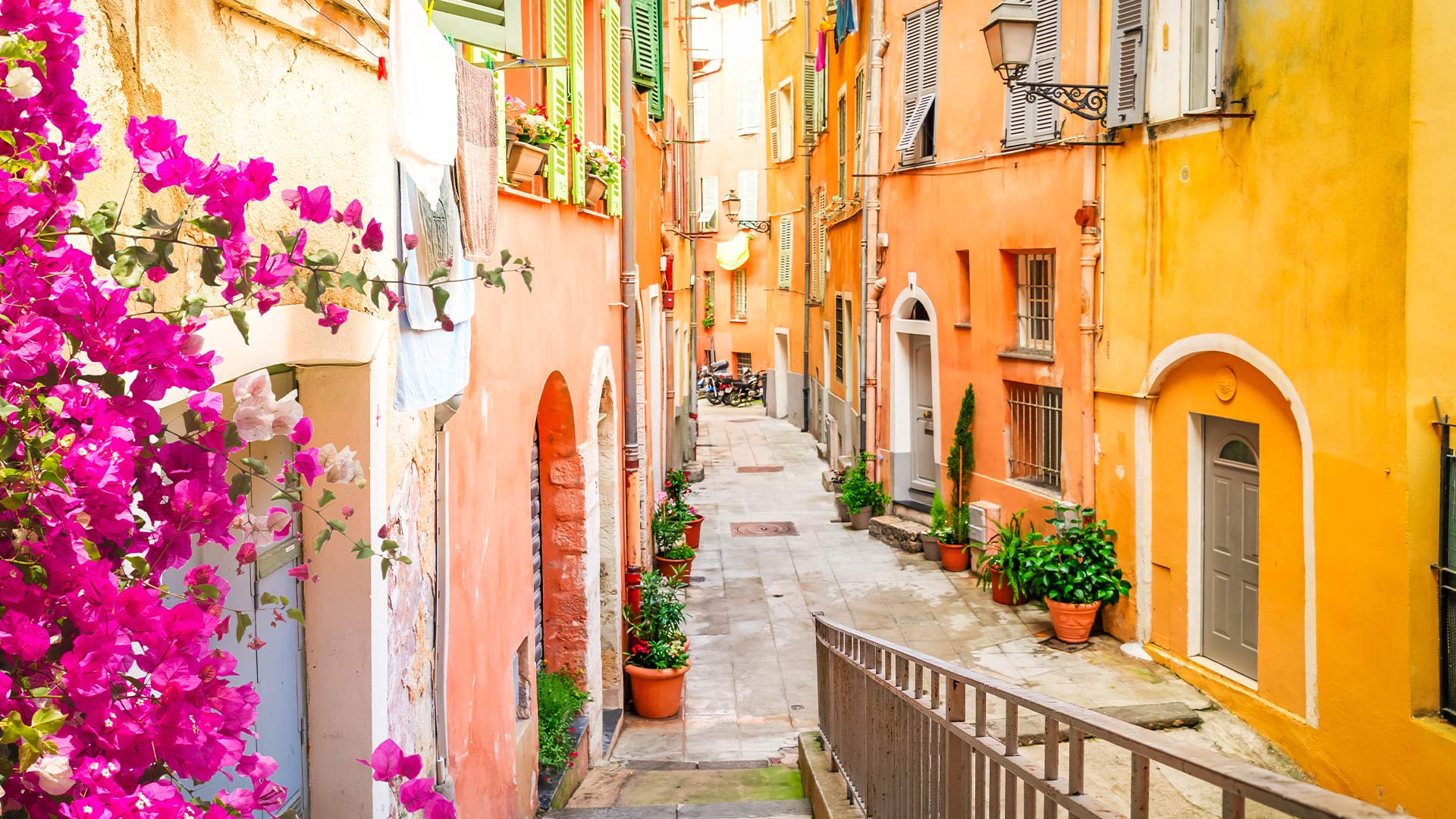
  • Browse unique handicrafts in the market squares of Provence’s lavender-scented towns
  • Trace the ramparts of Avignon and walk the echoing halls of the Palais des Papes
  • Climb the Arc de Triomphe to see the Champs-Élysées stretching out below

Travel style

Self-Drive i

Interest

Countryside and natural scenery i, Culinary experience i, Culture and history i, Honeymoon & romance i

Season

Apr - Oct

Departure

Daily

Interest

Countryside and natural scenery i, Culinary experience i, Culture and history i, Honeymoon & romance i

Driving distance

890 / 560 km/mi

Start / End

Venice Paris

Itinerary

A day-by-day plan to guide your journey.

  • Day 1: Ciao, Venezia

    Benvenuto in Italia. You begin your adventure in Venice, the home of Marco Polo – one of the most famous travellers in history. Venice is a city in which every journey feels like an adventure. Pick your way through its alleys and over its delicate bridges to St Mark’s Square, the beating heart of the city.

    Saint Mark’s Basilica broods to the square’s east. Its crystal blue domes float like bubbles above the city’s skyline. Prepare to be transported to a realm of ancient faith when you step over its threshold. As the sun goes down, a gondola ride through the city’s web of canals will make your heart sing.

    Spend the next 2 nights in the Venice area.

    Attractions Attractions Attractions Attractions Attractions See activities for this day
  • Day 2: Canal-lined streets in the Lagoon City

    Wake to the sound of gondoliers picking their way through Venice’s waterways. Spend today getting a little lost and see what you might find.

    Head back to St. Mark’s Square to find the old maritime republic’s centre: the Doge’s Palace. It preserves centuries of Venetian power and intrigue. Join a guided tour to be dazzled by the Palace’s riches, and to cross the Bridge of Sighs to see its darker side.

    Art lovers should seek out the Scuola Grande di San Rocco – Tintoretto’s paintings fill the walls, floor to ceiling. Then walk through winding streets to where the Rialto Bridge offers those classic Grand Canal views. 

    Spend another night in the Venice area.

    Attractions Attractions Attractions Attractions Attractions Attractions Attractions See activities for this day
  • Day 3: Shakespeare’s Verona & gleaming Lake Garda

    Collect your car and watch Venice dissolve like a mirage in your rearview mirror. Along the way to Lake Garda, Verona forms ahead. Shakespeare’s Romeo & Juliet breathed passion into this city’s cobblestones. Juliet’s House has a balcony honouring its most famous scene.  

    From here, be guided by Verona’s rhythm. Throw yourself into the atmosphere of the lively Market Square. Only short walks away, the Torre dei Lamberti tower and Roman Arena both offer you a glimpse of the city’s history

    Later, drive on to where the evening sun sparkles against the surface of Lake Garda. The Bardolino region is famed for its wine – after parking your car for the night, why not sample a glass? You’re in Italy, after all.

    Spend the next 2 nights in Lake Garda area. 

    Average driving distance: 220 km / 140 mi

    Attractions Attractions Attractions Attractions Attractions Attractions Attractions See activities for this day
  • Day 4: Exploring the south of Lake Garda

    Sirmione has captured hearts for millennia, and today it will add yours to its list. Its old town sits on a razor thin peninsula, narrow streets giving way to lake views and the ruined Grotte di Catullo. You’ll pass over the narrow Ponte Levatoio bridge and through the gates of the imposing Scaligero Castle to get there.

    Next up is Desenzano del Garda, the liveliest town on the lake. Pull up a chair in Piazza Malvezzi and watch the world go by around you. Then continue east to Peschiera del Garda – star-shaped, canal-laced, and very Venetian. Settle in for dinner and a glass of local Bardolino wine.

    Spend another night in the Lake Garda area. 

    Average driving distance: 80 km / 50 mi

    Attractions Attractions Attractions Attractions Attractions Attractions Attractions See activities for this day
  • Day 5: The road to Italy’s fashion capital

    Leave the lake behind this morning and cruise west to chic Milan. Drop off your rental car and head to the city’s central square, where the Duomo stops you cold. Buy a ticket to climb to the rooftop, where Gothic spires needle the sky and the sun glows off Milan’s skyline.

    Just next door is the Galleria Vittorio Emanuele II, one of Europe’s oldest shopping arcades. Pass beneath its immense glass ceiling and you’ll emerge in the Quadrilatero d'Oro, a grid of narrow streets lined by the world’s most iconic designer boutiques. 

    If you’d like to experience one of Italy’s great cultural monuments, you could get tickets to visit The Last Supper at Santa Maria delle Grazie*. Just keep in mind that pre-booking is essential.

    Spend the night in Milan.

    Average driving distance: 130 km / 80 mi

    *If you would like to view The Last Supper painting, it is essential that you book your tickets well in advance.

    Attractions Attractions Attractions Attractions See activities for this day
  • Day 6: Arrivederci, Italia – bienvenue en France

    The Côte d’Azur says a spectacular hello today. Your train from Milan takes you through rugged Italian farmland, carving south-west towards the Mediterranean. At Ventimiglia, change trains to cross the French border in style.

    Your train to Nice traces the coast so closely you’ll see waves breaking on the rocks below, Italian hill towns giving way to terracotta-roofed French villages. Secluded coves pass beneath your window, and then you’re pulling into one of the French Riviera’s liveliest cities.

    Get your bearings at the iconic Promenade des Anglais. Ocean waves break gently against the pebbled shore while locals and vacationers alike stroll the 7-kilometre walkway. Walk east to Castle Hill and climb its viewpoint to see the city and the Baie des Anges spread out below.

    Spend the next 2 nights in Nice.

    Included:
    • First-class train journey from Milan to Ventimiglia
    • Train journey from Ventimiglia to Nice

    Attractions Attractions Attractions Attractions Attractions Attractions See activities for this day
  • Day 7: Following the Riviera coastline

    Today you discover the sun-soaked beauty of the French Riviera by road. Pick up your car and cruise to the impossibly scenic Villefranche-sur-Mer. Spend some time getting lost in the streets of its pastel-fronted Vieille Ville.

    A short way inland is Èze-Village, balanced on a hill 427 metres above the sea. Follow its narrow streets up to the Jardin Exotique, where the ocean views stretch to the horizon. Then continue along the coast to the suntrap town of Menton. The streets here are lined with lemon trees, the citrus scent clinging to every breeze.

    On your way back, cross into Monaco. Park and follow the Formula 1 circuit through the streets on foot, then walk through the elegant old town to find the Prince’s Palace.

    Spend another night in Nice.

    Average driving distance: 60 km / 40 mi

    Attractions Attractions Attractions Attractions Attractions Attractions Attractions Attractions Attractions Attractions See activities for this day
  • Day 8: Riviera glamour & the road to Provence

    Say goodbye to Nice and make a few more scenic stops along the Riviera. First is Antibes, where 16th-century ramparts enclose a maze of cobbled streets, morning markets, and the Picasso Museum.

    Next up, Cannes glitters beyond its film festival reputation. The hilltop district of Le Suquet, La Croisette boulevard, and the yacht-filled Vieux-Port create a tableau of Riviera life.

    Then your drive takes you north through Provençal countryside to Avignon. Get lost in the medieval town centre until you find the Palace of the Popes – a fortress-like building once the seat of the Catholic Church. Stay until sunset, when the honey-coloured stone glows.

    Spend the next 2 nights in Avignon.

    Average driving distance: 280 km / 175 mi

    Attractions Attractions Attractions Attractions Attractions Attractions Attractions Attractions Attractions Attractions See activities for this day
  • Day 9: Roman remnants in Provence

    The idyllic landscapes of Provence await. Your first stop is the Pont du Gard a 3-tiered Roman aqueduct that has spanned the Gardon river for 2,000 years. Then drive on to Nîmes, where a 1st-century amphitheatre and the pristine Maison Carrée temple anchor the city in Roman history. Lunch somewhere in the medieval lanes.

    Then Arles – slow, sun-bleached, unmistakably Provençal. You’ll find 2 more Roman monuments here, an amphitheatre and theatre. Then follow local culture along the Van Gogh Trail, tracing spots where the artist set his easel.

    In Avignon, return your rental car and find a tucked-away bistro in the old town centre for one final ratatouille or daube de boeuf, paired with Provençal wine (of course).

    Spend another night in Avignon.

    Average driving distance: 120 km / 75 mi

    Attractions Attractions Attractions Attractions Attractions Attractions Attractions Attractions Attractions See activities for this day
  • Day 10: Train to graceful Paris

    Say goodbye to Provence and board your high-speed train to France’s capital. The countryside shifts as you head north, and then suddenly you’re stepping out into the City of Light.

    To orient yourself, climb to the top of the Arc de Triomphe. Twelve avenues splinter outward below you, the rooftops of Paris stretching into the summer haze. Stroll the Champs-Élysées to the Place de la Concorde, relaxed today but soaked in revolutionary history.

    Cross the gilded Pont Alexandre III and follow the Seine to where the Eiffel Tower rises. 330 metres of riveted iron, its shadow sweeping the grass of Champ-de-Mars. The Trocadéro Gardens opposite frame the view perfectly – or you could climb the tower itself. Your call.

    Spend the next 2 nights in Paris.

    Included:
    • First-class train journey from Avignon to Paris

    Attractions Attractions Attractions Attractions Attractions Attractions Attractions Attractions Attractions See activities for this day
  • Day 11: Paris, the moveable feast

    Begin at the Île de la Cité, where Notre-Dame Cathedral rises from the ashes of its 2019 fire. On the same island, Sainte-Chapelle hides floor-to-ceiling stained glass, dazzling in summer light. The nearby Conciergerie tells how Marie Antoinette was imprisoned before her execution.

    Wander south through the Latin Quarter to the Panthéon – burial place of Voltaire, Rousseau and Marie Curie – and the sun-dappled Jardin du Luxembourg. Or head north into Le Marais for some of Paris’s best street food, then climb Montmartre’s steep streets to the white-domed Sacré-Cœur.

    Spend another night in Paris.

    Attractions Attractions Attractions Attractions Attractions Attractions Attractions Attractions Attractions Attractions See activities for this day
  • Day 12: Au revoir, France

    One last morning. Stroll through the Jardin des Tuileries, where Parisians laze on iron chairs, and pause for a final croissant and café au lait at a red-awned bistro – it's compulsory. Nearby is Musée d'Orsay, an art gallery housed within a grand, retired train station.

    When your flight is drawing nearer, take the RER or hop in a taxi to the airport. We can arrange a private transfer, if you’d prefer. Watch the grand boulevards glide past your windows as you depart the city.

    And if you’re already missing France, don’t worry – you can always come back.

    Attractions Attractions Attractions Attractions See activities for this day

Optional extras

We recommend adding your extra activities to the tour now for the best booking experience and to secure your spot, as activities are likely to sell out.

Map

Here’s a map of your travel route, to help put things in perspective.

FAQs

Everything you need to know about this tour before you book

Got questions about this self-drive tour? We've answered the ones that come up most often below – so you can go into your European adventure knowing exactly what to expect.

On a self-drive tour, we hand you the keys to a quality rental car and a detailed personal itinerary – then let you get on with it. You’re the driver and the tour guide. The road trip playlist is entirely your call.

Before you set off, your personal travel consultant will have pre-booked everything that matters: rental car, accommodation, and any planned activities listed in your itinerary.

Everything else is yours to shape. The highlights we’ve suggested along the way are Nordic Visitor favourites – places we think you’ll love. But if something catches your eye, or a village looks worth a detour, stop. That’s the whole point.

On arrival, you’ll receive your full itinerary, a hand-annotated map, and our own Travel Guide – everything you need to feel confident from day one. And if you ever need us, our 24/7 helpline is just a call away throughout your trip.

Yes, you can customise this tour online. During the booking process, you can add extra nights to your itinerary as well as optional day trips, excursions and upgrades. 

If you have something specific in mind, please let your travel consultant know at the time of booking. They'll see what they can do to accommodate you. 

Absolutely. Many of your itinerary days are flexible, allowing you to add optional activities. These could be cultural experiences, outdoor adventures, and other things that make your trip richer. Of course, sometimes, most of your day could be spent travelling or exploring something specific, meaning there may not be time for extra experiences in every case.

You’ll be able to customise your trip by adding extra activities in the booking steps. Pick what speaks to you. Leave out what doesn’t.

Absolutely. During the booking steps, you'll see the option to add extra nights at the beginning or end of your trip.

If you're looking to stay longer somewhere in the middle of your itinerary, get in touch. Your travel consultant will be happy to help.

So when do you check in? And what can you expect upon landing in Italy?

After picking up your luggage, make your way to your accommodation. Italian cities are well connected to their respective airports.  Simply hop on public transport, catch a taxi or book an optional private transfer.

Check-in times vary between hotels and guesthouses, but it normally starts around 3 PM. You are welcome to request an early check-in for an additional fee. Although this isn’t always available, you’ll be able to store your luggage at the hotel if you have to wait. Please contact your travel consultant well in advance of your arrival if you’d like an early check-in.

France – especially the countryside – is a pleasure to discover by car. Roads are generally well-maintained, signage is clear, and outside the cities, traffic is rarely a problem.

One French quirk worth knowing: at unmarked junctions, the vehicle coming from the right has priority (priorité à droite). It catches visitors out more than anything else. Take it steady at first and you’ll find your rhythm quickly.

Italy is a step livelier. Drivers are expressive, cities are busier, and smaller towns can involve some genuinely narrow streets. That said, it’s perfectly manageable. Stay alert, take it at your own pace, and don’t be surprised if someone overtakes on a road where you wouldn’t.

Outside the cities, Italian driving is actually quite enjoyable. Quiet roads, beautiful landscapes, and very little to worry about.

A few things apply in both countries: seatbelts are compulsory for all passengers, and mobile phones at the wheel are illegal. Additionally, in Italy, headlights must be on at all times outside built-up areas.

Yes, both France and Italy operate Low Emission Zones (LEZs) in many cities, and they’re expanding.

In France, these are called Zones à Faibles Émissions (ZFE). Paris, Lyon, Grenoble, and Strasbourg are among those with active restrictions, and the rules are expanding. Your rental car will need to display a Crit’Air vignette. It’s a colour-coded sticker indicating its emissions category.

Italy’s equivalent is the Zona a Traffico Limitato (ZTL). A restricted traffic zone found in the historic centres of many cities, including Florence, Rome, and Bologna. These are enforced by cameras, and fines are issued automatically to vehicles that enter without a permit.

As a general rule: park on the edge of the old town and explore on foot. You’ll have a better experience that way anyway. If your itinerary includes any cities with ZFE or ZTL, we’ll flag this for you and make sure you’re prepared.

Do I need to pay tolls on my self-drive route?

Short answer: yes, most likely. But here’s a few more details.

France, Italy, Switzerland, and Monaco all have tolled road networks, and your route will probably include at least some of them.

France and Italy have extensive motorway networks (called autoroutes and autostrade respectively) where you’ll pay per stretch of road you use. In Italy, pick up a ticket at the entry gate and pay at the exit. In France, you may pay either before entering or at the end of a section. Don’t worry, it’ll be clearly signed.

Both countries accept cash and card at most booths. Some lanes are card-only, so it’s worth having one handy regardless.

Switzerland and Austria work differently: instead of per-road tolls, you buy a vignette (a motorway sticker) to use the main highway networks.

If you collect your rental in Switzerland or Austria, the vignette comes already attached to the windscreen. You’re good to go. If you’re starting from another country, you’ll need to buy a vignette and fix it to your car before you cross the border. (You’ll find them at service stations close to the border – they’re easy to spot.)

Monaco doesn’t have toll roads, but it’s a small principality, so you’ll typically be entering via France and the same French motorway tolls apply on your approach.

How much should I budget? Toll costs vary significantly depending on your route and how much motorway driving is involved. As a rough guide, a week-long self-drive through southern France might run around €50–80 in tolls. Italy tends to be comparable.

Can I use a toll tag? Italy’s Telepass system is widely used by locals, but as a visitor paying by card is the simplest option. If you’re renting a car, ask your rental company whether the vehicle has a toll device installed (sometimes there are associated fees).

If you accidentally break a rule, the fine gets sent to your rental agency. They’ll charge your card and let you know.

Not ideal, but it happens. And it won’t derail your trip.

Short answer: it varies.

In France, it mostly depends on the city. In smaller towns and villages, parking is usually easy to find and often free outside the centre. In larger cities – Paris, Lyon, Nice, Marseille – it’s more of a challenge. And city-centre parking can be expensive.

Italian cities can be strict about parking. Where you can park, where you can drive – it’s all clearly regulated. It’s a good idea to look up parking options online before you drive into a new city. Almost always, you’ll need to pay and display a ticket in your car.

Most hotels will advise on the nearest car parks, and many provide parking (sometimes included, sometimes at a charge). In general, we’d suggest parking up when you arrive somewhere and exploring on foot from there.

Both countries take drink-driving seriously, and the limits are lower than some visitors expect.

In France, the legal blood alcohol limit is 0.5g/litre. For drivers with less than two years’ experience, it drops to 0.2g/litre. Italy matches France: 0.5g/litre for experienced drivers. But it’s zero tolerance for those who’ve held their licence for less than 3 years or those aged 21 and under.  

The practical approach: enjoy the wine (and there’s plenty of excellent wine in both countries), but if you’re driving the next morning, be sensible the evening before. When in doubt, leave the car.

Whether you need an international driving permit will depend on which country your licence is from.

You’ll need an international driving permit if your current licence doesn’t mention your vehicle of choice in Latin script. That said, to be certain, we recommend checking with official government websites before your trip.

Additionally, if you are visiting from a country outside the EU or EEA, the Austrian government requires all drivers to have an international driving permit. This includes visitors from the United States, Canada and Australia. If you have a driving licence from the UK, you do not need an international driving permit.

To drive in both France and Italy, you'll need to be at least 21, and have held your license for a minimum of one year. It's also common for a small extra fee to apply for any drivers under the age of 25.

We'll let you know the specifics when we confirm your booking. Got questions before then? Just get in touch.

Yes. This tour includes two separate car rentals – one for your time in Italy, and one for France. You'll return your Italian rental car before boarding the train to France, and collect your French rental car once you arrive. Your travel documents will include all the details on where and when to pick up and drop off each car. Just make sure you have your driver's licence and a credit card in your name ready for each collection.

Yes. Every route is yours to shape.

We’ve planned each day to balance driving time with exploring time. You’ll get all our recommendations – the scenic roads, the stops worth making, the views that deserve a pause.

Then it’s up to you. Visit them all, pick your favourites, or take a detour somewhere else entirely. This is your trip.

Yes, for popular sites, you should pre-book tickets in advance. This way you can make sure you see the spots on your travel wish-list but also secure the ideal times for you. Your travel consultant will let you know the attractions where this is highly recommended. 

To reach Nice from Milan, you'll take 2 scenic train journeys.

The first leg is the longest, around 4 hours, and carries you south from the mountains of Lombardy towards the Mediterranean coast. At the Italian beach town of Ventimiglia, you'll change to your second train.

This leg takes just under 1 hour and hugs the Riviera coastline as you cross the border into France. You'll enjoy views of the glittering sea, secluded coves and clusters of pastel-painted buildings as the train carries you smoothly into Nice.

And yes, it's included in your tour. Your welcome pack will contain all your tickets and clear boarding instructions.

The TGV from Avignon to Paris is one of the great French train journeys. It takes just under 3 hours and drops you right into the heart of the city.

Along the way, you'll enjoy views of the Provence countryside fading into the distance, before hints of France's capital appear. You'll disembark in central Paris, close to public transport and taxi options to help you reach your hotel.

And yes, it's included in your tour. Your welcome pack will contain your ticket and clear boarding instructions.

Yes, you will need to carry your luggage when travelling via train. There will be storage spaces available onboard for you to store your larger bags during each leg of your journey. We recommend bringing a case with wheels for ease.

Not all trains in Europe offer seat reservations. On some – usually quieter, regional trains – you're free to choose whichever seat you'd like at time of boarding. If seat reservations are possible (usually on longer train journeys and those which cross borders) your travel consultant will reserve seats for you and anyone else in your travel party, to make sure you sit together.

Good to know is that we don't have control over whether you will be facing forwards or backwards, or whether you are next to a window. That said, most train journeys in Europe offer incredible views, no matter where you're sitting.

On longer journeys there will likely be an onboard café for you to purchase meals and snacks. Please note that this may not be the case for shorter journeys. We recommend that you bring snacks and a drink with you for all journeys, in case refreshments are not available to purchase onboard.

On longer journeys you can expect onboard Wi-Fi and power outlets at your seats. Please note that this may not be the case for shorter journeys.

The short answer is very easy!

Most countries in Europe are either part of the European Union, the Schengen Area, or both. These are diplomatic agreements that mean visitors to one country can easily cross the border into another.

Chances are you won’t need to pass through any border control after the initial airport inspection in your arrival country. That said, you’ll still need to keep your passport handy, as there may be some spot-checks over borders.

In the larger cities and at popular attractions, yes you can expect people to speak English. That said, in smaller towns you might find people have a limited knowledge of the language. We recommend having translation apps available such as Google Translate. 

Lavender season in Provence runs roughly from late June to early August, peaking around mid-July. The fields of the Luberon are at their most spectacular – and most photographed – during this window.

If your trip falls within these dates, you’re in for something truly memorable. Exact bloom times vary slightly year on year depending on conditions, but a mid-July visit is usually the safest bet for full colour.

During your tour in Europe, you’ll stay in accommodation hand-picked by our local travel experts. We’ve partnered with local businesses and selected hotels, B&Bs and guesthouses based on excellent ratings, comfort and personal experience.

Across the region, you can choose from single, double or triple rooms. Please also note that in the countries you’ll be visiting, room types are based on European standard sizes, which means they are smaller than in North America. For example, a double bed often consists of 2 single beds pushed together. Twin rooms are 2 separate single beds. Triple rooms include a double bed along with an extra bed, rollaway or sofa bed. And single rooms are often smaller than the standard double.

Both countries are at their sunniest and warmest from June to August. Southern France and the whole of Italy can get pretty hot – temperatures regularly exceed 30°C (86°F) at this time of year. Coastal areas like the Riviera and the Amalfi Coast can feel hotter still.

Northern Italy (where you’ll find the lakes and the Alps) is slightly cooler and more variable, but still very pleasant in summer.

Pack light, breathable clothing, good sunscreen, and a hat. Plan outdoor sightseeing for the morning or early evening if the heat is intense. Early afternoons in both countries can be fierce, and many local businesses close for a few hours in the middle of the day anyway. It’s worth following their lead.

Light, breathable clothing for summer days, with a layer or two for cooler evenings. Particularly if you're heading inland or into higher ground.

Comfortable walking shoes are essential: cobblestones, old town streets, and vineyard paths all demand something more than sandals. Beyond that, pack a power adaptor (France & Italy uses the standard European two-pin plug), sunscreen, sunglasses, and a small day bag.

If you're planning to visit churches or cathedrals, a scarf or light wrap can be useful for covering shoulders. You'll want swimwear for those Riviera beaches. And a small amount of euros in cash is handy for markets, small cafés, and the occasional toll booth.

All countries you visit on this tour use the euro, so there’s no need to change currency if you’re crossing borders. Card payments are widely accepted everywhere, though smaller towns, markets, and rural cafés may prefer cash.

It’s worth keeping €50–100 in small notes handy for small purchases and incidentals. ATMs are easy to find in all three countries too.

As a rough guide, budget around €50–80 per person per day for meals if you’re eating out for lunch and dinner.

In France, a bistro lunch typically costs €15–25 per person. Dinner at a decent restaurant, €30–50. In Italy, you can eat very well for slightly less – a good trattoria lunch can come in at €15–20, and dinner at €25–40.

Markets, bakeries, and delis in both countries are excellent for putting together an affordable lunch on the road.

For petrol, France and Italy are broadly similar: around €1.70–1.90 per litre (prices fluctuate). Supermarket stations are usually the cheapest option.

In mainland Europe, tipping is not mandatory, but welcomed. It is usually based on the quality of service. Locals often add around 10% or simply round up their bill.

We’re here to help make sure your trip goes well – and that includes eating well. Just let us know your dietary requirements when you book and your travel consultant will factor them in from the start. Whether that’s an allergy, intolerance, lifestyle choice, or anything else. Breakfast is included at your accommodation each day, and we’ll make sure your needs are flagged in advance. Typical breakfast spreads include baked goods, cheese, jam, yoghurt, cereal, fresh fruit, juice, and coffee, so there’s usually a good range to work with. For lunches and dinners, most places are used to accommodating different requirements. Just let the waiting staff know when you arrive.

Vegetarian options are widely available, and gluten-free awareness has grown significantly in recent years. Vegans may find it more of a patchwork depending on the destination, but easier in cities and larger towns, patchier in rural areas. If you have a severe allergy, it’s always worth communicating this clearly and, where relevant, having a short written note explaining your needs in the local language. We’re happy to help you put one together before you travel.


You’ll be spending time in a few different regions on your tour. All of these are part of the Schengen area, which is a zone of free movement. The European countries that are part of Schengen are:

Austria, Belgium, Bulgaria, Croatia, Czech Republic, Denmark, Estonia, Finland, France, Germany, Greece, Hungary, Iceland, Italy, Latvia, Liechtenstein, Lithuania, Luxembourg, Malta, Netherlands, Norway, Poland, Portugal, Romania, Slovakia, Slovenia, Spain, Sweden, and Switzerland.

If you are visiting from Canada, the United States, the United Kingdom, Australia or another EU state, you won’t need a visa for short-term travel (less than 90 days) to a Schengen area country.

Visiting from another country? Please look up the official websites of the Nordic Visitor destinations you’ll be visiting. On them you’ll find the complete lists of countries whose nationals require visas to enter. You’ll need to apply for a Schengen visa via the country where you will be spending the most time.

Good to know: Liechtenstein does not issue visas. If you enter via Switzerland, you’ll see there is no border control. The same visa requirements apply between both countries.

Your passport needs to be valid for the entirety of your stay in Europe, and for at least 6 months after your departure date. It’s a good idea to check your passport expiry date early in case you need to renew it.

Once your tour is confirmed, we’ll get to work. Over the following weeks, we’ll put together your itinerary, reserve your accommodation and lock in all your services.

When everything is in place, we’ll send your travel documents by email – so you can read, plan, and get excited for your trip.

Then, when you arrive at your destination, a welcome bag will be waiting for you. Inside: hard copies of your personalised itinerary, our exclusive Travel Guide, and all your service vouchers. Everything you need, right when you need it.

It’s best to book as soon as you can to secure your preferred travel dates. Once you have picked your tour, check the availability calendar to see which months are open for booking. Then, select the date you want and complete your booking. 

Nordic Visitor offers 10–20% deposits so you can reserve your trip as early as it’s convenient for you. The remaining balance is due 30 days before you travel. 

Many tours are also open for the following year if you like to plan well ahead. And if you have any questions or need advice, you can always contact us

When you book this tour, we’ll ask for a 10% deposit to secure your spot. Then you’ve got plenty of time – the rest is due 30 days before you arrive.

Here’s a tip: if you pay a 20% deposit instead, we’ll include our cancellation protection at no extra cost. It's there to give you breathing room if your plans need to change.

Booking last minute? If it’s less than 30 days until your trip, we’ll need the full payment upfront.

Want to know more? Check out our payment and cancellation terms or just get in touch – we’re here to help.

Your remaining balance is due 30 days before your arrival date. Apart from the deposit, all remaining payments are managed through our Customer Portal. On this portal, you also have the option to split your payments if preferred.

All bookings are billed in Euros (EUR), the local currency of Italy.

Prices displayed in other currencies are indicative only and based on the daily exchange rate. This means conversions from EUR to other currencies will fluctuate from day to day.

After booking your tour package online, you will be contacted within 2 business days by your own dedicated travel consultant. They will be your point of contact for all your travel needs before, during and even after your trip. 

We aim to complete bookings within a few weeks. During this time we take care of booking your accommodation, activities, and transport, confirming all parts of your journey. Once this is done, your travel consultant will provide you with all the details of your trip. 

When we get back to you might depend slightly on how far ahead you’ve booked your travels and other tours running at the time. 

By booking with Nordic Visitor, you’ll have peace of mind knowing that there’s always someone there for you throughout your trip.

For support and advice during the day, you can call our office. And if anything unexpected happens outside working hours, you can reach us on our 24/7 helpline. 

During your tour, there will always be a travel expert on call to handle any unforeseen situations, such as unusual weather or events.

No need! Nordic Visitor is already working on offsetting the estimated carbon footprint of your package. We’ve partnered with an environmental fund in Iceland to carbon offset all our tours.

Carbon offsetting your international flights is not included, but we highly recommend you look into possibilities with your airline or directly through a local environment fund. 

Yes, we highly recommend getting travel insurance for your trip.

There are numerous insurance providers online, offering policies with varying levels of coverage. These will protect your finances in the event of illness or other medical emergencies, lost or damaged luggage, flight cancellation, trip curtailment, theft and much more.

Accommodation

Sleep soundly, in the accommodation type of your choice, and wake up ready to enjoy another day of exploration.

Comfort Plus

In this category, you can expect standard rooms in good quality 3-star guesthouses or country hotels. Properties usually include t..

View

Superior

In this category, you can expect standard rooms in 4-star hotels or boutique guesthouses. This will be in combination with Superio..

View

Rental car

Enjoy your journey with free GPS and Collision Damage Waiver (CDW) to reduce liability.

Peugeot 208 & Fiat 500 (automatic)
or similar

  • x4
  • x3
  • x2
  • A

Peugeot 208 & Fiat 500 (automatic)
or similar

  • Description: Economy
  • Passengers: 4
  • Suitcases: 2
  • Doors: 3/5
  • Transmission: Automatic

DS4 & Citroen C4 (automatic)
or similar

  • x5
  • x5
  • x2
  • A

DS4 & Citroen C4 (automatic)
or similar

  • Description: Compact
  • Passengers: 5
  • Suitcases: 2
  • Doors: 5
  • Transmission: Automatic

Peugeot 3008 Hybrid & Mercedes Benz C Class (automatic)
or similar

  • x5
  • x4
  • x3
  • A

Peugeot 3008 Hybrid & Mercedes Benz C Class (automatic)
or similar

  • Description: Crossover SUV/Saloon/
  • Passengers: 5
  • Suitcases: 3/2
  • Doors: 5/4
  • Transmission: Automatic

BMW 3 Series & Peugeot 3008 (automatic)
or similar

  • x5
  • x4
  • x3
  • A

BMW 3 Series & Peugeot 3008 (automatic)
or similar

  • Description: Saloon/Crossover SUV
  • Passengers: 5
  • Suitcases: 3
  • Doors: 4/5
  • Transmission: Automatic

BMW X5 & BMW X5 (automatic)
or similar

  • x5
  • x5
  • x4
  • A

BMW X5 & BMW X5 (automatic)
or similar

  • Description: Luxury SUV
  • Passengers: 5
  • Suitcases: 5
  • Doors: 4
  • Transmission: Automatic

Price per person from

The amount will be charged in EUR

Approx 2784 EUR

Other suggested tours

Italy
Venice Venice
Best seller
Self-drive
10 days / 9 nights
Apr - Oct

Best of Northern Italy – 10 days in Venice, the Lakes & Milan

1788EUR

Eur

View map
Italy
Venice Venice
Best seller
Self-drive
10 days / 9 nights
Apr - Oct

Best of Northern Italy – 10 days in Venice, the Lakes & Milan

1788EUR

Eur

Close map view
Italy
Milan Milan
Best seller
Self-drive
10 days / 9 nights
Apr - Oct

Northern Italy Road Trip – Lakes to Venice in 10 days

1788EUR

Eur

View map
Italy
Milan Milan
Best seller
Self-drive
10 days / 9 nights
Apr - Oct

Northern Italy Road Trip – Lakes to Venice in 10 days

1788EUR

Eur

Close map view
Italy
Rome Rome
Best seller
Self-drive
14 days / 13 nights
Apr - Oct

Best of Italy in 14 Days

1877EUR

Eur

View map
Italy
Rome Rome
Best seller
Self-drive
14 days / 13 nights
Apr - Oct

Best of Italy in 14 Days

1877EUR

Eur

Close map view
Italy
Rome Rome
Best seller
Self-drive
10 days / 9 nights
Apr – Oct

Best of Italy in 10 Days

1351EUR

Eur

View map
Italy
Rome Rome
Best seller
Self-drive
10 days / 9 nights
Apr – Oct

Best of Italy in 10 Days

1351EUR

Eur

Close map view
We’re here for you

Get in touch with our local experts. We’re here for you every step of the way – and that starts right here with planning.

here for you