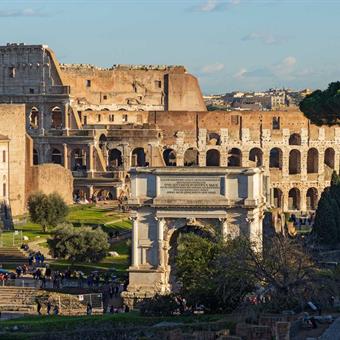
There’s no one best way to travel in Italy. There’s only the best way for you. Some travellers want the freedom of their own car, winding through Tuscan back roads at whatever pace they like. Others would rather settle into a train seat and watch the countryside glide by. And plenty of people, understandably, don’t want to plan any of it themselves.
Here, we walk you through the two decisions most people face when planning a trip to Italy: how to get around day to day and how to structure your trip as a whole. We’ll compare travelling by car and train (with a quick word on the bus), then look at self-drive road trips versus guided tours.
- Choose from self-drive, train and small group tours of Italy designed and planned by our local experts in Rome

How to get around Italy day-to-day?
For most visitors, the main options for getting around Italy are trains or a rental car. Both will get you from Rome to Florence or from Venice to Milan and beyond. Where they differ is in how you experience the distance in between.
Travelling by train
Italy’s train network connects its major cities quickly and comfortably.
High-speed trains link Rome, Florence, Venice, Milan and Naples in a few hours, and they’re often faster door-to-door than driving, once you factor in city traffic. Train stations are usually right in the city centre, so you can walk to your accommodation instead of hunting for parking. For train timetables and tickets, head to the Italo and Trenitalia websites.
Just make sure to book in advance on high-speed routes, especially during peak season, as cheaper tickets sell out first. And bear in mind that away from the big cities, though regional trains connect smaller towns, they run less frequently and can take longer.
If you do choose to travel Italy by train, the trade-off is flexibility. You’re tied to a timetable, and reaching a hilltop village or a rural agriturismo will mean taking a taxi or bus from the nearest station.
Travelling by car
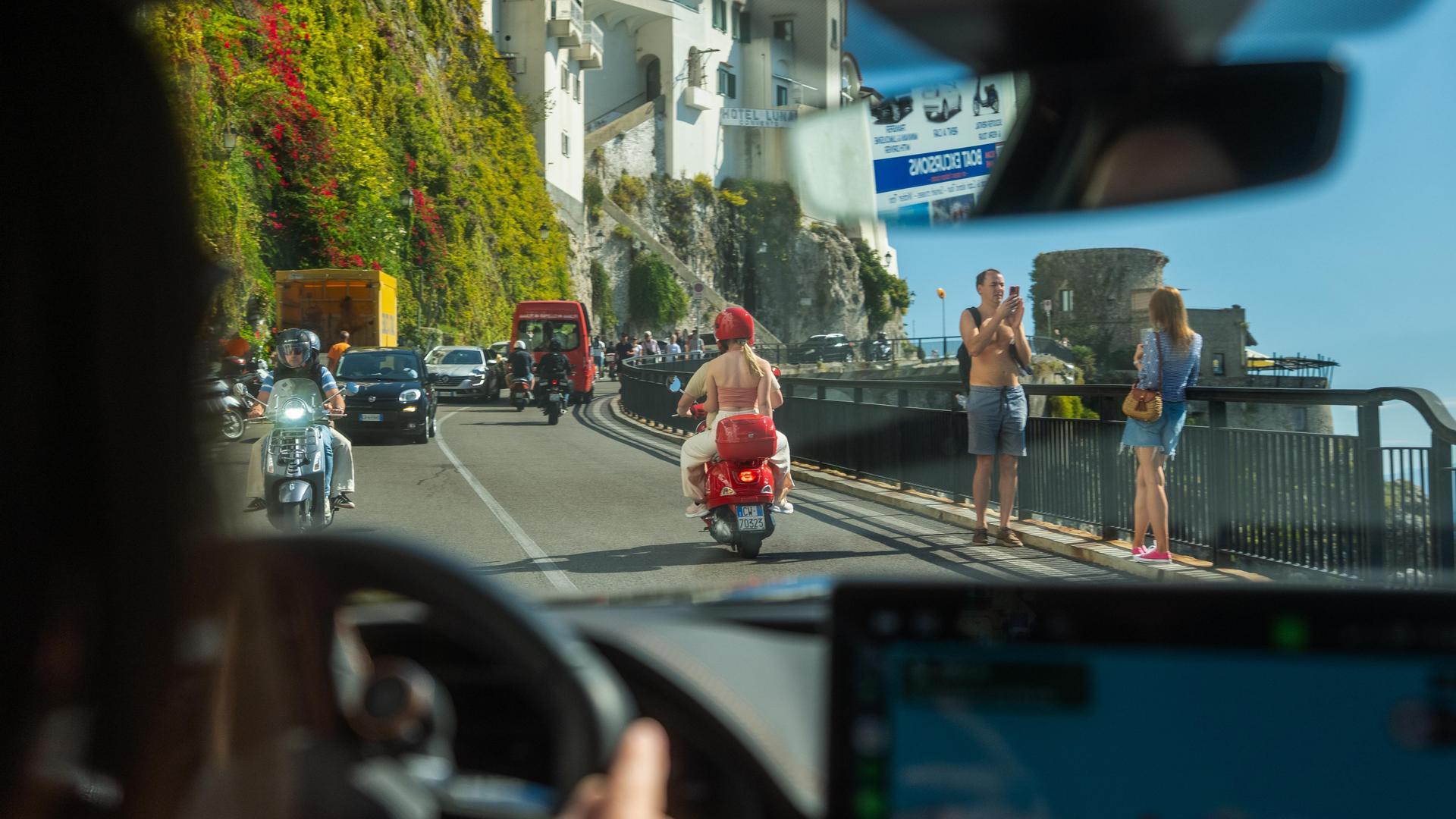
Renting a car opens up all the places that trains can’t reach. You set the pace, and you’re not restricted to stops along the train line. Your reward? The cliffside roads on the Amalfi Coast, the hill towns of Tuscany, and the unexpected lunch stop.
That said, driving in Italy takes some getting used to. Non-residential traffic is often restricted in city centres through ZTL zones, and cameras issue automatic fines to anyone who drives through without permission. Parking can also be hard to come by in historic centres.
Because of this, a car makes the most sense once you’re travelling between villages or covering long distances through the countryside, where trains don’t go. It makes less sense in city centres, where a car can become a headache rather than a convenience.
- Our driving in Italy travel guide covers what to expect before you collect your keys
- Related: Tips for driving in Italy
What about the bus?
Buses fill some of the gaps between car and train. They’re a useful option for short hops, but timetables can be sparse and aren’t always available online, and journey times tend to be slower than the train. You might want to use buses to supplement a car or train trip rather than building a whole itinerary around them.
Car vs train: what’s best for your trip?
Journey time: Trains are often quicker between major cities; a car is best for exploring rural areas or covering several off-the-beaten-path spots in one day.
Flexibility: A car lets you change plans on a whim; the train means working around a timetable, though major routes usually run frequently, so you’ll have a choice of departures.
Effort involved: Trains involve less walking with luggage than you’d think, thanks to central stations; driving means handling unfamiliar roads and city parking.
Cost: Car rental, fuel, and tolls can add up on longer trips; train ticket fares vary depending on how far in advance you book (booking early is typically more affordable).
Best for: Trains suit travellers focused on city-hopping and looking for ease over independence; a car is best if you want to experience smaller towns at your own pace.

Planning a multi-day trip: self-drive vs guided small group tour
Once you’ve settled on how you’ll get around, there’s a bigger decision to make: do you plan and drive the entire Italy itinerary yourself, or let a guide handle the logistics?
Self-drive tours
A self-drive tour gives you a car, a route, and pre-booked accommodation, but leaves the driving and daily decisions to you. You can linger an extra hour at the Colosseum, take a detour through a wine region that catches your eye, or skip a stop that doesn’t.
This is the way to travel if you enjoy the journey as much as the destinations, and feel comfortable navigating unfamiliar roads and parking rules.
Guided tours
A small group tour of Italy takes the planning and driving off your hands entirely. A local guide leads the way, handles logistics, and shares insider knowledge, whether that’s the history behind a piazza or the best time of day to see the Uffizi Galleries before the crowds arrive.
Travelling with a small group also means built-in company, which might appeal if you’re travelling solo. The trade-off is a shared schedule. Everyone in the group sees the same sights at the same pace, so there’s less room for spontaneity.
Like the idea of a guide but not the shared itinerary? Consider a privately guided Italy tour. You get an expert guide, but the itinerary and pace are designed around just you or your travel party.
Self-drive vs guided tour: what’s best for your trip?
Pacing: Guided tours follow a set schedule; self-drive lets you explore at your own pace and take detours.
Flexibility: Self-drive wins outright here; guided tours trade flexibility for ease.
Effort involved: Self-drive means navigating and driving yourself; on guided tours, you just need to show up and enjoy the day.
Cost: Self-drive is usually more affordable; guided tours tend to cost more because they bundle in a guide, transport and planning.
Best for: Self-drive suits confident drivers who want independence; guided small group tours suit those who’d rather relax and let someone else handle the details; and privately guided tours suit those who want a guide without sharing the itinerary.
Want more information for planning your trip?
Whichever modes of transport you choose, doing a little groundwork before your trip will make for a smoother experience. Check out our Italy at a glance guide for a broad overview before you dive into these in-depth guides to packing, weather, and flights to Italy.
For ideas on where to go once you’ve decided how to travel, our articles on the best places to visit in Italy and when to go are well worth a read.
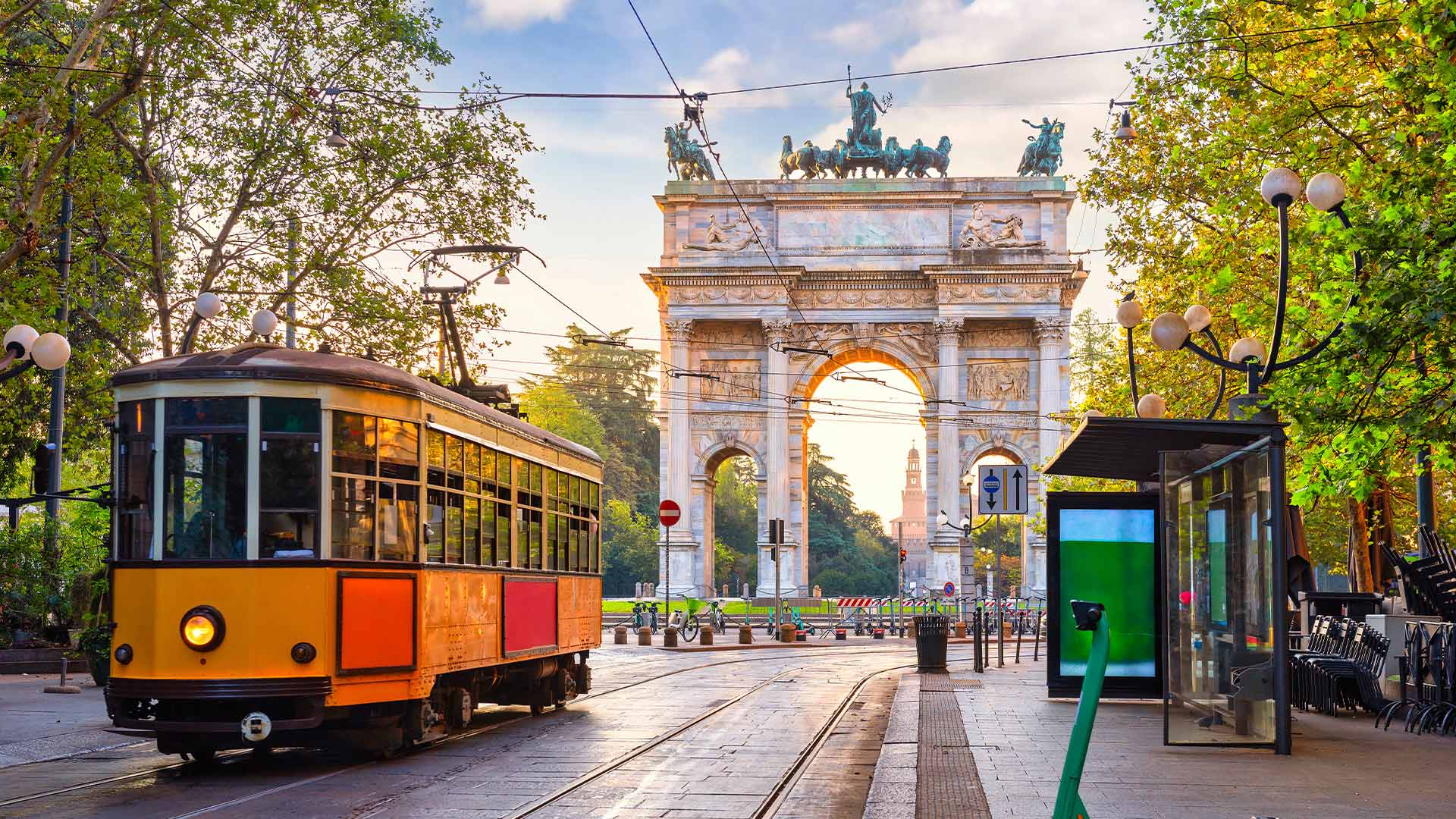
The best way to see Italy with Nordic Visitor
Now you know more about how to travel in Italy, it’s time to start planning your trip. Our local experts are based in Rome. They’ll share all their best travel advice with you, and even plan your trip for you. All you need to do is book your flight to Italy, and we’ll take care of the rest.
Just remember that a day in Italy might not always go exactly to plan, however you’re travelling, but that’s part of the appeal. And it’s exactly why we’re here. If something unexpected crops up, you can call us day or night for support.
Still weighing up your options? Our Rome team will talk you through what suits your pace, interests, and travel style. Get in touch, and we’ll help you plan the Italy trip you’ve always wanted.