Paris is very good at giving you options. Climb the Eiffel Tower. Spend an afternoon with Monet. Watch artists sketch portraits around Place du Tertre in Montmartre.
This guide rounds up 10 must-see places to visit in Paris, then adds a second layer.
You’ll cover the unmissable tourist attractions, plus museums, gardens and neighbourhood spots. Just as worth your time, and much easier to overlook.
Think of it as a starting point for France’s capital, with a few extra stops that might end up being the ones you remember most.
- Start in the capital, then go further with our tours from Paris
1. The Eiffel Tower
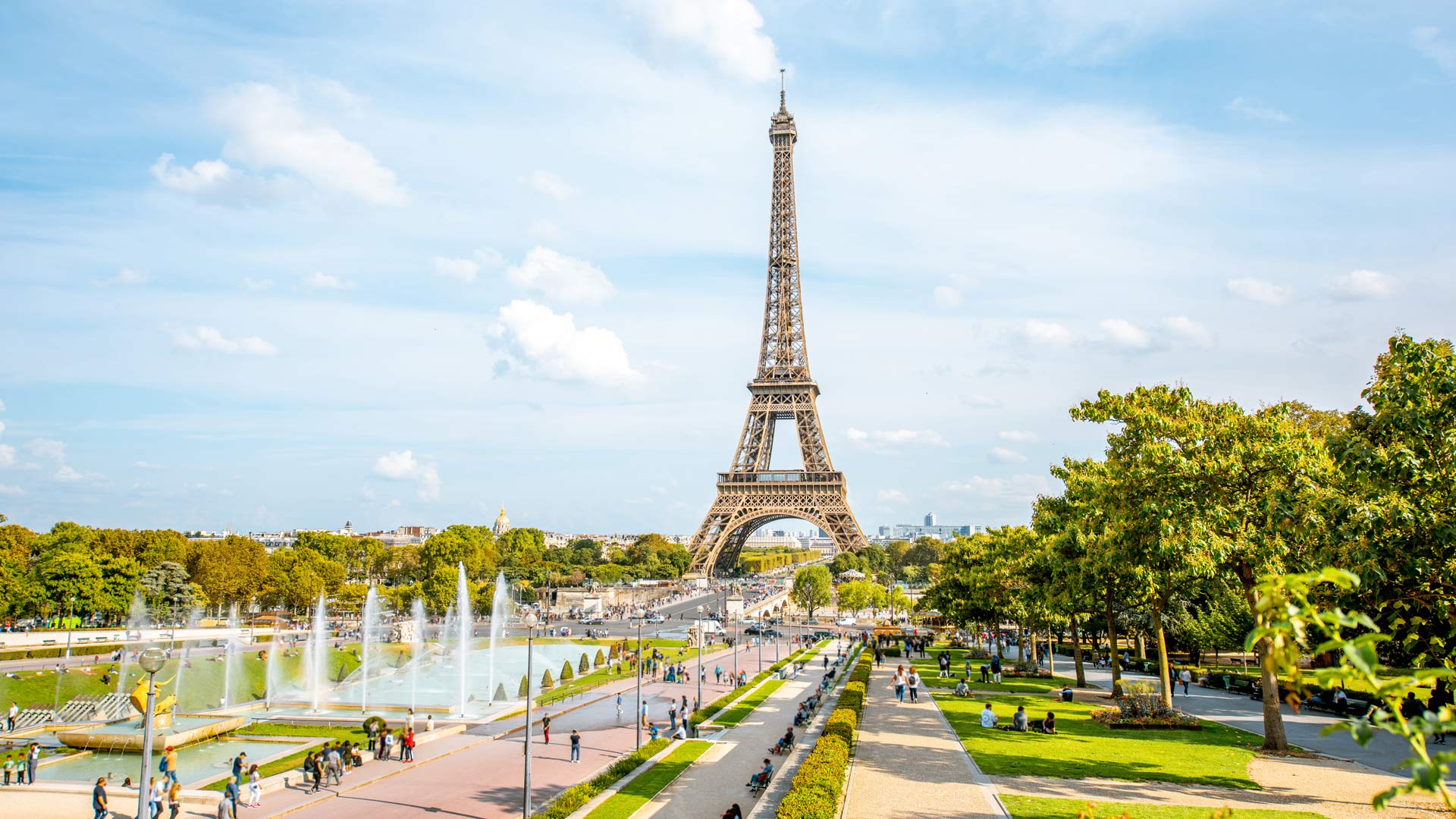
You’ve seen it on postcards, in films and probably on more fridge magnets than you can count. Around 10 million people visit the Eiffel Tower each year, and yes, you should absolutely be one of them.
The simplest option? Start at ground level. Find a spot around the Champ-de-Mars and admire the Eiffel Tower from below, no ticket needed. Or head up through its 3 visitor levels, each with its own view. Make it to the top, and there’s a champagne bar waiting for you.
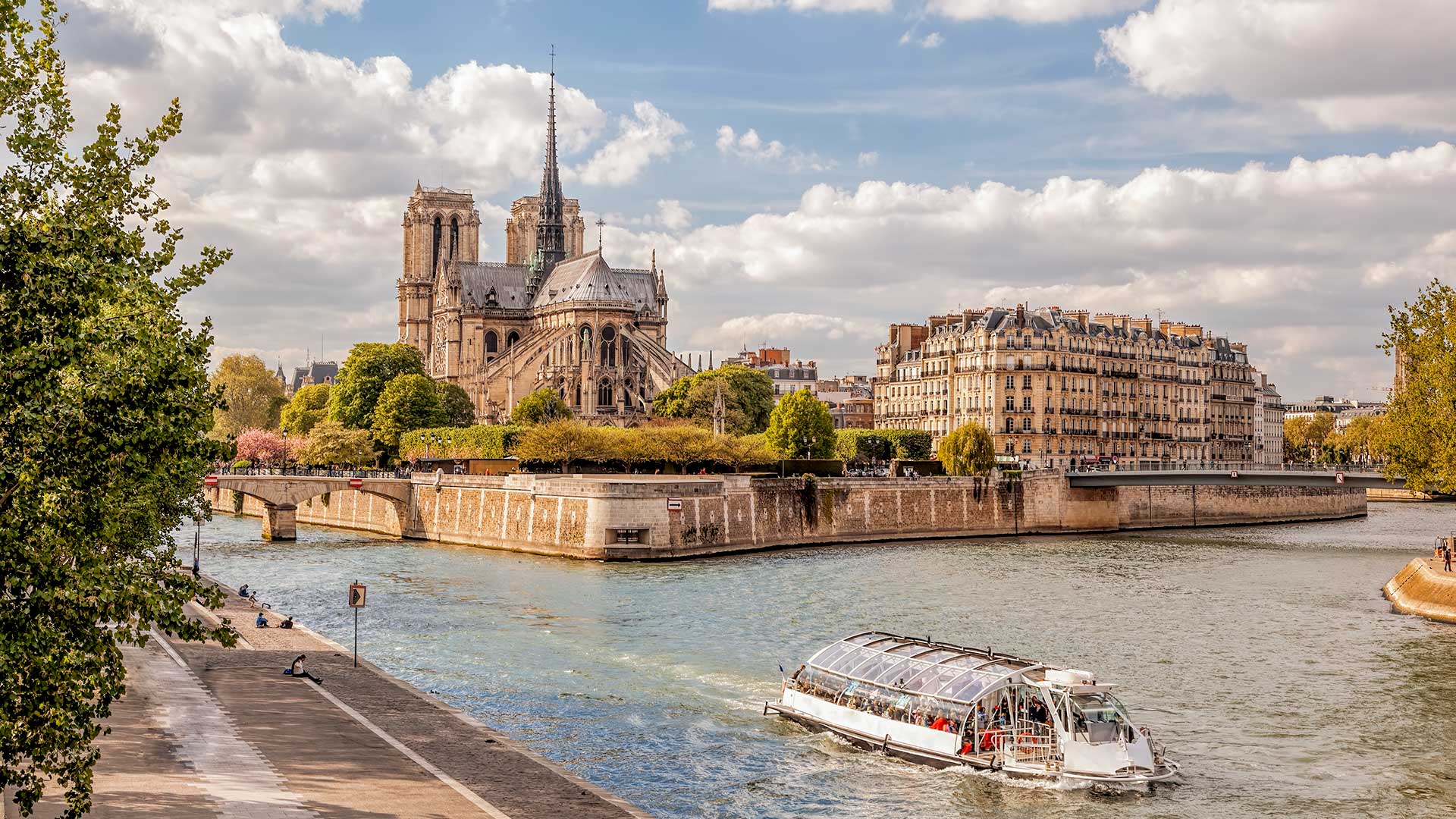
Not in the mood to line up at all? See it from the Seine river instead. Sightseeing cruises run throughout the day, and many take around an hour.
The Seine stitches much of central Paris together, so you’ll see far more than the tower along the way: bridges, grand façades and some very good people-watching along the riverbanks.
Then seek out: the Seine riverbank
Skip the lines and bring a picnic instead. Pick up a baguette, some cheese and a bottle of wine, then head down to Parc Rives de Seine near Pont de l’Alma and find a spot by the water. You’ll still have the Eiffel Tower in view.
Sip. Snack. Watch Paris go by.
For a longer wander, follow Parc Rives de Seine along the Rive Gauche – Paris’s Left Bank. This car-free riverside route stretches past Pont de l’Alma and the Musée d’Orsay.
Near the Alma end, step onto the floating gardens: 5 little islands built on barges, planted with grasses, fruit trees and other greenery. One even has a sanctuary where birds can nest. Continue along the river, and you’ll pass the gilded Pont Alexandre III bridge.
- Planning something romantic? Check out our France honeymoon tours
- Related: Best time to visit France – Your guide
2. The Louvre
The Louvre is the world’s most visited museum. Around 35,000 pieces of artwork are on display across more than 400 rooms, so seeing everything in one visit was never really on the cards.
You’ll walk in beneath I.M. Pei’s glass pyramid, itself one of Paris’ most recognisable landmarks. Inside, follow the crowds to the Mona Lisa. She’s smaller than many visitors expect and protected behind glass.
Then wander without trying to conquer the place. The Venus de Milo, Winged Victory of Samothrace and Delacroix’s Liberty Leading the People are all here. Getting a little lost between them is part of the fun.
Then seek out: Musée d’Orsay
If impressionist art is really why you came, cross the Seine to the Musée d’Orsay, home to the largest collection of Impressionist and Post-Impressionist art in the world.
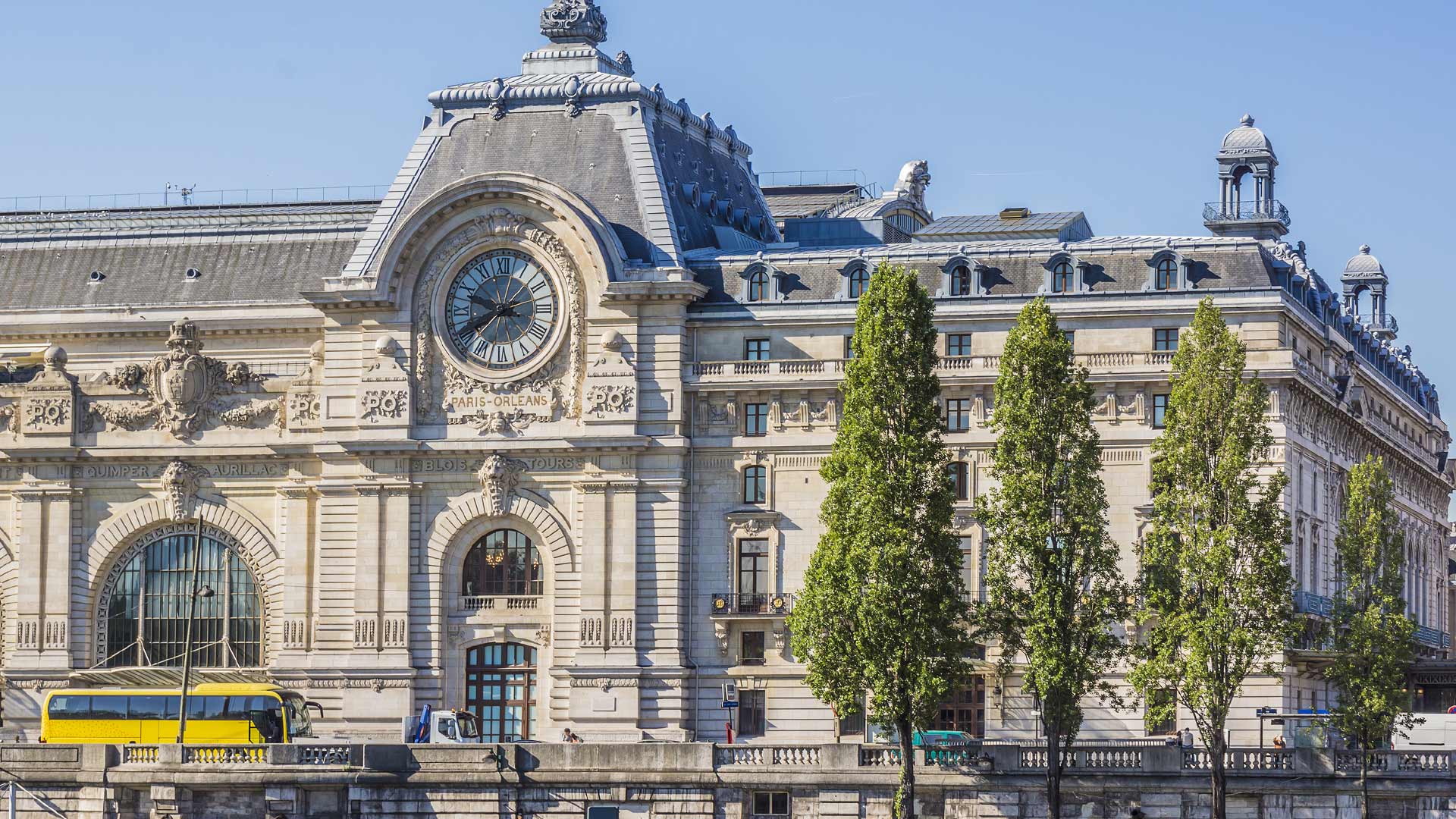
The building alone deserves some attention. It started life as a Beaux-Arts railway station, built for the 1900 Exposition Universelle.
Vaulted ceilings. A monumental clock. Monet, Degas, Renoir, Cézanne and Van Gogh inside.
Give it 2 to 3 hours, and you can get a very good feel for the collection without turning your museum day into an endurance sport.
3. Notre-Dame Cathedral
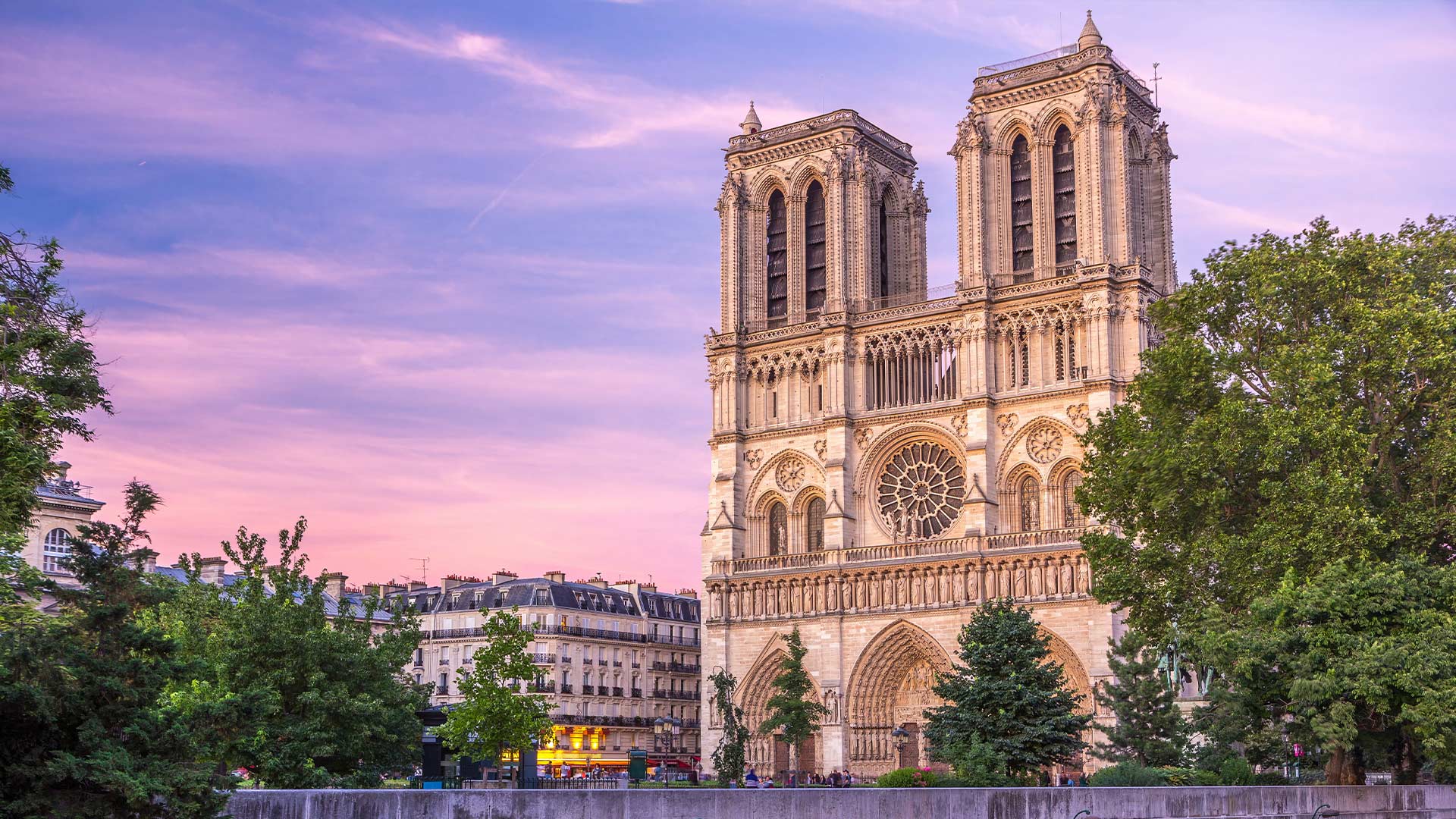
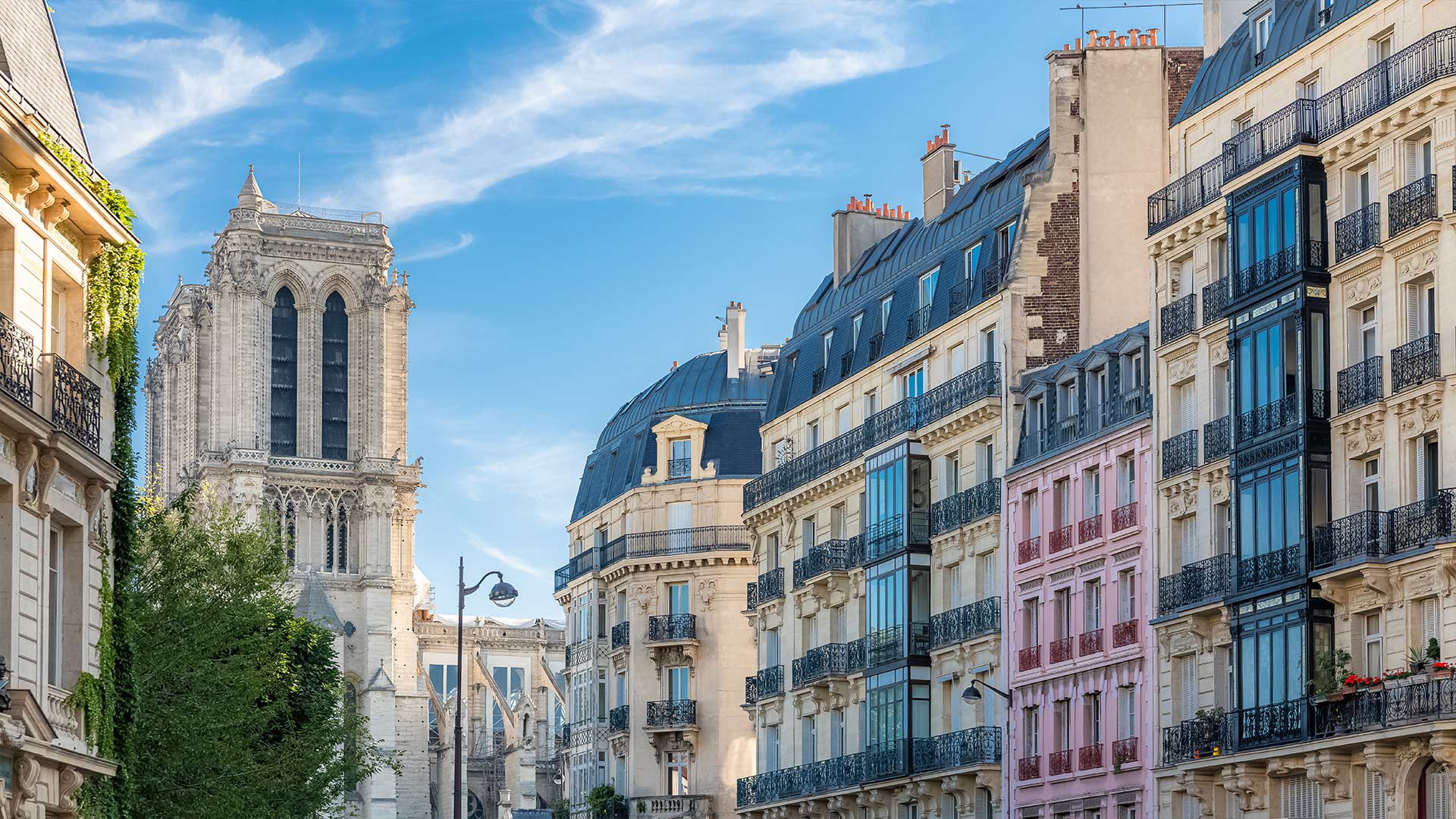
Notre-Dame is open again. After 5 years of restoration following the 2019 fire, the cathedral reopened in December 2024. Inside, you’ll see cleaned pale stone, restored stained glass and its soaring Gothic nave.
The 19th-century spire lost in the fire has also been reconstructed to Eugène Viollet-le-Duc’s design, and the bells are ringing once again.
Entry is free. It’s also wildly popular, so reserve a time slot online before you go. It won’t cost you anything, but it will save you waiting in a long line.
Then seek out: Sainte-Chapelle and Saint-Sulpice
Around 10 minutes’ walk from Notre-Dame, Sainte-Chapelle holds one of the finest stained-glass collections anywhere in the world.
Built in the 13th century for King Louis IX, its upper chapel is surrounded by 15 stained-glass windows rising around 15 metres high. Together, they contain 1,113 biblical scenes.
Tickets are timed, so book ahead if you can.
For a very different church on the Left Bank, head to Saint-Sulpice. It’s one of the largest churches in Paris, and it’s free to enter.
Find Delacroix’s murals in the Chapel of the Angels, the huge Cavaillé-Coll organ with more than 7,000 pipes, and the brass line of the 18th-century gnomon running across the floor.
Recognise that last one? It had a starring role in The Da Vinci Code.
- Carry on to Provence and the Riviera with our South of France tours
4. The Champs-Élysées & Arc de Triomphe
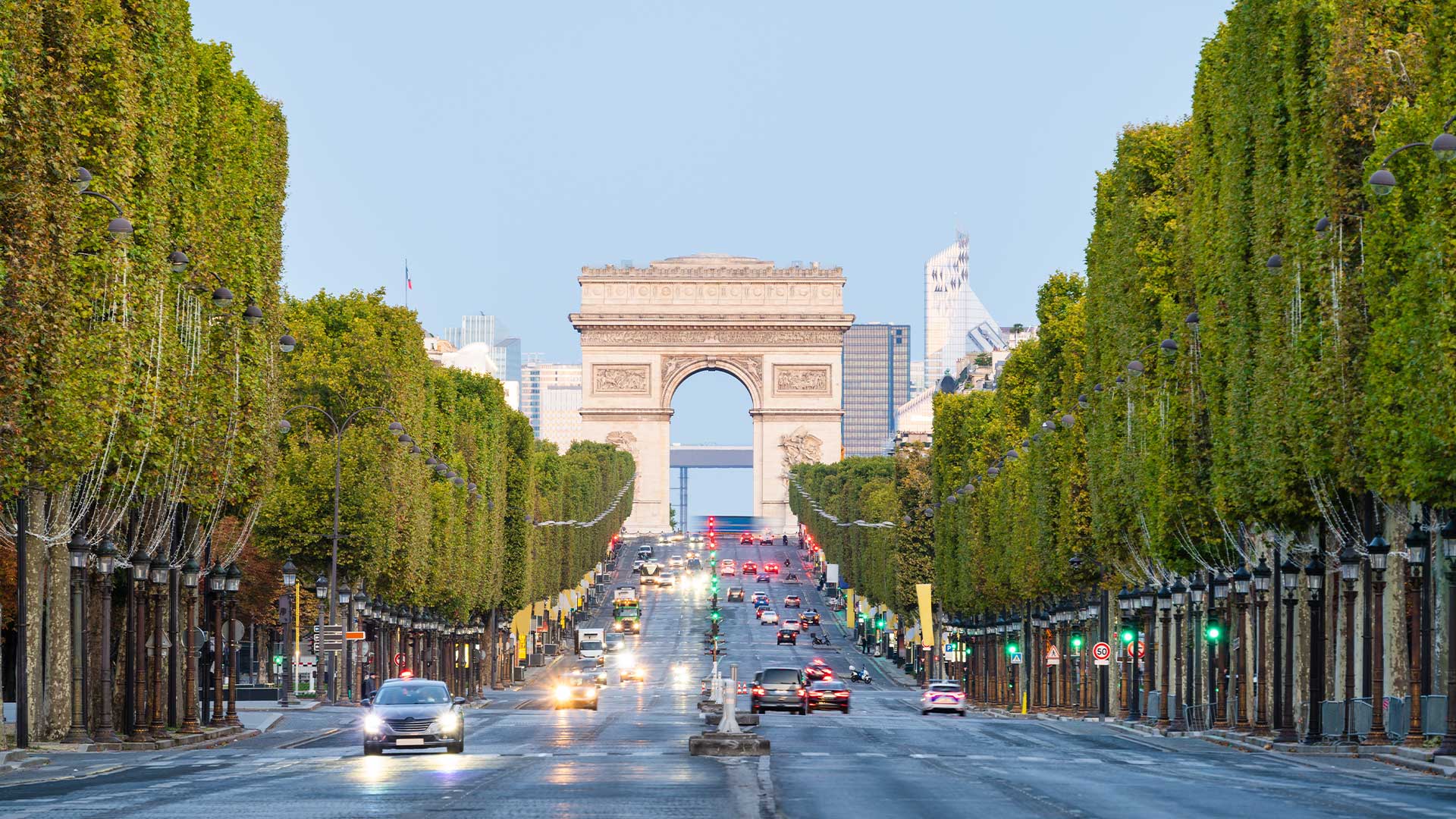
It’s the walk everyone pictures when they think of Paris: wide pavements, flagship luxury stores like Louis Vuitton, Dior and Cartier. All with the Arc de Triomphe anchoring the far end like the world’s most expensive postcard.
The base of the Arc is free to visit, so you can see the Tomb of the Unknown Soldier beneath it without buying a ticket. Or you can pay to climb for a view that lays out 12 avenues like spokes on a wheel, with the Champs-Élysées running straight back through the middle.
Then seek out: Galeries Lafayette Haussmann
If the Champs-Élysées has put you in the mood to shop, carry on to Galeries Lafayette Haussmann.
This iconic Paris department store has been around for more than a century, and the building is part of the reason to visit. Step beneath its 43-metre-high Art Nouveau glass dome, then browse floors of French and international fashion, beauty and accessories.
Save a little time for the top floor. The rooftop terrace is free, with views across Paris towards the Eiffel Tower, Opéra Garnier and Montmartre. No ticket needed.
Across the road, the Gourmet store is the place for chocolates, pastries, cheeses and other edible souvenirs.
- Savour French delicacies on a Provence tour
5. Jardin des Tuileries
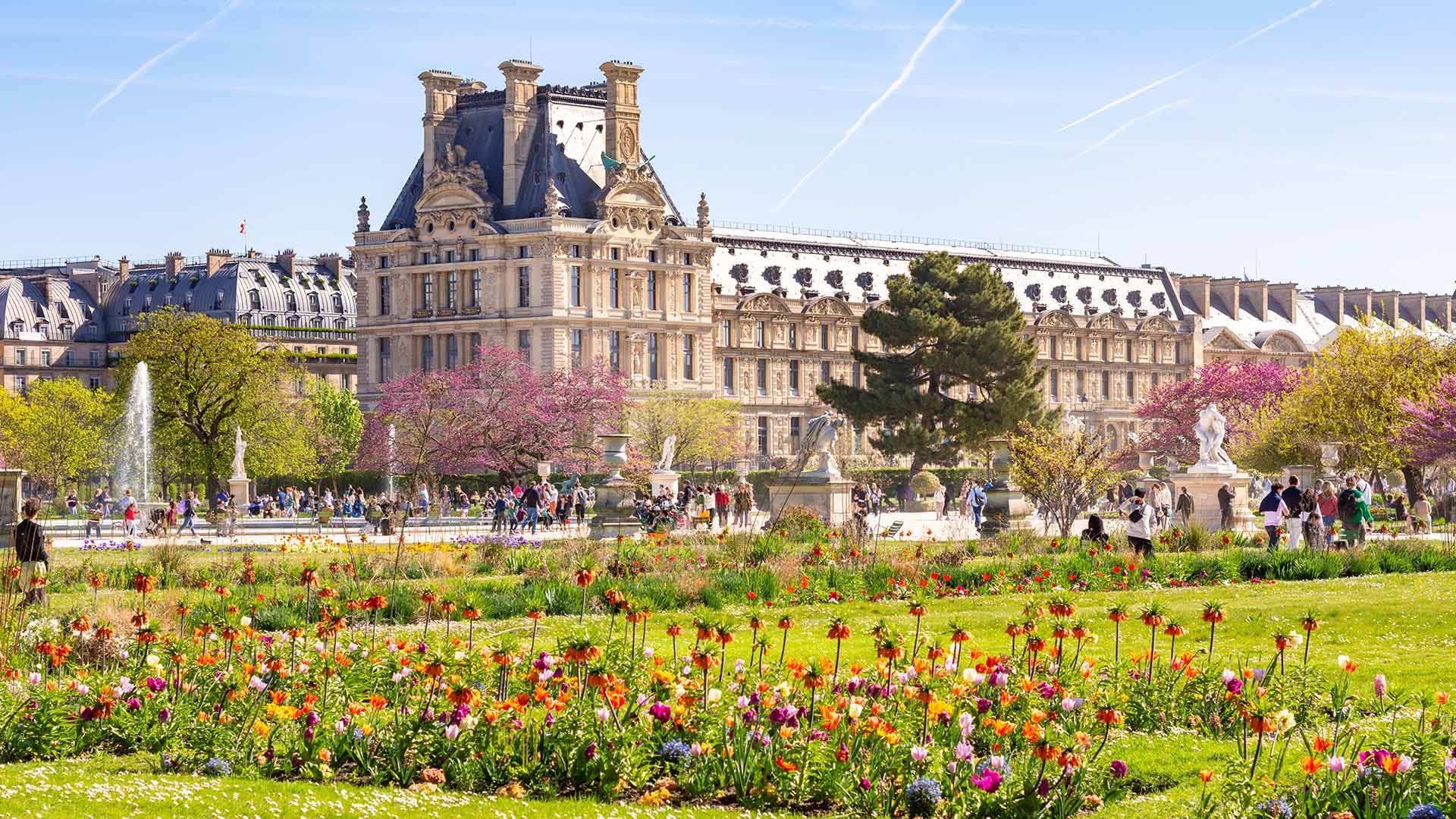
Right between the Louvre and Place de la Concorde, the Jardin des Tuileries is one of the best places to visit in Paris. Especially when your feet are asking for a break. You’ve got 25 hectares (61 acres) of fountains, gravel paths and tree-lined walks to explore.
Take your cue from the Parisians. Pull one of the garden’s green metal chairs towards the fountain, pick up an ice cream from a kiosk and see Parisian life unfold around you.
The garden dates back to the 16th century, when Catherine de’ Medici had it created beside the Tuileries Palace. The palace disappeared long ago, but the garden stayed. Today, you’ll find sculptures dotted between the paths, including works by Rodin and Maillol.
Then seek out: Musée de l’Orangerie
Before you leave the Tuileries, head to the garden’s south-west corner. There, inside a former orangery, you’ll find Monet’s Water Lilies.
Eight enormous panels curve around 2 oval rooms, with natural light filtering in from above. Monet had a say in how the works would be displayed. He created a space where you’re surrounded by water, reflections, and sky rather than looking at a single painting on a wall.
There’s more downstairs too. The museum’s collection includes works by Cézanne, Matisse, Picasso, Renoir and Modigliani, so leave yourself time to wander beyond the lilies.
6. Montmartre
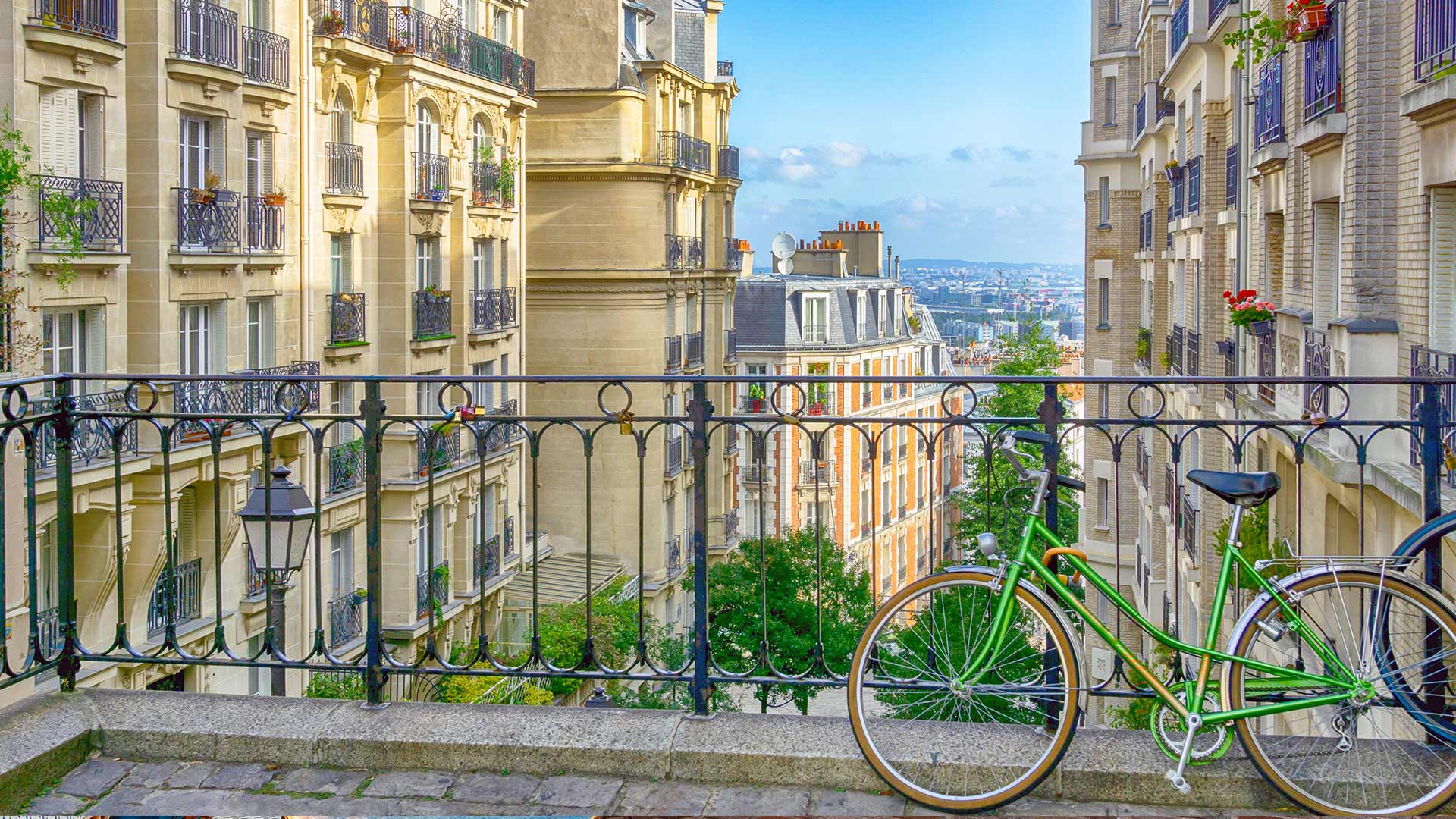
Paris' most famous district has been pulling artists uphill for more than a century. Picasso and Modigliani worked here, Renoir painted here, and artists still set up their easels around Place du Tertre today.
Start at Sacré-Cœur, the white-domed basilica sitting at the top of the hill. Entry is free, so step inside before heading back out to the terrace for one of Paris’s best-known views.
Still have some energy? You can climb to the basilica’s dome for an even higher look across the city. Or save your steps and take the Montmartre funicular up the hill instead. The ride takes just 90 seconds.
Then wander. Place du Tertre is only a short walk away, where portrait painters and sketch artists continue a tradition that dates back to the 19th century.
Then seek out: Musée de Montmartre and the Renoir Gardens
A few minutes from Sacré-Cœur, Musée de Montmartre takes you inside the neighbourhood’s artistic past.
The buildings here once housed artists, including Auguste Renoir. Today, the museum tells the story of the artists, cabarets and studios that shaped the neighbourhood.
Save time for the Renoir Gardens outside. The 3 gardens wrap around the museum, with views over Montmartre’s vineyard, leafy paths and a small pond.
After Sacré-Cœur and Place du Tertre, the gardens give you a breather without leaving Montmartre.
7. Le Marais
Le Marais is a historic neighbourhood in central Paris, stretching across parts of the 3rd and 4th arrondissements. It’s one of the best areas to wander if you want that old Paris feel, good food and plenty of shopping within a fairly compact patch of the city.
Its medieval streets weave past 17th-century townhouses, independent boutiques, galleries and cafés. Rue des Rosiers runs through the historic Jewish quarter, where falafel shops, bakeries and delis mean you’ll want to arrive hungry.
Nearby, Marché des Enfants Rouges adds another stop for food. It’s Paris’s oldest covered market, with stalls serving everything from French dishes to Moroccan and Japanese food.
Then seek out: Place des Vosges
At the eastern edge of Le Marais, Place des Vosges is one of the neighbourhood’s defining sights.
Built in the early 17th century, it’s one of the oldest squares in Paris, framed by red-brick façades, slate roofs and covered arcades. Grab a patch of grass in the central garden or wander beneath the arches, where galleries and cafés fill the ground floors.
Victor Hugo once lived at number 6. His former home is now the Maison de Victor Hugo, a museum dedicated to the writer.
- Ready to swap Paris streets for the open road? Explore our France self-drive tours
8. The Latin Quarter and Panthéon
If you’re wondering what to see in Paris beyond the big-ticket landmarks, the Latin Quarter is a good place to start.
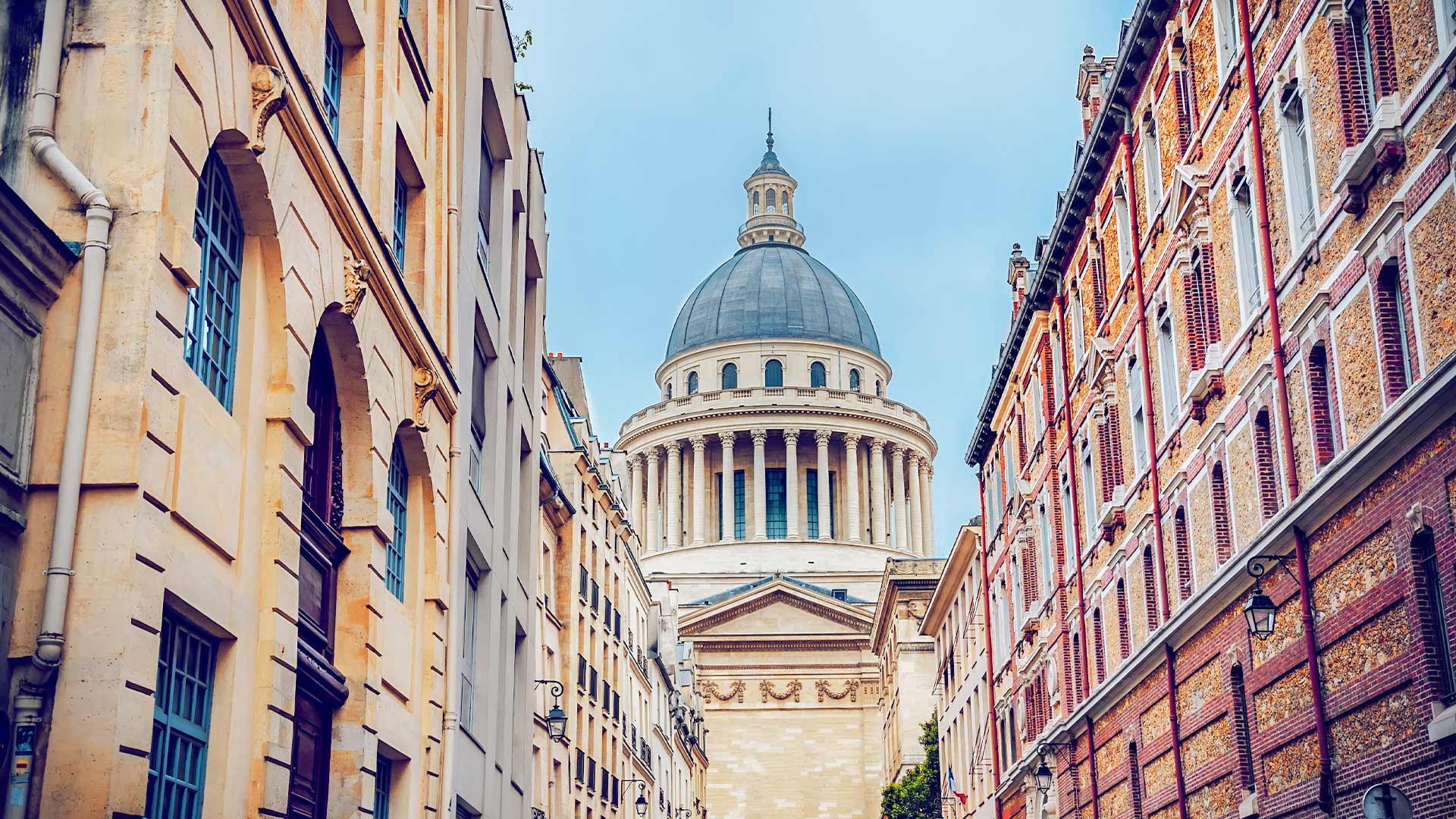
This is Paris’s historic student district, home to the Sorbonne University and a tangle of old streets on the Left Bank. Browse the bookshops around Boulevard Saint-Michel, stop for coffee around Place de la Contrescarpe, then head uphill towards the Panthéon. Its huge dome is hard to miss.
The Panthéon was originally built as a church dedicated to Saint Geneviève, before becoming a national mausoleum during the French Revolution. Inside the crypt, you’ll find the tombs of some of France’s best-known figures, including Victor Hugo, Marie Curie and Alexandre Dumas.
Then seek out: Arènes de Lutèce
Roman Paris is hiding just a few streets away.
The Romans took control of Gaul in the 1st century BC, and Paris, then known as Lutetia, grew into a Roman town on and around the Left Bank. The Arènes de Lutèce were built in the 1st century AD and once held up to 17,000 spectators for theatre, gladiator fights and other public entertainment.
Today, the remains sit inside a public garden in the middle of the 5th arrondissement.
Walk down into the old arena, and you can still make out parts of the seating and stage. It’s a very different glimpse of Paris, almost 2,000 years before the boulevards and zinc rooftops you know today.
9. Luxembourg Gardens
Need somewhere to sit for a while? The Luxembourg Gardens make that very easy.
Spread across 23 hectares (57 acres) beside the Luxembourg Palace, the gardens mix formal flowerbeds with tree-lined paths, fountains and more than 100 statues.
The name comes from the Hôtel de Luxembourg, which Marie de’ Medici bought in 1612. The Queen of France, wife of King Henry IV, later built the palace and gardens around it. Today, the palace is home to the French Senate.
Pull up one of the green chairs around the Grand Bassin and watch the little wooden sailing boats drift across the water. In spring, the flowerbeds fill with seasonal colour. There’s an orchard too, along with an apiary and greenhouses.
If you’re travelling with children, leave extra time. There are playgrounds, puppet shows and pony rides around the garden.
Then seek out: the Medici Fountain
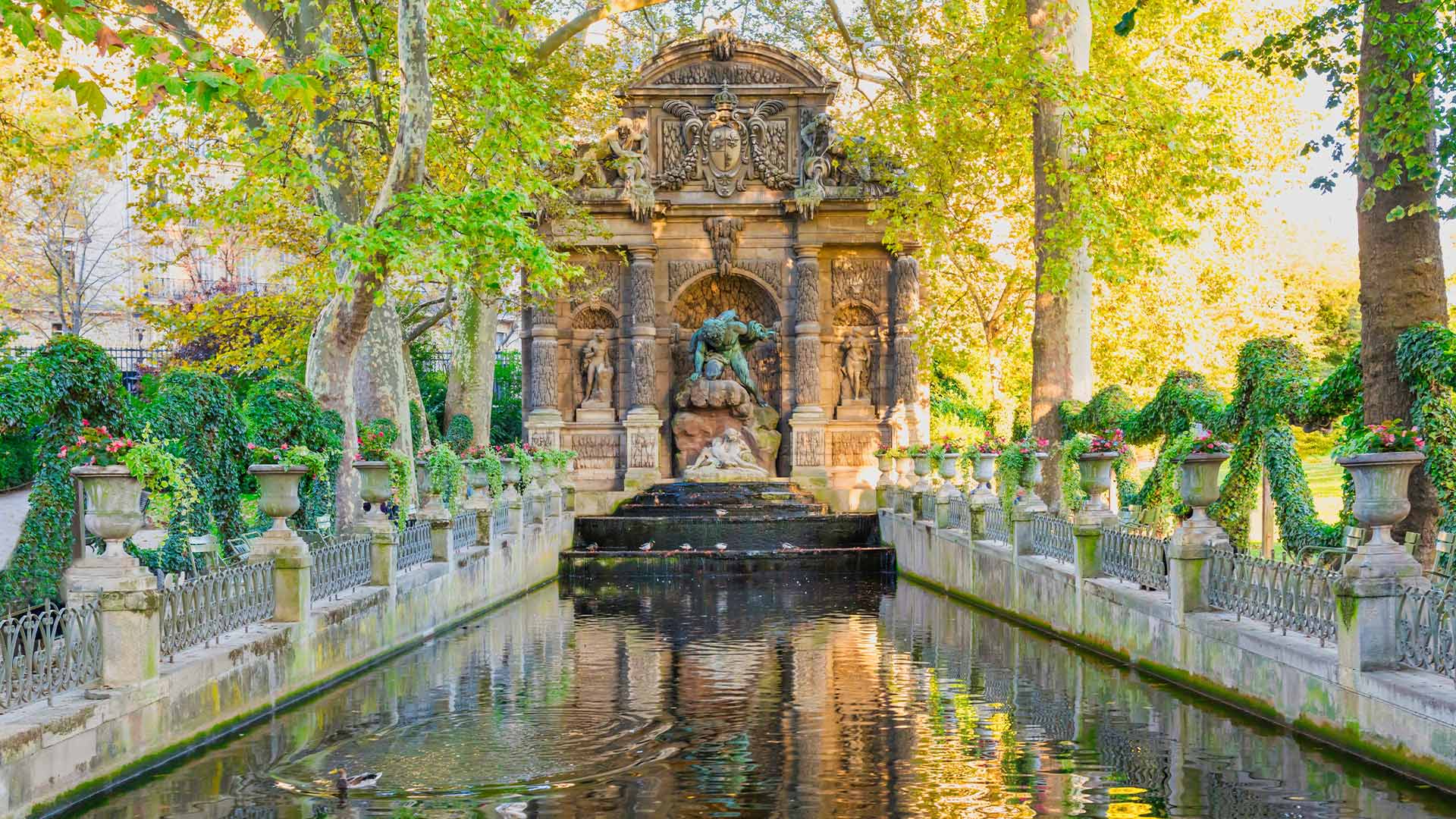
Head towards the eastern side of the gardens, and you’ll find the Medici Fountain, built for Marie de’ Medici in the 17th century.
A long rectangular pool leads towards the stone grotto, shaded by trees and lined with benches. At the far end, a sculpture shows Polyphemus discovering Acis and Galatea together.
It’s only a short walk from the busier Grand Bassin, but this part of the gardens feels much calmer and tucked away.
10. Palace of Versailles
Technically, Versailles isn’t in Paris at all. It sits about 20 kilometres (12 miles) outside the city, making it one of the easiest day trips to add to your stay.
Getting there is simple. The RER C train normally runs directly to Versailles Château–Rive Gauche, followed by a 10-minute walk to the palace. From central Paris, allow roughly 40–50 minutes for the journey.
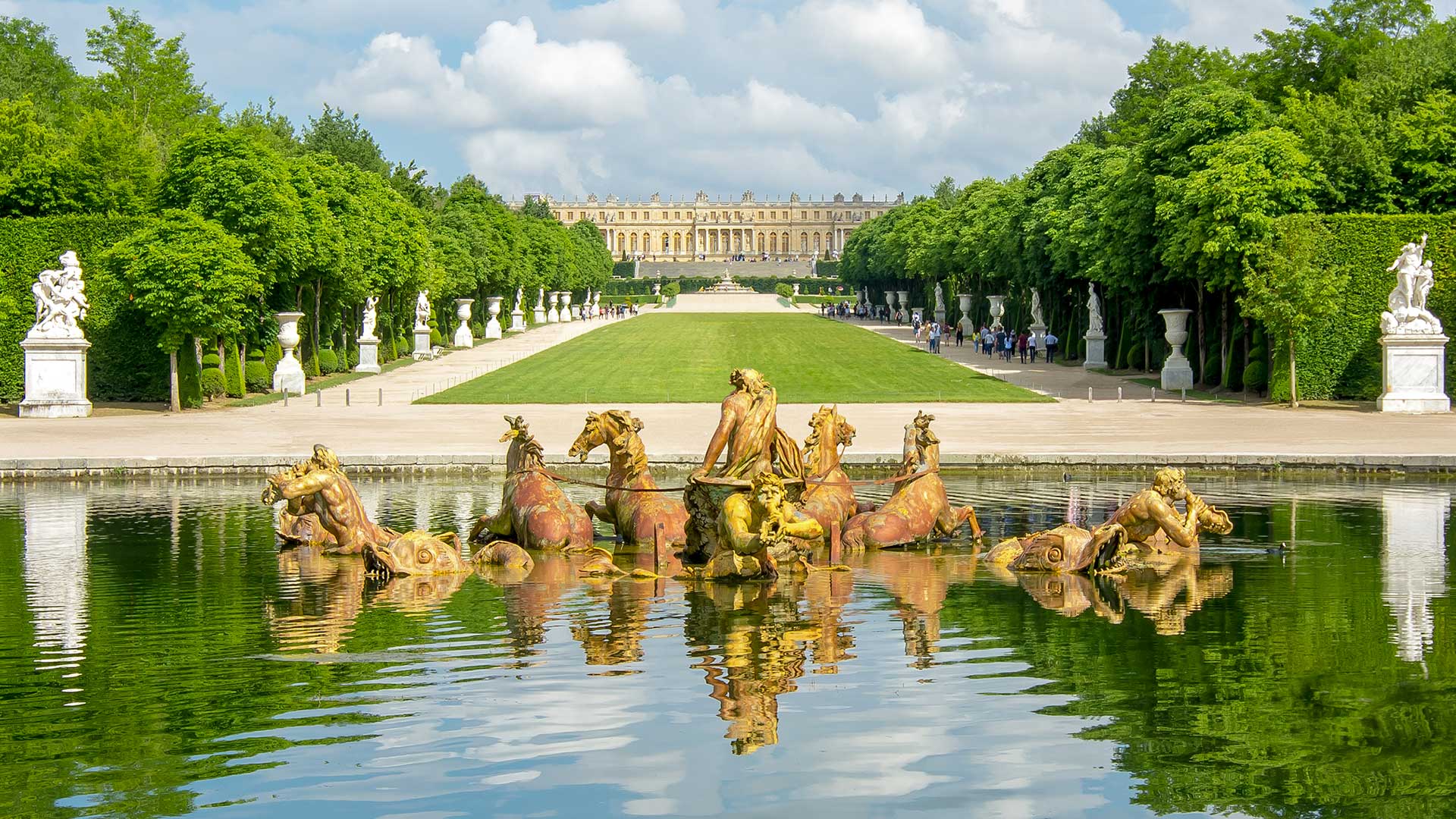
Once you get there, give yourself most of the day. Walk through the Hall of Mirrors and royal apartments, then head outside into the formal gardens stretching behind the palace.
There’s a lot of ground to cover, literally, so comfortable shoes are a very good idea.
Then seek out: the Queen’s Hamlet
Keep going beyond the palace, and you’ll eventually reach a very different side of Versailles.
Marie Antoinette’s Queen’s Hamlet was built in the 1780s near the Petit Trianon, with cottages gathered around a lake and a working farm nearby.
You can wander through the Hamlet as part of the Estate of Trianon, which opens from noon. It feels a world away from the gold, mirrors and extravagance of the palace itself.
Discover Paris’ best sights then venture further
There are plenty more places to go in Paris, but these give you a strong starting point. See the icons, follow a few detours, and leave enough room in your plans for the places you find by accident.
Ready to see more of France? Our tours from Paris start with the capital, then take you beyond it to places like Provence and the French Riviera.
We’ll take care of your hotels, local transport and itinerary. So by the time you touch down at Charles de Gaulle, the fiddly bits are already sorted.
Get in touch with one of our travel experts, and we’ll help bring your France trip to life.