The best things to do in the South of France aren’t always where the red carpet gets rolled out. They’re down cobbled lanes, beside market stalls and at tables where lunch rolls into dinner.
Wander lavender fields in Provence, swim beneath the Calanques’ limestone cliffs, or drive the Côte d’Azur with stops in Cannes and Nice.
Come hungry, stay curious and leave a little room for getting gloriously sidetracked. Because when you’ve properly visited the French Riviera, the unplanned detours are often the stories you tell first.
Ready to see where the road takes you? Let’s get into it.
- Explore this sun-soaked region on a South of France tour
1. Follow the lavender trail through Provence
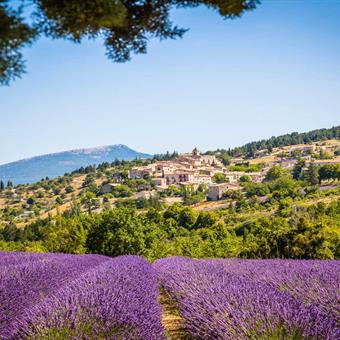
Purple to the horizon. Lavender humming with bees. That unmistakable scent in the warm air. Provence in bloom lives up to the photographs, then casually outdoes them.
The Luberon region, just under an hour from Avignon, is one of the best places to go lavender spotting. Hire a bike or drive along the quiet country roads around Gordes, Roussillon and Bonnieux. Just don’t expect to get anywhere quickly. The views have other plans.
Further east, the Valensole Plateau – about an hour north of Aix-en-Provence – delivers lavender on a grander scale, with neat purple rows rolling towards the mountains. You’ll want to pull over. Everyone does.
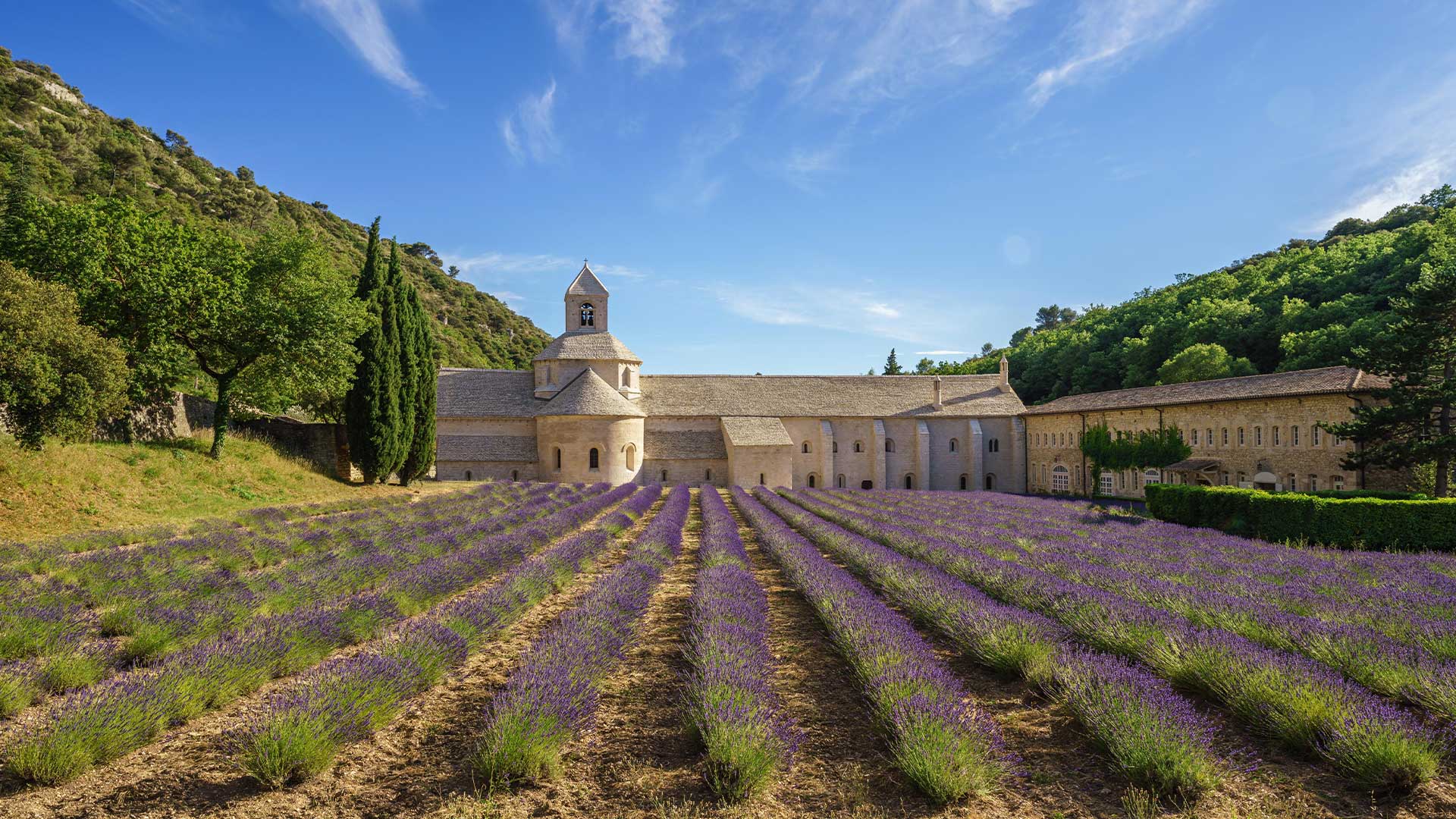
Near Gordes, follow the scent of lavender to Abbaye Notre-Dame de Sénanque, where purple fields frame a 12th-century Cistercian monastery that’s still home to a community of monks.
Curious about what happens after harvest? Stop at the Lavender Museum in Coustellet to explore the plant’s journey from field to essential oil, with workshops and seasonal distillation demonstrations.
Top tip: The best time to visit France for lavender is roughly from mid-June to early August, peaking in July. Come outside that window, and you’ll find the fields bare. Worth planning around.
- Take a train to Provence on a France tour from Paris
- Related: Best time to visit Provence – Your guide
2. Explore the Luberon’s hilltop villages
The best bits happen at a walking pace. Follow a cobbled lane with nowhere particular to be. Stumble into a Provençal market. Duck into a madeleine shop and try not to eat one before you’ve even paid for the bag.
The hilltop villages of Provence were made for slow meandering.
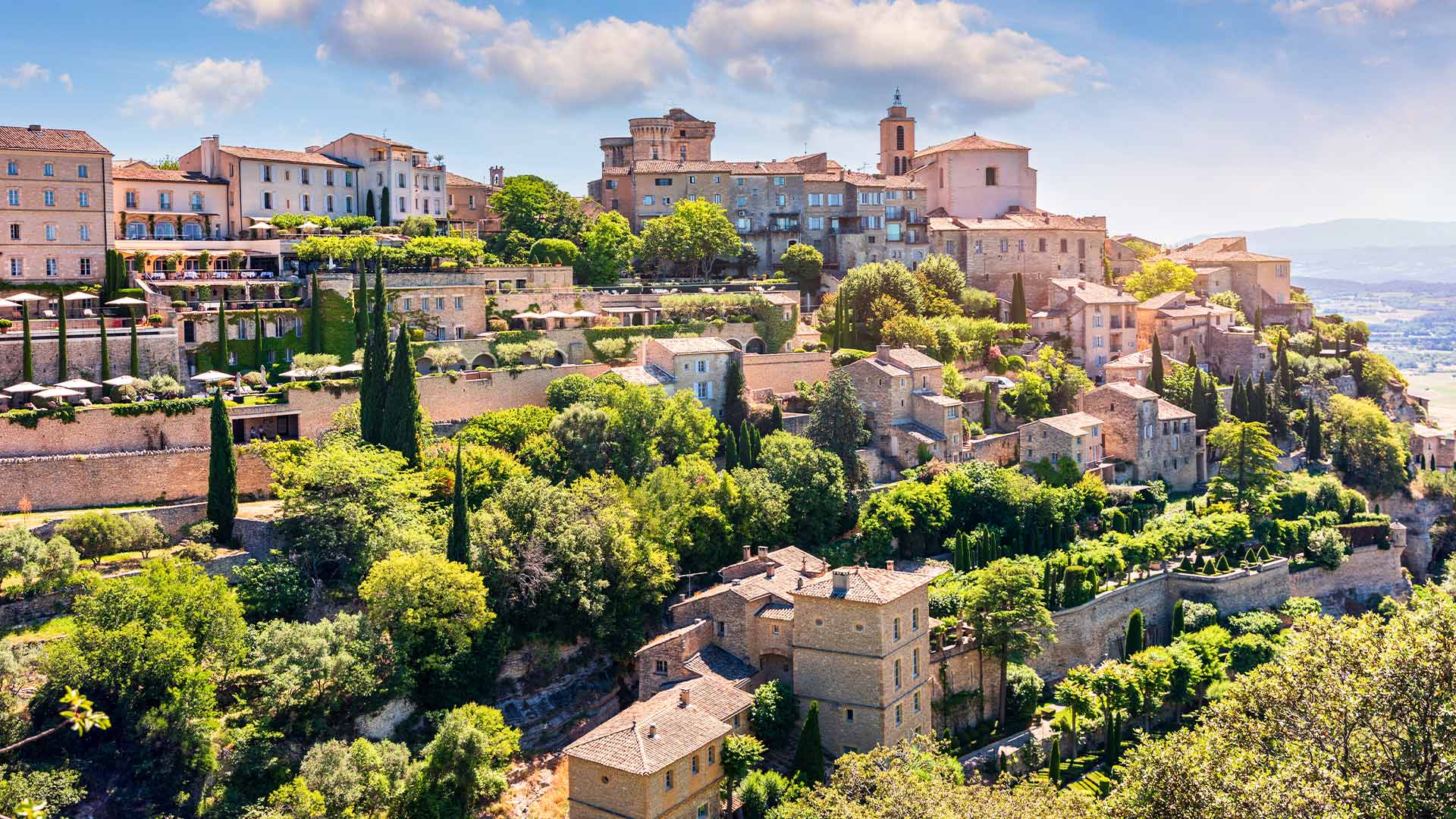
Gordes sits in the heart of the Luberon, which means if you’ve already been chasing lavender through the valley, it’s right on your doorstep. The village climbs steeply up a rocky ridge, its narrow calades (cobblestone alleys) threading between golden stone houses. At the top, the 11th-century Château de Gordes overlooks the plains of Provence.
A short drive brings you to Roussillon, a village that looks like it was painted by hand. Gold, amber, terracotta, and deep red: the buildings glow in shades drawn straight from the surrounding ochre.
Wander the labyrinth of streets, pop into artisanal shops, then take the Sentier des Ocres trail through a former quarry carved into strange, fiery shapes.
- Go village-hopping on a self-drive tour of France
3. Take to the water at Verdon Gorge
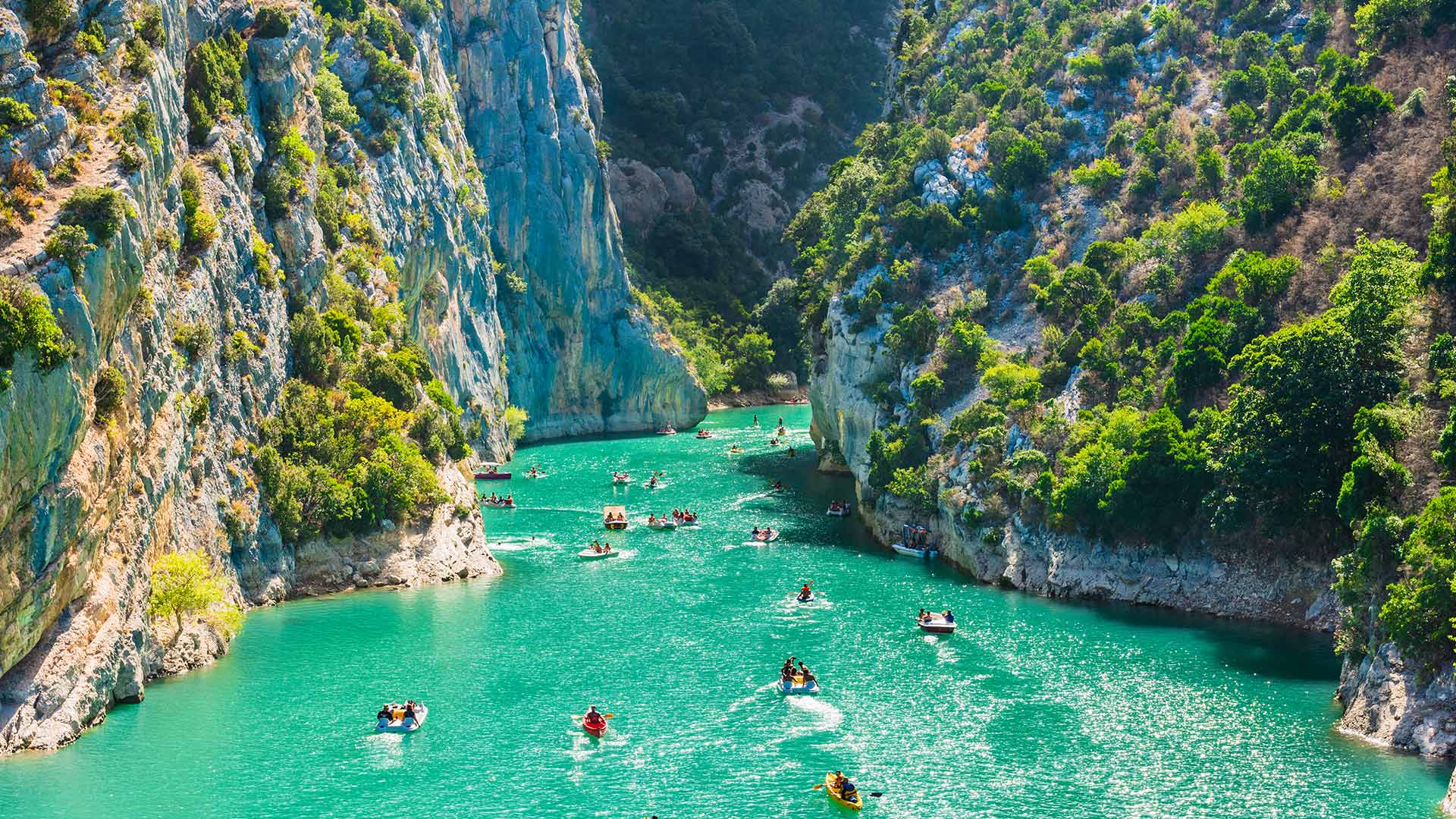
Europe’s answer to the Grand Canyon. That’s how people talk about the Verdon Gorge. Standing at the edge of it, looking down into the turquoise water far below, it’s hard to argue.
The gorge cuts through Provence for around 25 kilometres (15 miles), dropping to depths of up to 700 metres (2,296 feet) in places. The colours alone are worth the drive. Far below, the Verdon River runs an almost unreal shade of blue-green.
One of the best ways to see it is from the water. Hire a paddle boat at Lac Sainte-Croix, the vast reservoir at the western end of the gorge, and glide towards the canyon mouth. The cliffs rise. The shoreline disappears behind you. Suddenly, your paddle boat feels very small.
Verdon Gorge is roughly a 2-hour drive from Nice and Aix-en-Provence, making it an easy stop between Provence and the Riviera.
4. Hike the Calanques National Park
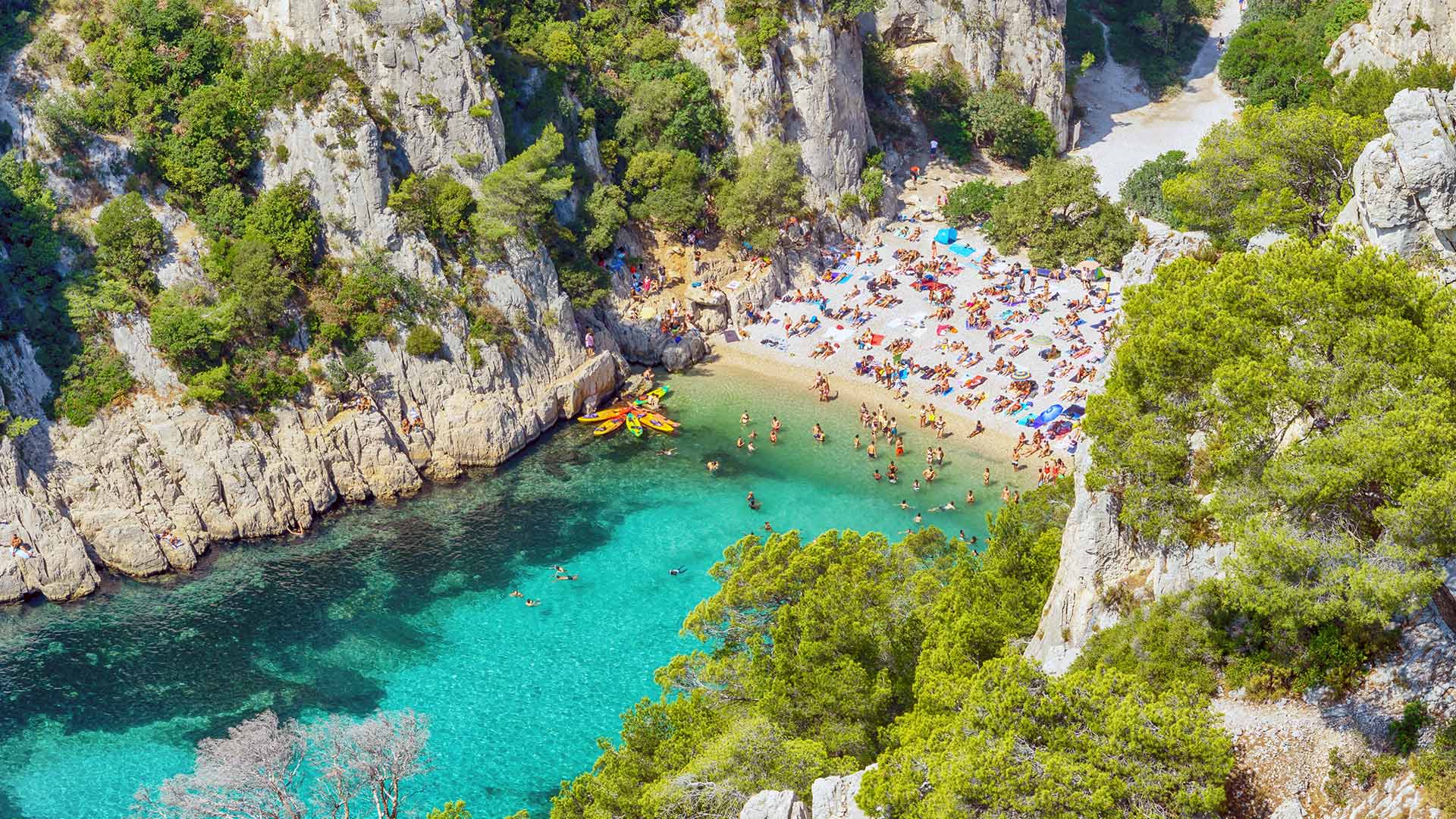
Calanques National Park is a string of narrow inlets, cut into pale limestone cliffs, where the water is so turquoise it looks borrowed from the tropics.
Pull on your walking shoes to reach coves such as Sugiton and En-Vau. Trails wind over rocky headlands before dropping towards clear water and pocket-sized beaches. The climb back up? Let your legs worry about that tomorrow.
Prefer to give your calves the day off? Boat tours from Marseille and Cassis cruise past several calanques (inlets) – some excursions also include time for swimming or snorkelling.
Kayaking is a good in-between option too, quiet enough that you might spot a dolphin, and flexible enough to go at your own pace.
In summer, access can be restricted due to heat, wildfire risk, and visitor numbers, so check the latest park guidance before you go. And here's a handy tip: you'll need to book your spot ahead of time for some of the most popular calanque beaches, free of charge.
- Related: Best national parks in Europe
5. Follow the art trail
The French Riviera and Provence have pulled artists south for generations, and you don’t need a gallery pass to see why.
Start with the Van Gogh trail in Arles. Markers around the city pair his paintings with the cafés, riverbanks and gardens that inspired them. Same view. Slightly fewer swirling brushstrokes.
Nearby in Saint-Rémy-de-Provence, Van Gogh spent a year at Saint-Paul-de-Mausole and created more than 140 works, including The Starry Night. Wander through the monastery’s cloisters and gardens, then look towards the Alpilles. Inspiration wasn’t exactly in short supply.
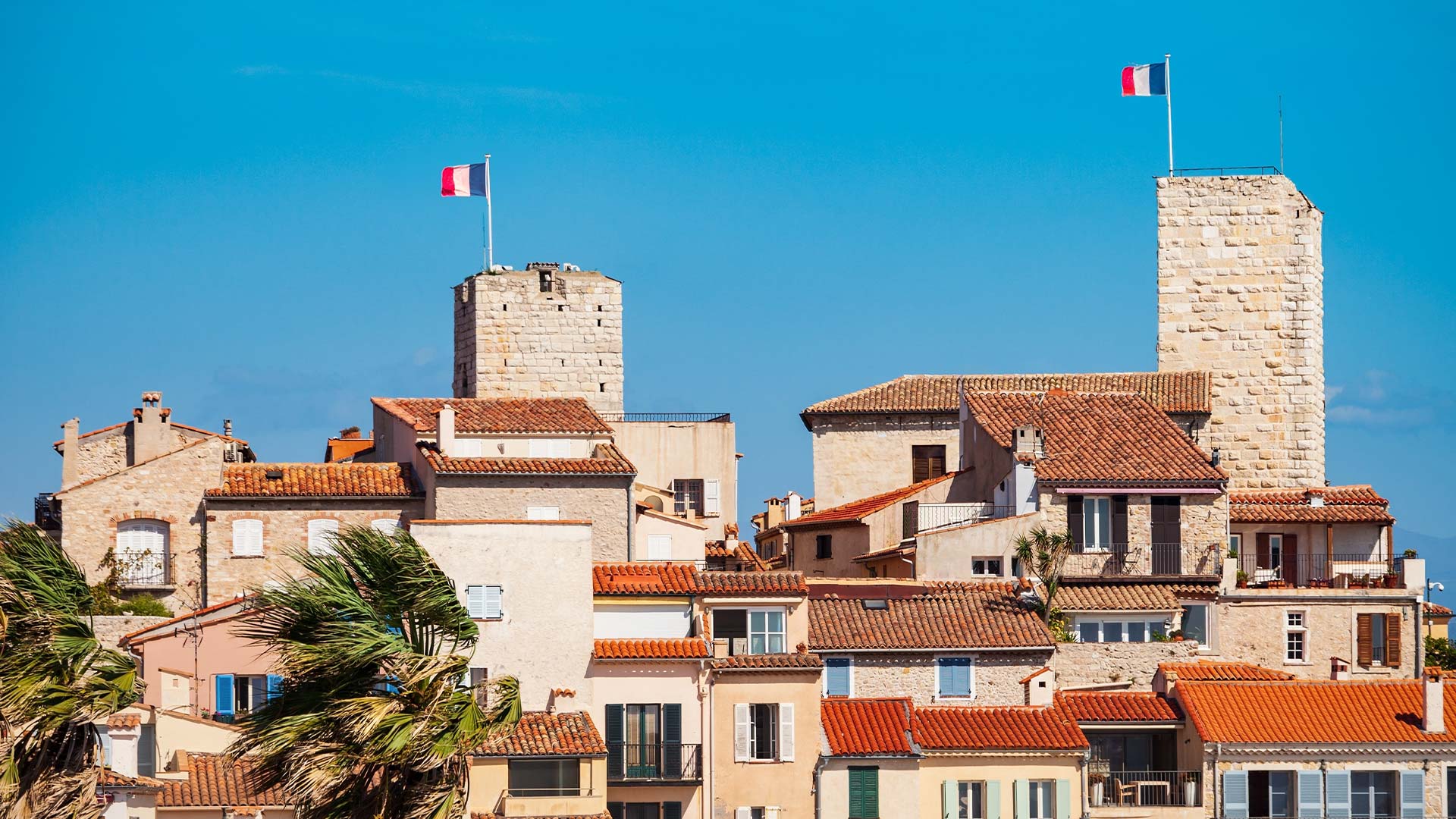
Follow the coast east to Antibes, home to the Picasso Museum. It’s housed in a seafront château where Picasso once had his studio, packed with paintings, ceramics, and sketches from his most prolific Riviera years.
In Cagnes-sur-Mer, visit Renoir’s former home and studio, surrounded by the olive trees he loved to paint. Then head inland to Fondation Maeght in Saint-Paul-de-Vence, where works by Miró, Giacometti and Calder spill through galleries, courtyards and sculpture gardens.
Finish in Nice, where the trail closes out at the Matisse Museum, home to decades of his work, and the Musée Marc Chagall, built specifically to house his series on biblical themes. Different artist, different mood, a fitting last stop.
6. Settle into Riviera life in Nice
Many trips to the French Riviera begin at Nice airport. Resist the urge to rush onwards – this city deserves a few days of its own.
Take a stroll along the Promenade des Anglais, a sprawling seafront walkway that’s drawn visitors since the 19th century. Sea air, palm trees, and the famous blue chairs lined up facing the pebbled beach. Pause, have a seat, and watch the Mediterranean sparkle in the sun.
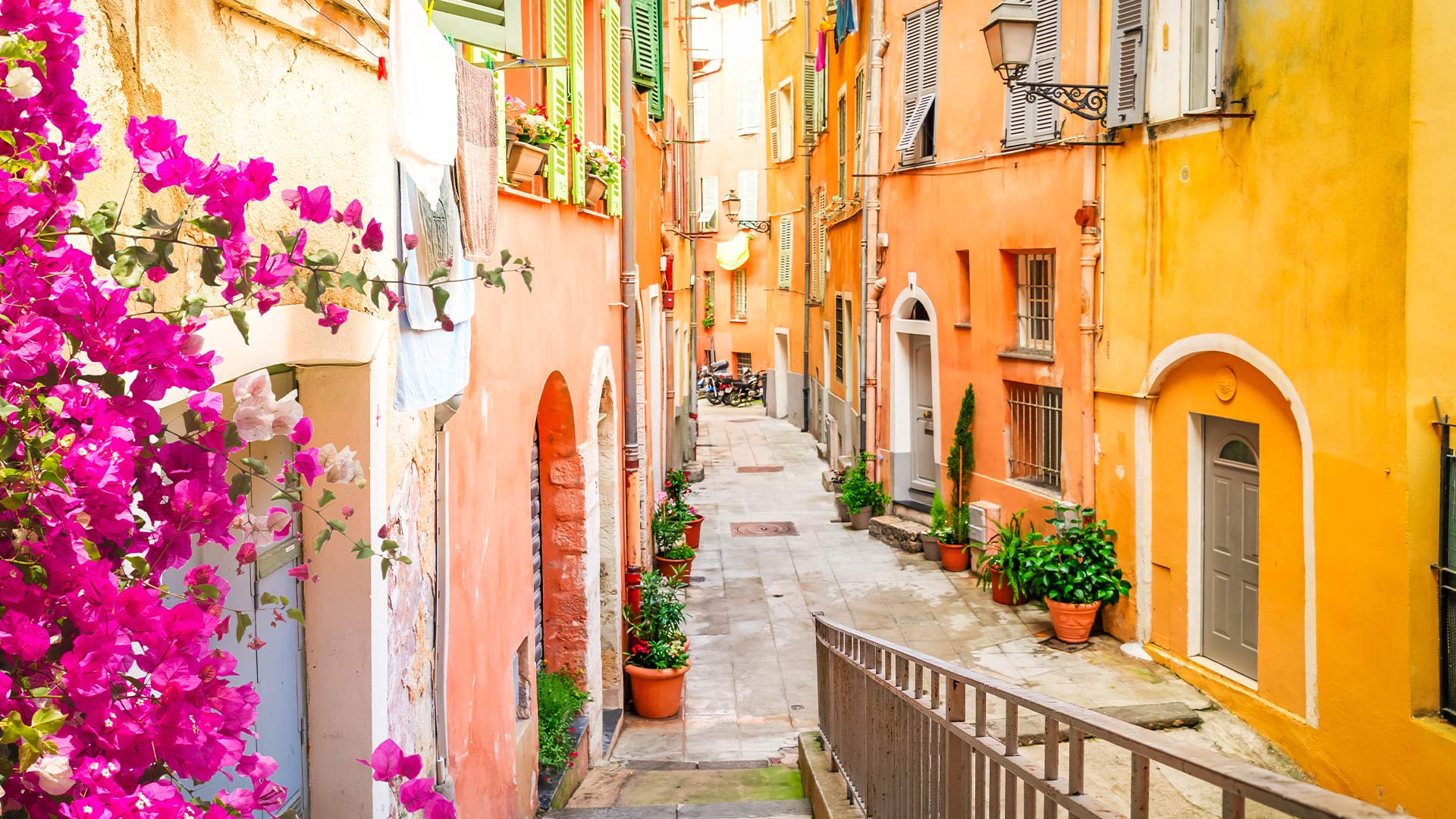
Then slip into Vieux-Nice. Narrow lanes, pastel façades, and colourful stalls fill the old town. The Italian influence in Nice runs deep: the city was ruled by the House of Savoy before becoming part of France in 1860.
Pause inside the cool marble sanctuary of baroque Cathédrale Sainte-Réparate. Afterwards, climb Castle Hill for sweeping views across the Baie des Anges. Your legs may have questions. The view has all the answers.
For things to do in the French Riviera beyond the city, Nice is your launchpad.
- Cross the border on a France and Italy tour
7. Hit the road along the Côte d’Azur
Of all the things to do in Côte d’Azur, a coastal road trip might be the hardest to beat. Windows down. Mediterranean glittering beside you. Just don’t expect the views to help with your schedule.
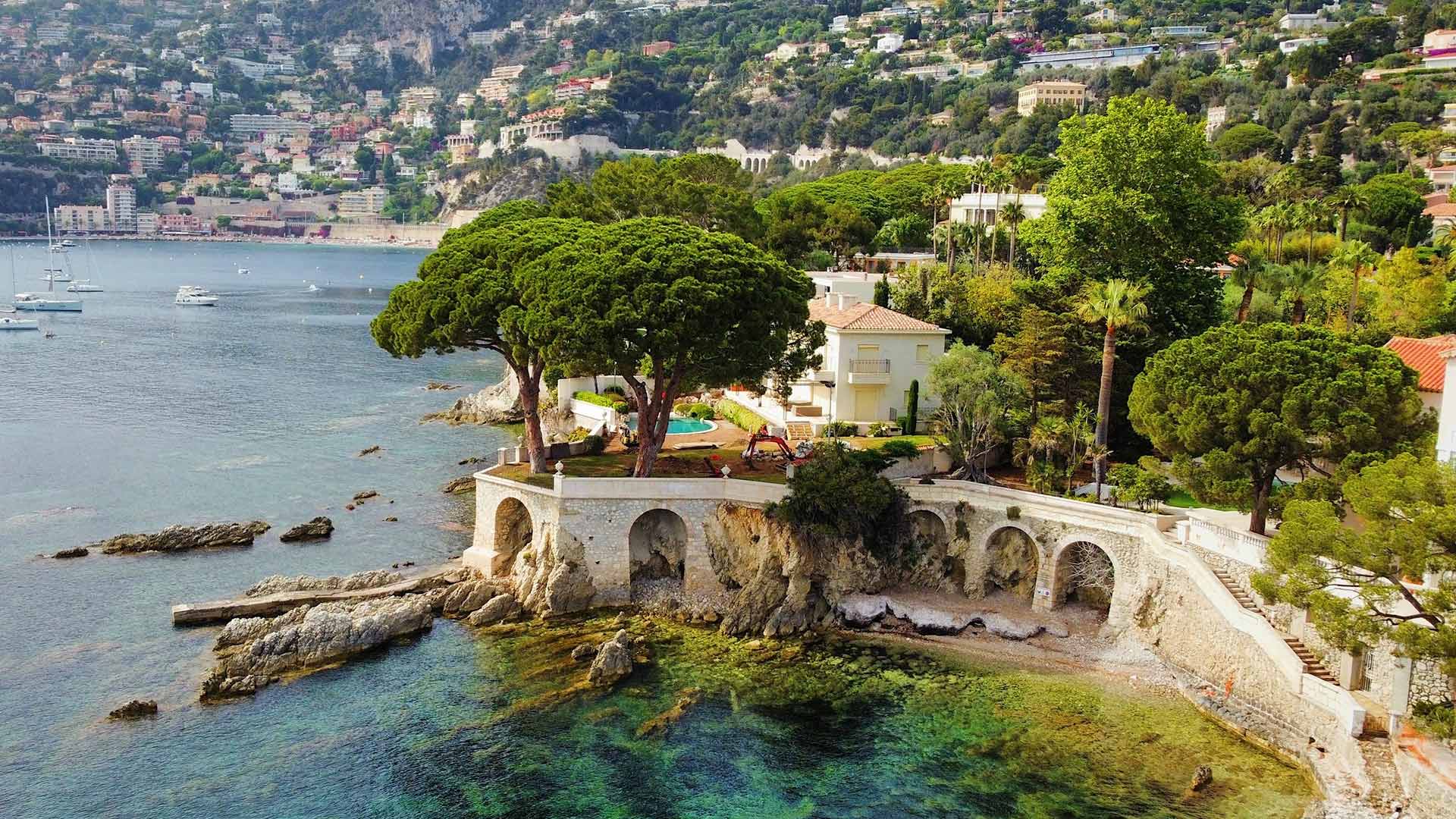
Rent a car and head west from Nice towards Cannes, where yachts bob beside Boulevard de la Croisette and beach clubs spill onto the sand. Carry on around the coast to Saint-Tropez for harbourside cafés, designer boutiques and old-school Riviera glamour. It’s a longer drive – and summer traffic gets busy – so you could also arrive by boat.
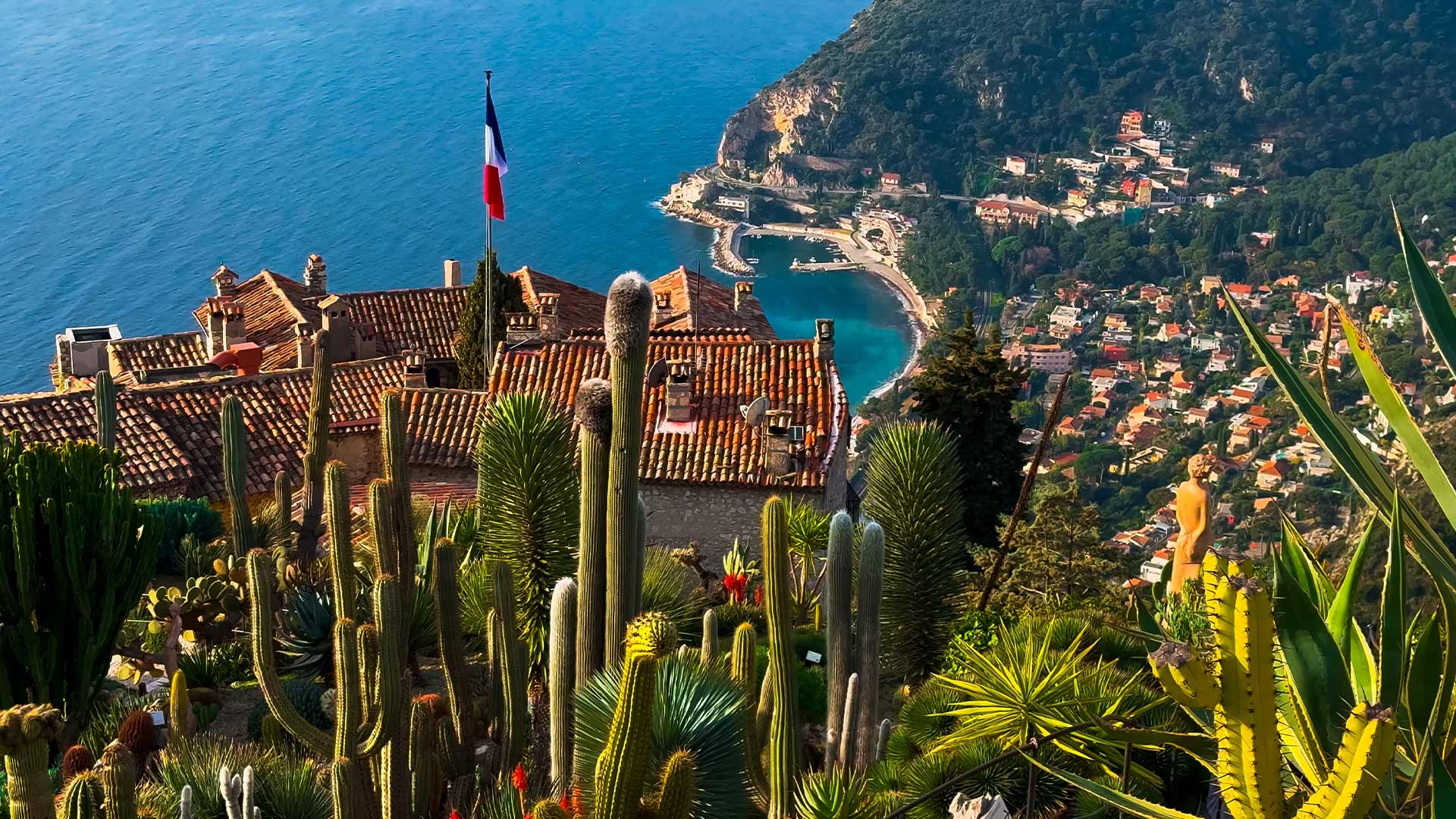
Or point the car east. Pause in pastel-coloured Villefranche-sur-Mer, then follow the coast around pine-covered Saint-Jean-Cap-Ferrat. From there, head up to Èze, where medieval lanes wind towards wide-open Mediterranean views.
Finish across the border in Monaco. Follow parts of the legendary Grand Prix route through Monte Carlo, then stop at the Casino de Monte-Carlo for one last dose of Riviera glamour.
- Browse all our France tours
8. Follow your nose to Grasse
Wondering what to do in the French Riviera beyond the beach? Take a day trip to Grasse, around a 30-minute drive from Cannes. This sun-warmed town is known as the perfume capital of the world. And yes, the air smells rather good.
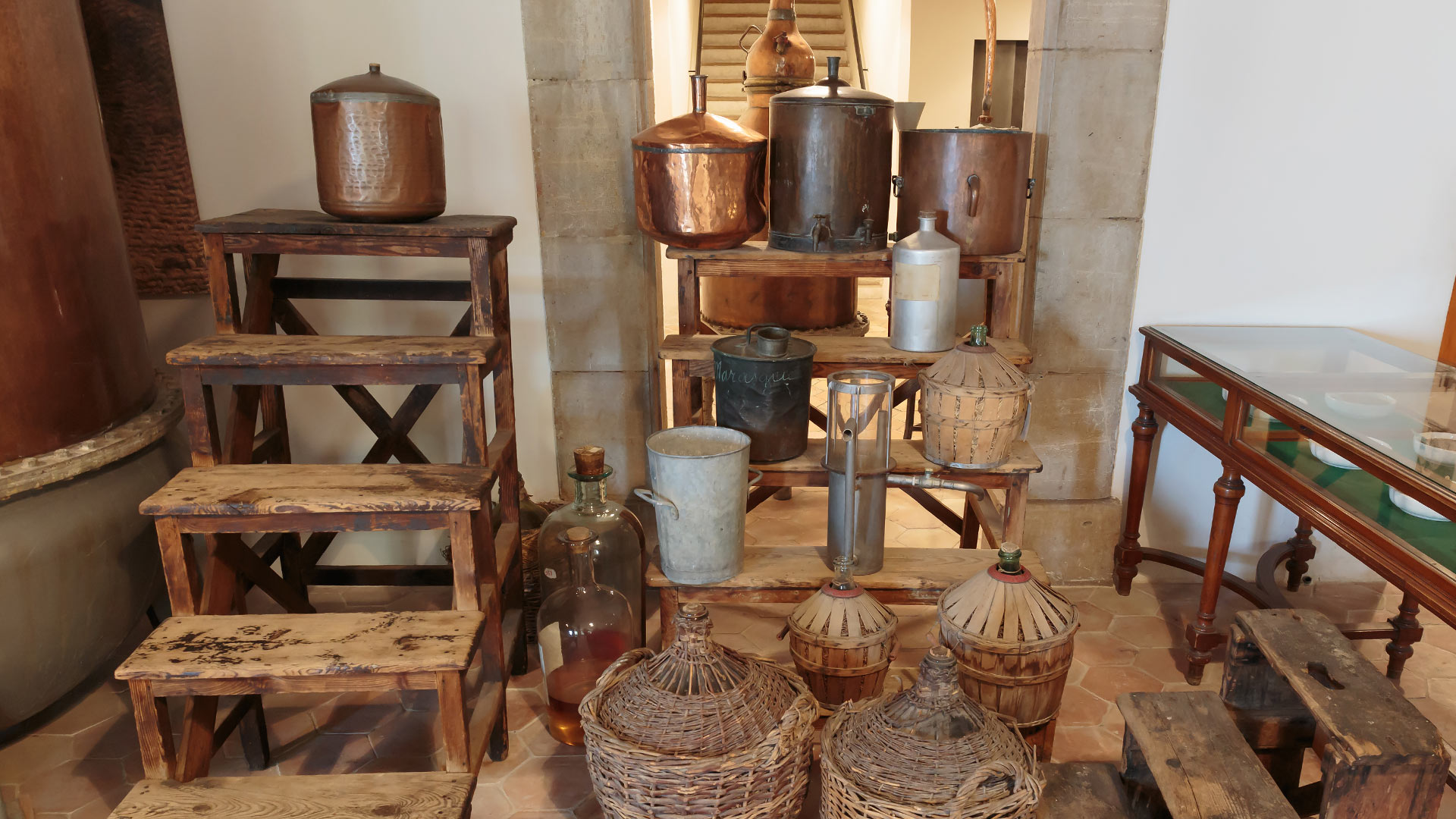
The 3 great perfume houses – Fragonard, Molinard, and Galimard – all open their doors to visitors, with free guided tours exploring how perfume travels from flower to bottle. Visit one, or follow your nose around all 3.
For the full story, step inside the International Perfume Museum. Its collections trace thousands of years of fragrance, including the ingredients, techniques and traditions behind what ends up on your dressing table.
You’ll come out knowing things about scent that will make you insufferable at dinner parties (in the best possible way).
9. Shop, graze and linger at a local market
A French market is always worth setting your alarm for. Clear your morning, bring a bag, and expect to leave with local honey, a bunch of lavender, and at least one thing you didn’t plan on buying.
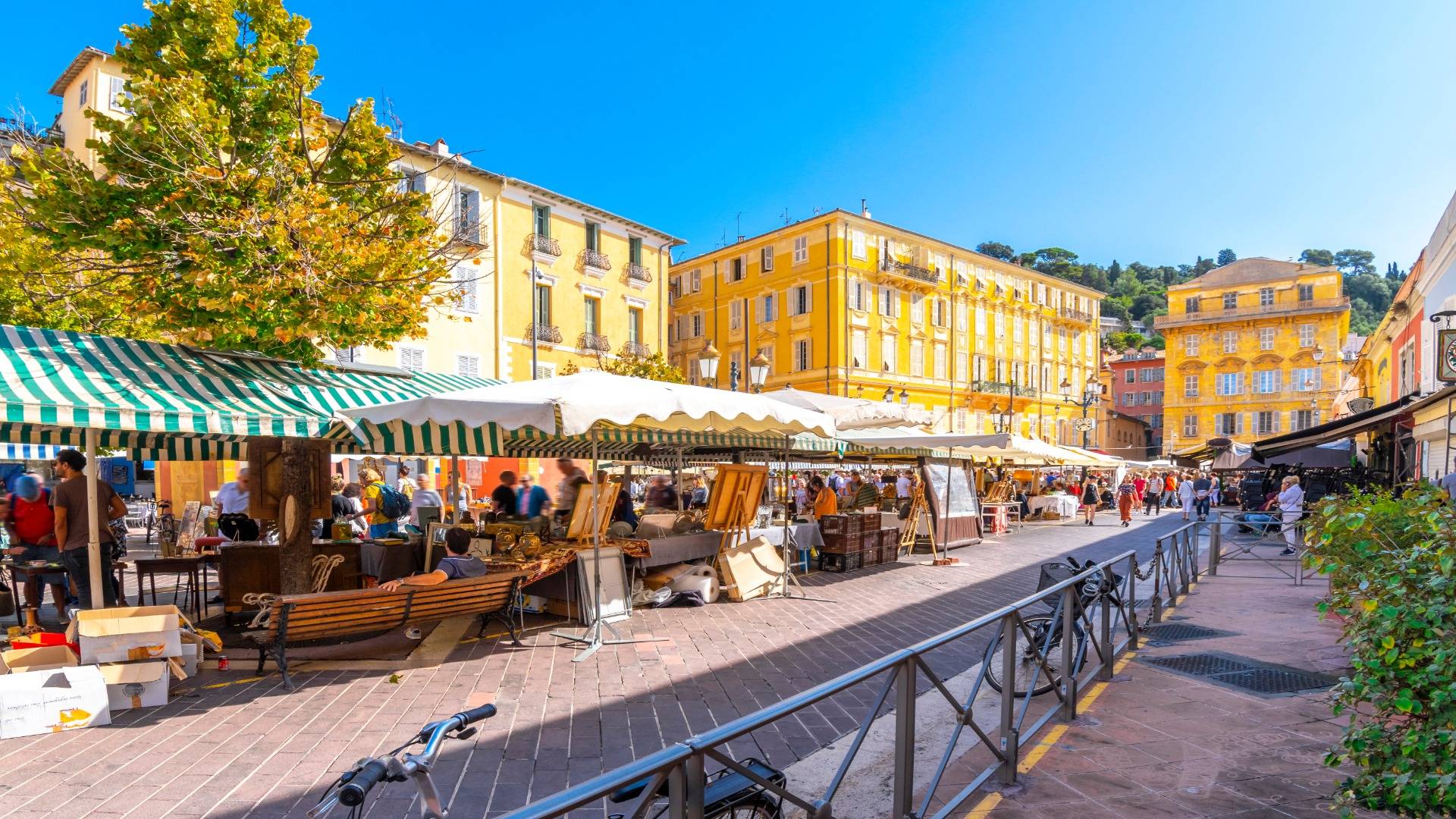
At Nice’s Cours Saleya, flowers, olives, cheese and fresh produce fill the square from Tuesday to Sunday morning. On Mondays, the food stalls make way for antiques and vintage finds. Come for breakfast. Leave with a brass candlestick. These things happen.
In the medieval village of Saint-Paul-de-Vence, a small market fills the Place du Jeu de Boules with fresh bread and local preserves.
Head inland to Provence and the markets get bigger. In Aix-en-Provence, market days bring stalls to streets and squares across the city. Browse clothes, crafts and antiques beneath the plane trees of Cours Mirabeau, then follow the scent of fruit, herbs and cheese towards the nearby food markets.
Avignon’s covered Les Halles is another favourite, packed with fresh produce, charcuterie and local specialities. In Arles, the sprawling Saturday market lines the boulevards with food, flowers, clothes and household treasures.
One last piece of advice: arrive hungry.
Explore the South of France with Nordic Visitor
Lavender fields. Hilltop villages. Van Gogh’s old haunts. One seriously scenic drive along the Côte d’Azur. There’s plenty to fit in, preferably with time left over for a long lunch in Provence.
Book your south of France trip with us, and we’ll take care of the details. This includes handpicked hotels, local transport, and a personalised itinerary built around what you actually want to see and do.
Your toughest decision? Which town deserves an extra night.
Get in touch with one of our travel experts to start planning your South of France.